
Tank vs. Tankless Water Heaters: Where Leaks Happen
September 12, 2026 · 6 min read · By Water Heater Leak Repair Experts
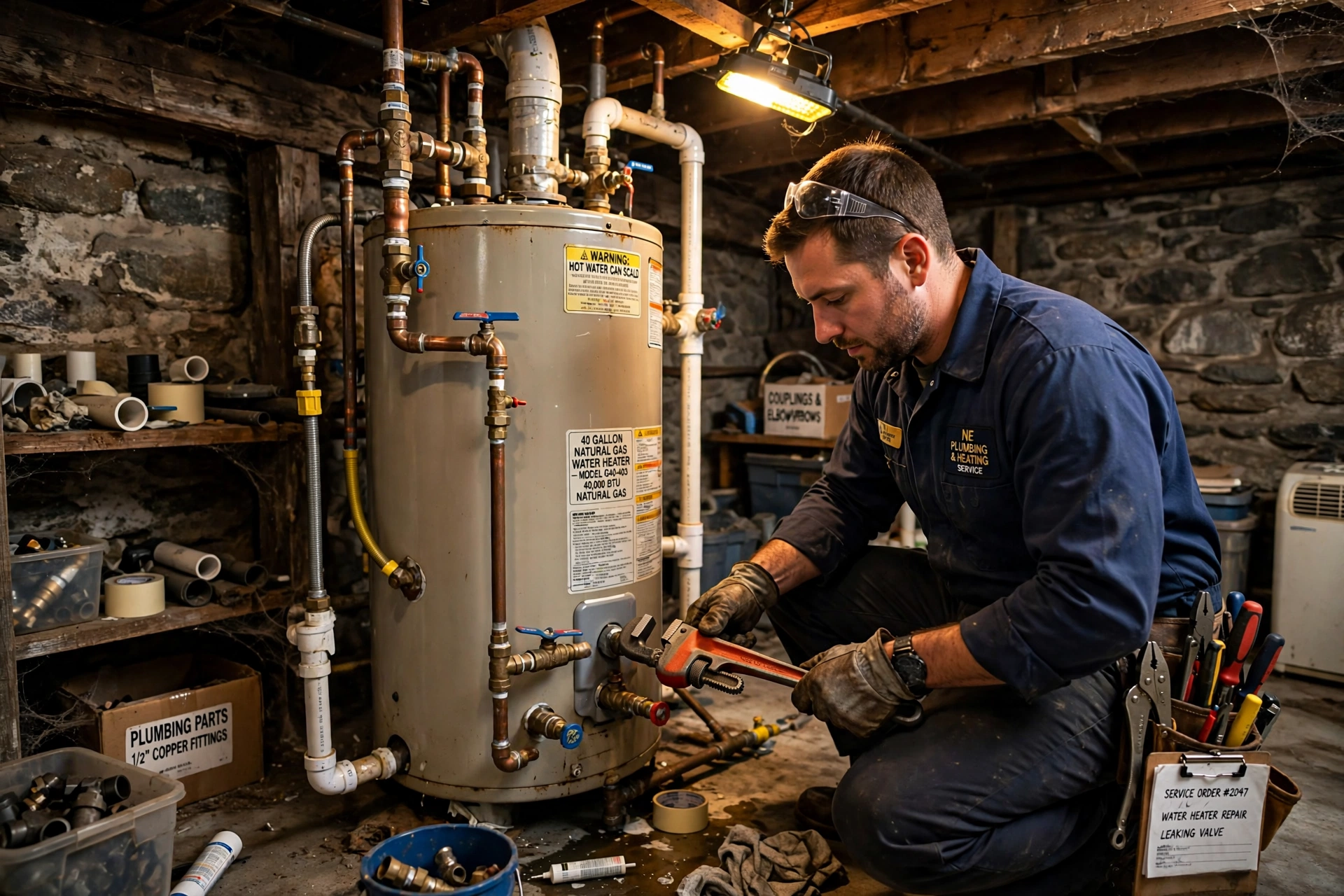
Thinking about switching — or just wondering why your unit leaks where it does? Tank and tankless heaters fail in completely different places. Here's the map.
Where tank heaters leak
The shell: rust-through at the bottom weld or side seams — fatal, means replacement. Drain valve: cracked plastic or corroded seats weep at the base. T&P valve: drips from age or excess pressure. Top fittings: dielectric unions corrode where copper meets steel. Element gaskets (electric): weep when overheated by scale. Tanks hold 40–50 gallons, so when the shell goes, the flooding is dramatic — one more reason for a drain pan.
Where tankless units leak
Inlet/outlet connections: the most common drip point, especially after freeze-thaw cycles stress fittings. Condensate line (condensing models): clogs and backs up. Internal seals and O-rings: age out and weep inside the cabinet. Heat exchanger: rare but serious — usually from years of skipped descaling in hard water. Pressure relief valve: same job as a tank's T&P, same failure modes. Tankless leaks are typically smaller in volume but harder to spot inside a wall-hung cabinet.
Which is better for an older Attleboro home?
Honest answer: it depends on the house. Tankless needs adequate gas line capacity or electrical service — both can be undersized in vintage homes — plus annual descaling that well-water households can't skip. Tanks are simpler, cheaper to install, and fit existing spaces. We install and repair both, and we'll assess your home's infrastructure before recommending either. Our tankless repair and tank repair pages detail what each service involves.
The bottom line
Tanks leak bigger; tankless leaks sneakier. Both are very fixable when caught early — which is why annual inspection matters regardless of type. If yours is leaking now, call (833) 713-2101 and we'll identify the source the same day.