
Water Heater Leak vs. Condensation: How to Tell the Difference
September 25, 2026 · 5 min read · By Water Heater Leak Repair Experts
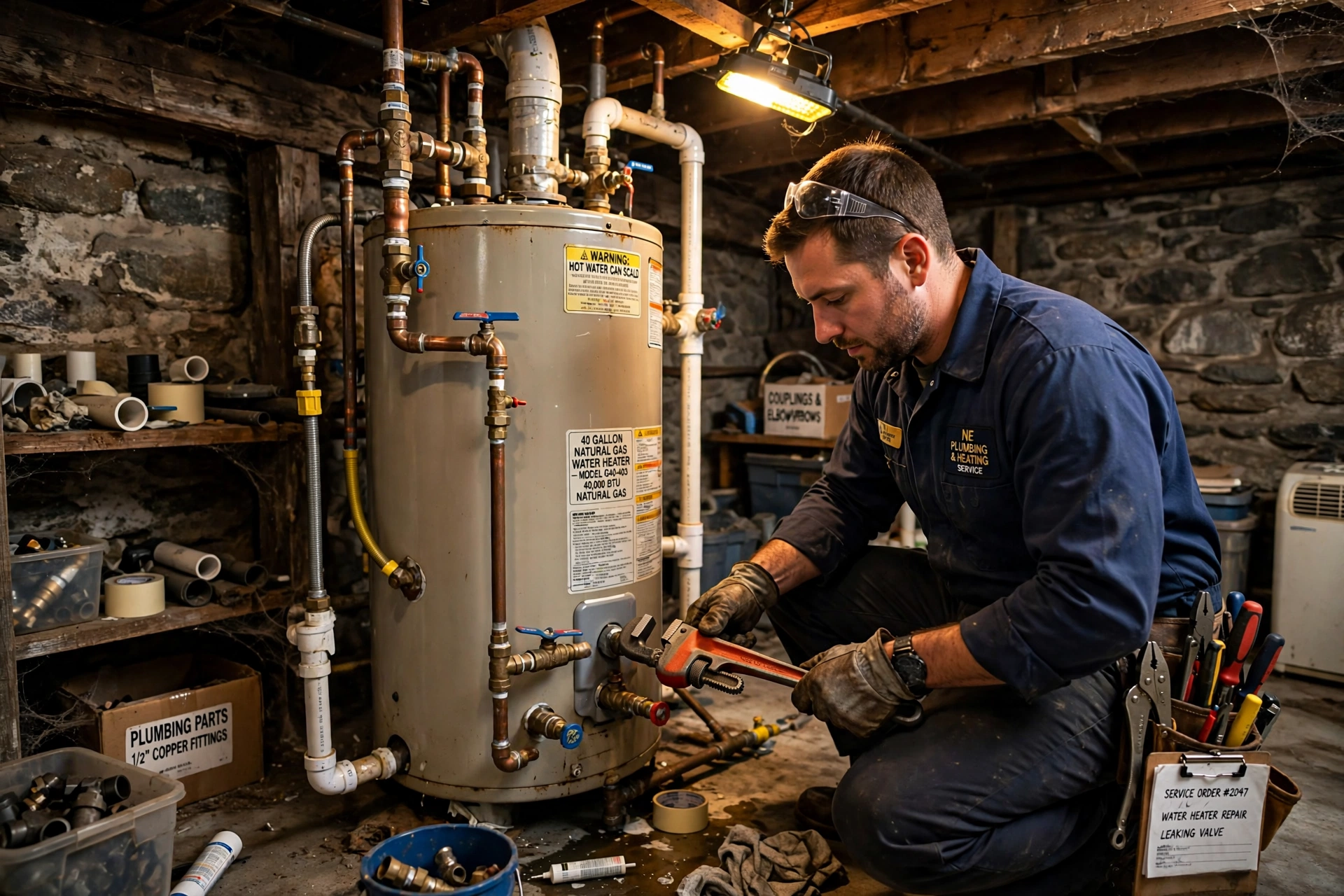
You spot moisture on your water heater and your stomach drops. But before you call for a repair, it's worth knowing: water heaters sweat. Here's how to tell harmless condensation from a leak that needs fixing.
Why water heaters sweat
Cold water entering a tank in a warm, humid basement condenses on the steel jacket — the same physics as a cold glass on a summer day. In New England, this peaks in summer when basement humidity soars and incoming groundwater runs cold. Newly installed heaters sweat most, because the whole tank starts at groundwater temperature.
The wipe-and-wait test
Dry the tank completely with a towel, then check back in one to two hours without running hot water. Condensation returns as a light, even film across broad surfaces. A real leak returns as droplets forming at one specific point — a fitting, a valve, a seam — often with a trail running downward.
Clues that point to condensation
Moisture appears on humid days and vanishes in winter; it coats the tank evenly rather than streaming from a point; the floor beneath is damp but never pools; and it lessens after the heater has been running steadily. A dehumidifier near the heater usually solves it.
Clues that point to a real leak
Water reappears at the same fitting or seam every time; you see rust streaks originating from a point; the T&P discharge pipe is wet; the floor pools even on dry days; or your hot water runs out faster than usual. Any of these means it's time for professional leak detection.
When sweating still deserves attention
Chronic condensation keeps the tank jacket damp, which accelerates exterior rust — a real issue in already-damp older basements around Attleboro. If your heater sweats heavily every summer, a dehumidifier and a yearly inspection will add years to its life. And if the wipe-and-wait test ever points to a true leak, call us at (833) 713-2101 before a drip becomes a flood.