
How Long Do Water Heaters Last? Lifespan by Type
September 22, 2026 · 6 min read · By Water Heater Leak Repair Experts
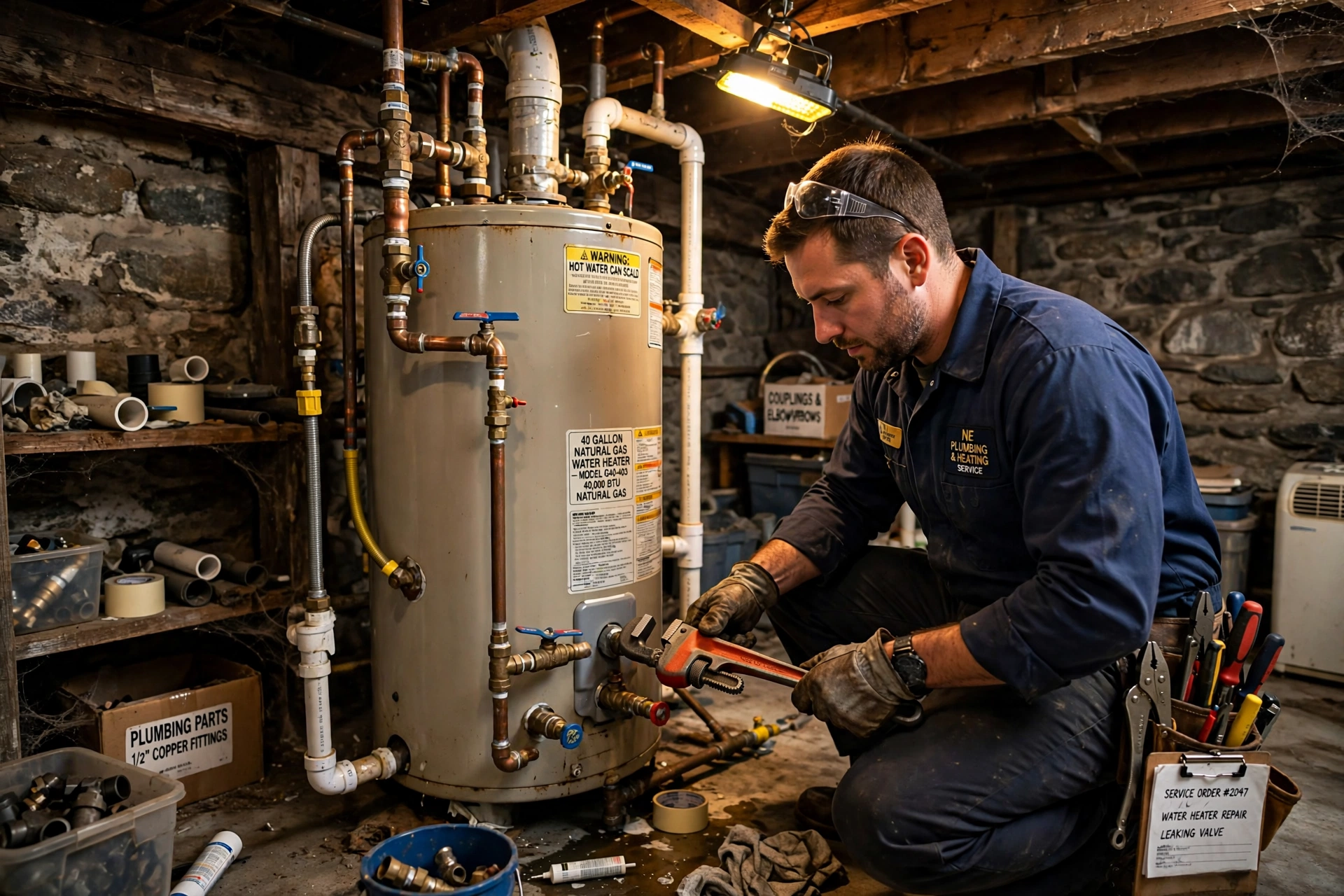
Every water heater has an expiration date stamped invisibly on its future. Knowing where your unit sits on its timeline tells you whether a leak is worth repairing — or the opening act of a replacement.
Conventional tank: 10–15 years
The workhorse of Attleboro basements. Glass-lined steel tanks last 10 to 15 years with maintenance, 8 to 12 without it. The killer is sediment: it insulates the tank bottom, causes overheating, and eventually cracks the steel. Check your serial number — most manufacturers encode the build date in the first characters.
Tankless (on-demand): 15–20 years
No stored water means no tank to rust through, so tankless units outlive tanks — if descaled annually. Skip the descaling in hard-water areas and scale will choke the heat exchanger years early. Compare failure modes in our tank vs. tankless leak guide.
What shortens life in the Attleboro area
Three local factors: hard, mineral-heavy well water that scales tanks and eats anode rods; damp stone basements that corrode exteriors and fittings; and skipped maintenance — most heaters we replace never had a single flush or anode check. A $200 anode rod replacement every few years is the cheapest life-extension in plumbing.
Repair or replace? The honest math
Under 8 years with a valve, fitting, or element leak: repair it. Over 12 years with a tank-shell leak: replace it — patching is throwing money at borrowed time. In between, compare the repair quote against replacement cost and the unit's remaining expected years. We'll lay out both numbers plainly when you call (833) 713-2101; the decision stays yours.
Stretching the years you have left
Annual flushing, anode rod checks every 3–5 years, a working expansion tank, and 120°F temperature settings together add years. Our maintenance checklist walks through all of it, or book a tune-up and we'll handle it in one visit.