Water Heater Maintenance Checklist: Monthly, Annual, and Beyond
The complete water heater maintenance checklist: monthly 5-minute checks, the annual deep service, 2-to-3-year tasks, an
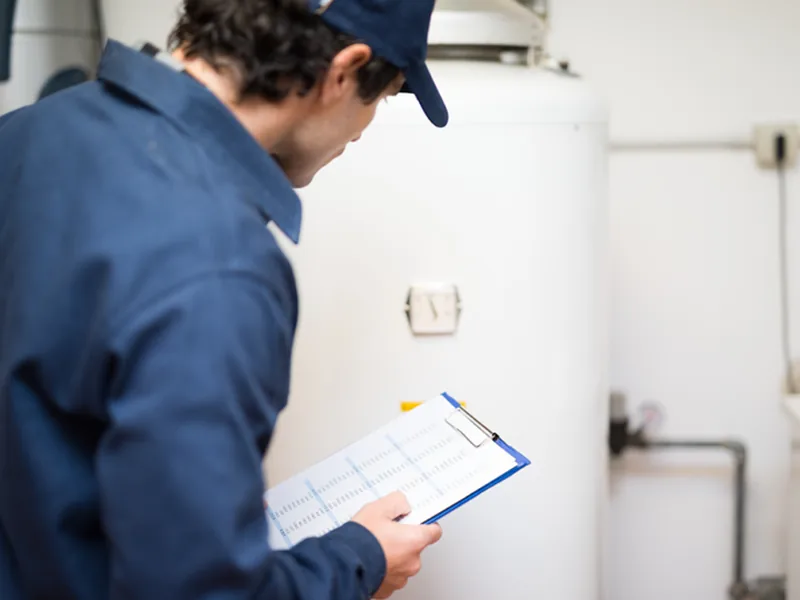
A water heater is the most taken-for-granted appliance in your home — until the day it is not. The difference between a heater that dies at year 7 and one that serves faithfully to year 14 is not luck; it is maintenance. And maintenance is not complicated. It is a short list of simple tasks, done on schedule, that each address a specific failure mode.
This is the complete checklist: what to do monthly, yearly, and every few years, in plain order. Print it, tape it to the heater, and work through it. For any task you would rather hand off, Water Heater Leak Repair Crew handles full water heater tune-ups across Attleboro — call (833) 713-2101.
Monthly: The 5-Minute Look-Over
- Visual leak check: Flashlight around the base, top fittings, drain valve, and relief-valve discharge pipe. Look for drips, rust streaks, and mineral crust.
- Listen: Stand by the heater during a heating cycle. New popping, rumbling, or hissing deserves investigation (see our noises guide).
- Check the area: Make sure nothing is stored against the heater, vents are unblocked, and (gas units) combustion air paths are clear.
- Glance at the temperature setting: Confirm it is still at 120 degrees — dials get bumped.
Annually: The Core Maintenance Visit
Once a year, work through these in order. Budget about two hours the first time, one hour once you know the drill.
- Flush sediment from the tank: Drain and flush until the water runs clear. In Attleboro's hard water this is the single most impactful task. See our step-by-step draining guide.
- Test the T&P relief valve: Lift the lever briefly — strong flow, then full stop on release. If it dribbles afterward or nothing flows, replace it.
- Check the expansion tank: Tap test (hollow top, solid bottom) and check the air charge against house pressure with a tire gauge. Recharge or replace as needed.
- Inspect the anode rod: Technically a every-2-to-3-year task, but checking annually lets you track its consumption rate and never be surprised.
- Verify the thermostat setting: 120 degrees, both thermostats on electric units.
- Gas units — inspect the vent: Look for corrosion, disconnection, or blockage at the draft hood and vent pipe. Check the burner flame through the sight glass — it should be mostly blue.
- Gas units — vacuum the burner compartment: Dust chokes pilot orifices and burners. A quick vacuuming prevents ignition headaches.
- Electric units — check wiring: With the breaker OFF, remove access panels and look for scorched, melted, or brittle wire insulation. Any damage means call for service.
- Inspect the drain pan and drain line: Make sure the pan is intact and its drain is not clogged. Test any water alarm by touching its sensors with a wet finger.
- Check pipe insulation: Hot-water pipes — especially the first several feet from the heater — should be insulated. Replace any crumbling insulation.
Every 2 to 3 Years: The Deep Service
- Replace the anode rod if depleted: In Attleboro water conditions, this is a 2-to-3-year cycle for magnesium rods. This one task does more for tank longevity than everything else combined.
- Consider replacing the drain valve: If the factory plastic valve is getting stiff or weepy, swap in a full-port brass ball valve before it fails.
- Tankless units — descale: Flush the heat exchanger with descaling solution through the service valves. In hard water, do this yearly, not every few years.
- Review the heater's age: Past year 10, shift from maintenance mode to replacement-planning mode. Maintenance still matters, but budget for the inevitable.
Seasonal: Massachusetts Winter Prep
Before heating season, give the heater winter-specific attention: confirm pipe insulation is intact on all exposed hot and cold lines near the unit, verify the area stays above freezing (garage and crawl-space installations), check that exterior vents are clear of obstructions, and if you will be away, either leave the heat on or shut down and drain properly — never just switch the heater off and leave a full tank in a freezing house. See our winter prep guide for the full seasonal routine.
What Skipping Maintenance Actually Costs
It helps to be blunt about the stakes. A skipped flush lets sediment bake onto the tank bottom and elements — the direct cause of popping noises, failed lower elements, and overheated tank bottoms. A never-checked anode rod means the tank corrodes unprotected for years. An untested relief valve may not work when needed. A dead expansion tank spikes system pressure every single day. None of these failures announce themselves politely; they show up as emergency leaks, cold showers, and premature replacement. The entire annual checklist costs you an afternoon and a garden hose. The emergency it prevents costs far more in money and stress.
Keep Records
One final habit that pays off: write the date of each maintenance task on a tag or piece of tape stuck to the heater — flush dates, anode inspections, valve tests. When a technician asks about service history, or when you are deciding repair-vs-replace at year 11, that little log is gold. Photograph the rating plate too, so model and serial numbers are always at hand.
Want it done for you? Water Heater Leak Repair Crew performs complete water heater tune-ups in Attleboro — flush, anode check, valve tests, expansion tank, and full inspection in one visit. Call (833) 713-2101 to schedule yours.