What Makes 02703 Tough on Anode Rods
Attleboro's housing stock is a timeline of American plumbing. Downtown triple-deckers hide forty-year-old tanks in low stone basements behind the boiler; the colonials off Park Street run tanks installed during the nineties remodeling wave; the newer streets toward South Attleboro have mid-life units quietly approaching the end of their first anode rod. The city's treated municipal water is consistent, but chlorine in the supply steadily consumes sacrificial anodes — a magnesium rod here typically gives four to six years before it's down to a bare wire. The tell in Attleboro is rusty hot water that clears after a few seconds, or a faint metallic smell at the tap nobody can quite place. Swapping the rod now costs a fraction of an emergency tank replacement later, and it buys the tank five or more extra years. We read the serial number, check the rod's actual condition, and only replace what the tank needs.
Symptoms of a Depleted Rod in Attleboro Homes
Most Attleboro tanks we open are running unprotected, and the homeowners had no idea anything was wrong — because a dying anode rod is invisible until it isn't. The early signs are subtle enough to dismiss: hot water with a faint metallic tang, a sulfur note at the hot tap that comes and goes, the occasional rusty tint in the morning shower that clears after a few seconds. Each one means the rod is past its effective life and the tank's steel is now in the corrosion path. In early-1900s colonials and downtown triple-deckers, we also see the advanced signs: flaking rust around the tank's top fittings, a hex head at the tank top crusted with corrosion, and popping or rumbling from sediment that accumulated while nobody was maintaining the unit. A rod inspection takes minutes and answers the question definitively — we pull it, measure what's left, and show you. If there's meaningful metal remaining, the tank is protected; if it's a bare wire, every additional month is borrowed time.
In Attleboro's older homes the classic warning is hot water that runs rusty for the first few seconds each morning — tenants in triple-deckers notice it before owners do. A rotten-egg smell at the hot tap, a tank past year six with no service history, or visible crust on the hex head at the tank top all point to a spent rod.
How We Swap a Rod Without the Drama
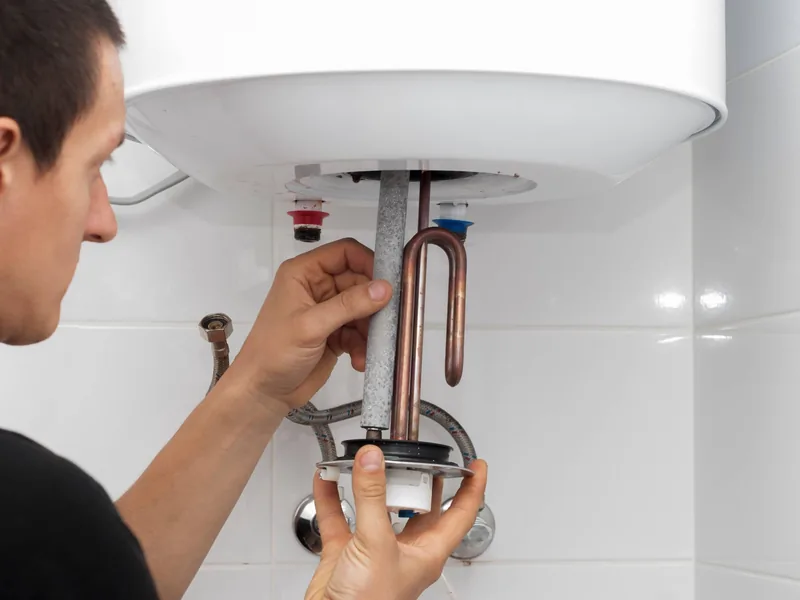
The complication in early-1900s colonials and downtown triple-deckers is clearance: anode rods are long — often over forty inches — and many Attleboro tanks sit under low ceilings, beneath stairs, or in closets where a rigid rod physically cannot be inserted. That's why we carry segmented flexible rods, which thread in section by section and perform identically once installed. The other common complication on 02703 service calls is the seized hex head — years of mineral exposure weld the fitting in place, and the correct answer is controlled torque with the tank properly braced, not a bigger cheater bar. We also manage the details homeowners forget: well-pump isolation on well-system homes so the pump doesn't dead-head during drain-down, thermal expansion considerations on closed systems, and a check of the temperature-and-pressure relief valve while we're at the tank. It's a small job done with full professionalism — because the tank's next five years depend on these details.
Attleboro jobs often mean working in tight stone basements with low headroom, so we carry flexible segmented rods that thread in where a rigid forty-inch rod never would. We shut the water and power, bleed pressure, pull the old rod for inspection, and show you what came out before the new one goes in.
Which Rod Your Tank Actually Wants
Powered anode rods — also called impressed-current anodes — are the definitive answer for Attleboro's most aggressive water. Instead of dissolving sacrificial metal, a powered rod uses a tiny electrical current from a wall outlet to halt corrosion electrochemically. It never depletes, never needs replacement, and it eliminates sulfur odor because there's no degrading magnesium for bacteria to feed on. For well supplies around 02703 that eat a magnesium rod in two to three years, the economics are compelling: one powered rod instead of three or four sacrificial swaps over the tank's life, with continuous protection throughout. Installation is the same ninety-minute visit plus plugging in a small power supply. The upfront part cost is higher than a sacrificial rod, but for aggressive-water homes in early-1900s colonials and downtown triple-deckers, it's the last anode decision the tank will ever need.
Aluminum/zinc alloy rods are the workhorse upgrade for Attleboro's problem-water homes. The alloy sacrifices more slowly than pure magnesium, so it lasts longer — often seven-plus years on the same water that eats magnesium in four — and crucially, it doesn't feed sulfur bacteria the way magnesium does. For the rotten-egg hot water complaints we see across 02703's well-water pockets, swapping magnesium for aluminum/zinc frequently ends the odor within days while restoring full corrosion protection. The tradeoff is slightly less aggressive protection than magnesium, which is irrelevant in practice for residential tanks — the alloy still vastly out-protects a depleted rod, which is the actual alternative. When a Attleboro homeowner reports sulfur smell plus an aging tank, aluminum/zinc is usually our first recommendation, and the results speak at the tap.
Keeping the Tank Protected Year After Year
The anode rod doesn't work alone — it's half of a two-part protection system, and the other half is flushing. Attleboro's treated municipal supply lays down sediment in every tank: mineral particulate that settles to the bottom, buries the lower heating element or insulates the burner, and creates the popping and rumbling Attleboro homeowners hear from neglected units. Sediment also matters for the rod's world: a tank choked with sediment runs hotter at the bottom, accelerating the corrosion chemistry the rod is fighting. That's why our 02703 rod visits include a drain-valve check and usually a flush — the fresh rod protects the steel while the flush removes the sediment working against it. Going forward, annual flushing plus the rod-check rhythm above is the complete maintenance program, and it's the difference between tanks that die at ten years and tanks that serve at twenty.
The replacement is only half the job — the other half is the inspection rhythm that keeps the tank protected from here on. On Attleboro's treated municipal supply, the honest intervals are: municipal water, check every four to five years; mixed or moderately aggressive well water, every three; the truly aggressive well supplies around 02703, every two. 'Check' means pulling the rod and looking, not guessing from the calendar — water chemistry varies street by street, and the rod's actual condition is the only reliable gauge. In early-1900s colonials and downtown triple-deckers, we leave every homeowner with the tank's birthdate from the serial number and a recommended next-check date written down, because the number-one reason rods die unnoticed is that nobody writes anything down. A two-minute inspection every few years is what stands between a twenty-year tank and a ten-year tank.
Talk to a Tech Today
You don't need to prepare anything before we arrive — but two things help the visit go faster. First, clear a working path to the tank; in early-1900s colonials and downtown triple-deckers that sometimes means shifting stored items in a basement or utility room, and the tech will need about three feet of headroom (we bring flex rods where that's impossible). Second, know your water: town or well, and whether the hot water has smelled like sulfur — that single detail often determines the rod alloy before we even pull the old one. Everything else we handle: water and power shutdown, pressure relief, the seized-fitting wrestling that older 02703 tanks always provide, sealant, refill, and testing. When we're done, you'll have seen your old rod, you'll know your tank's real condition, and you'll have a next-check date. That's the whole job. Reach us at (833) 713-2101.