What an Anode Rod Actually Does Inside Your Tank
A water heater tank is a steel vessel holding forty or fifty gallons of hot, oxygenated water — an environment practically designed to rust steel. The anode rod defeats that chemistry by being more reactive than the tank wall. Corrosion is an electrochemical process: in the presence of water, the more reactive metal sacrifices itself, releasing electrons that protect the less reactive steel. The rod slowly dissolves over years of service while the tank stays intact. Once the rod is gone, the protection stops and the tank begins rusting from the inside out.
Most rods last somewhere in the range of three to six years depending on water chemistry and usage, and they give almost no visible warning as they deplete. You cannot see the rod without pulling it out through the port on top of the heater, which is why this maintenance gets skipped so often. By the time rust appears at the base of the tank or in the hot water, the rod has been gone for a long time and the damage is already structural.
Attleboro's soft municipal water adds a wrinkle worth knowing. Soft water leaves little scale, which means the rod is not buried in mineral deposits — but soft water does not slow the electrochemical corrosion the rod exists to absorb. If anything, the absence of scale means there is nothing masking the rod's condition, and nothing slowing the tank's corrosion once the rod is spent. The maintenance schedule does not get a pass just because the water is soft.
The Rotten-Egg Smell: When Your Anode Rod Meets Bacteria
One of the most common reasons Attleboro homeowners call us about anode rods is not a leak at all — it is the smell. Hot water that reeks of rotten eggs, but only from the hot tap, is the signature of a reaction between a magnesium anode rod and sulfate-reducing bacteria that live harmlessly in many water supplies. The bacteria feed on the magnesium, producing hydrogen sulfide gas as a byproduct, and the result is hot water you can smell from across the room.
This is not dangerous in the concentrations found in household water, but it is deeply unpleasant, and it is a sign that the rod is actively deteriorating. The fix is not to remove the rod and leave the tank unprotected — we see well-meaning homeowners do this, and the tank pays for it within a couple of years. The correct fix is to replace the magnesium rod with an aluminum-zinc alloy rod, which the bacteria do not feed on in the same way, or in stubborn cases to install a powered anode rod that protects the tank with a small electrical current instead of a sacrificial metal.
If your cold water smells fine and only the hot water stinks, the anode rod is almost certainly the culprit. Call (833) 713-2101 and describe the smell — we will know exactly what we are walking into and bring the right replacement rod.
How Our Anode Rod Replacement Visit Works
We start by shutting off power or gas to the heater and closing the cold-water inlet, then we relieve pressure through a hot tap so the tank is safe to open. The anode rod lives under a hex-head plug on top of the heater — on many units it shares the hot-water outlet fitting, which we check first. Breaking that plug loose on an older heater can take real torque, especially if the rod has never been touched, and we carry the breaker bars and impact tools to do it without damaging the tank.
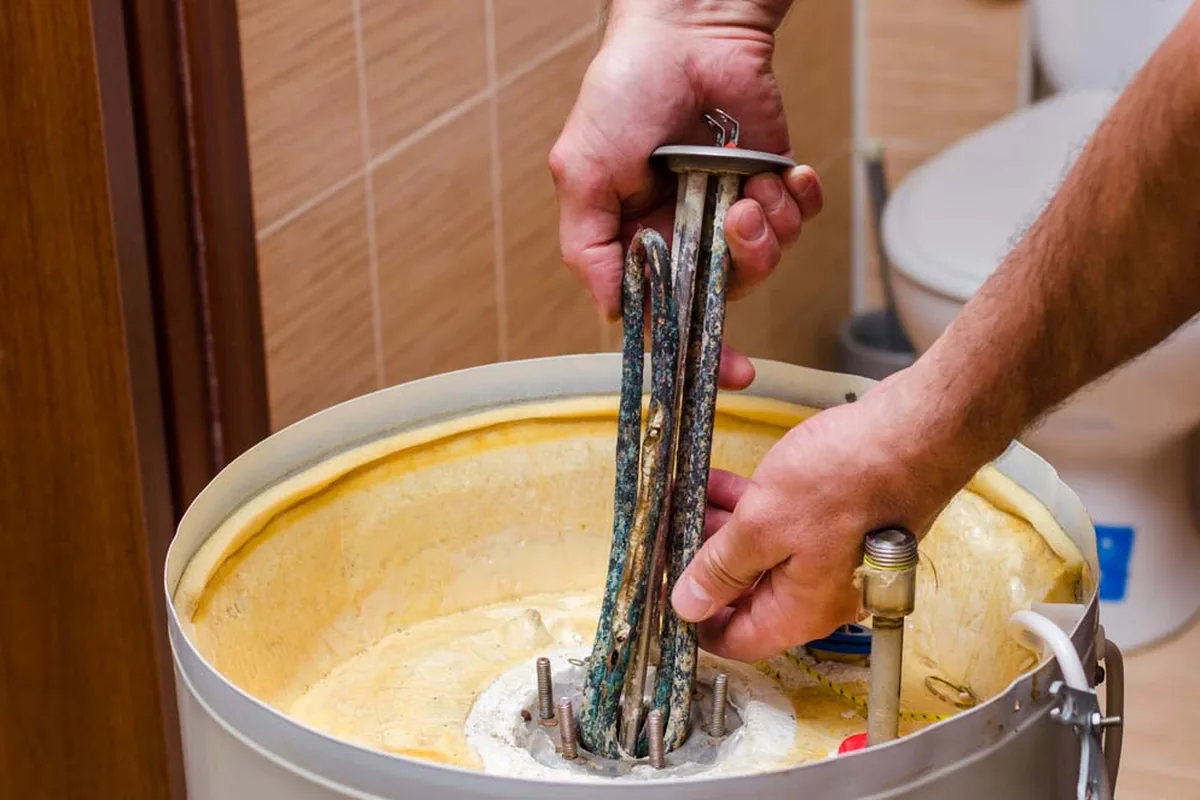
Once the old rod is out, we show it to you. A spent rod is a striking thing — sometimes reduced to a thin wire, sometimes coated in a white calcium crust, sometimes swollen and pitted. Its condition tells us a great deal about what is happening inside your tank. Then we thread in the new rod, sealing the connection properly, restore water and power, and verify the heater fires and holds pressure.
One practical note for Attleboro's older homes: some basements have low ceilings or tight clearances above the heater, and a standard rigid rod needs about four feet of vertical space to slide in. When clearance is tight, we use flexible segmented rods that bend into place — same protection, no need to move the heater or cut into the ceiling. We check your clearance before the visit so we arrive with the right type.
Signs Your Anode Rod Needs Replacing Now
Age is the simplest indicator. If your tank is more than five years old and the anode rod has never been inspected, assume it is significantly depleted. At seven or eight years without service, most rods in this area are effectively gone. If you know your heater's installation date — check the manufacturer's label on the tank, which encodes it — and the rod has never been touched, a replacement is overdue regardless of how the heater seems to be performing.
Rust-colored hot water is a later-stage warning. When the rod is spent and the tank begins corroding, iron oxide shows up first as discolored hot water, especially after the heater has sat unused overnight. By this point the tank is already taking damage, but replacing the rod now can still slow further corrosion and buy meaningful time — it is not too late, but it is urgent.
The sulfur smell described above is another trigger, as is any visible corrosion around the anode port on top of the tank. And if you are already having us out for another service — a flush, a valve replacement, a thermostat — ask us to check the rod while we are there. It adds little to the visit and tells you exactly where your tank stands.
Why This Small Part Matters So Much in Older Attleboro Homes
Consider the math of an Attleboro basement. A large share of homes here were built before 1980, and their water heaters sit in basements with old plumbing, old shutoff valves, and often finished space nearby. Replacing a tank in that environment is a bigger job than in new construction — tighter access, older connections that may need updating, more at stake if something goes wrong. Every year you keep the current tank healthy is a year you postpone that disruption and expense.
Anode rod replacement is the single most effective life-extending maintenance a tank heater can receive. Tanks do not usually die because their burners or elements fail — those are replaceable parts. Tanks die because the steel gives up, and the anode rod is the part whose entire job is to prevent that. Replacing it on schedule is the difference between a tank that makes it twelve or fourteen years and one that rusts through at eight.
For landlords and owners of Attleboro's many pre-war multi-unit buildings, scheduled anode service across units is one of the cheapest forms of property protection available. A rusted-through tank in an upstairs unit or a finished basement does not just cost a heater — it costs flooring, drywall, and tenant goodwill. A rod replacement every few years is cheap protection against that scenario.
What to Expect After the New Rod Goes In
Immediately after replacement, nothing dramatic happens — and that is the point. The heater runs exactly as before, but the internal corrosion that was quietly eating the tank wall has been halted. If we replaced the rod to address a sulfur smell, the odor typically fades over the following days as the water chemistry settles with the new alloy in place. We will tell you what to expect and when to call back if the smell lingers, which can indicate the bacteria need an additional sanitizing flush.
Going forward, we recommend having the rod checked every few years — we note the replacement date on the tank so the next technician knows exactly when it was done. Pair the rod check with a sediment flush and a TPR valve test, and your heater is getting the full preventive treatment that keeps it out of the emergency-repair category.
Call (833) 713-2101 to schedule an anode rod inspection or replacement anywhere in the Attleboro area. It is a short visit, a modest service, and one of the smartest things you can do for a tank water heater.