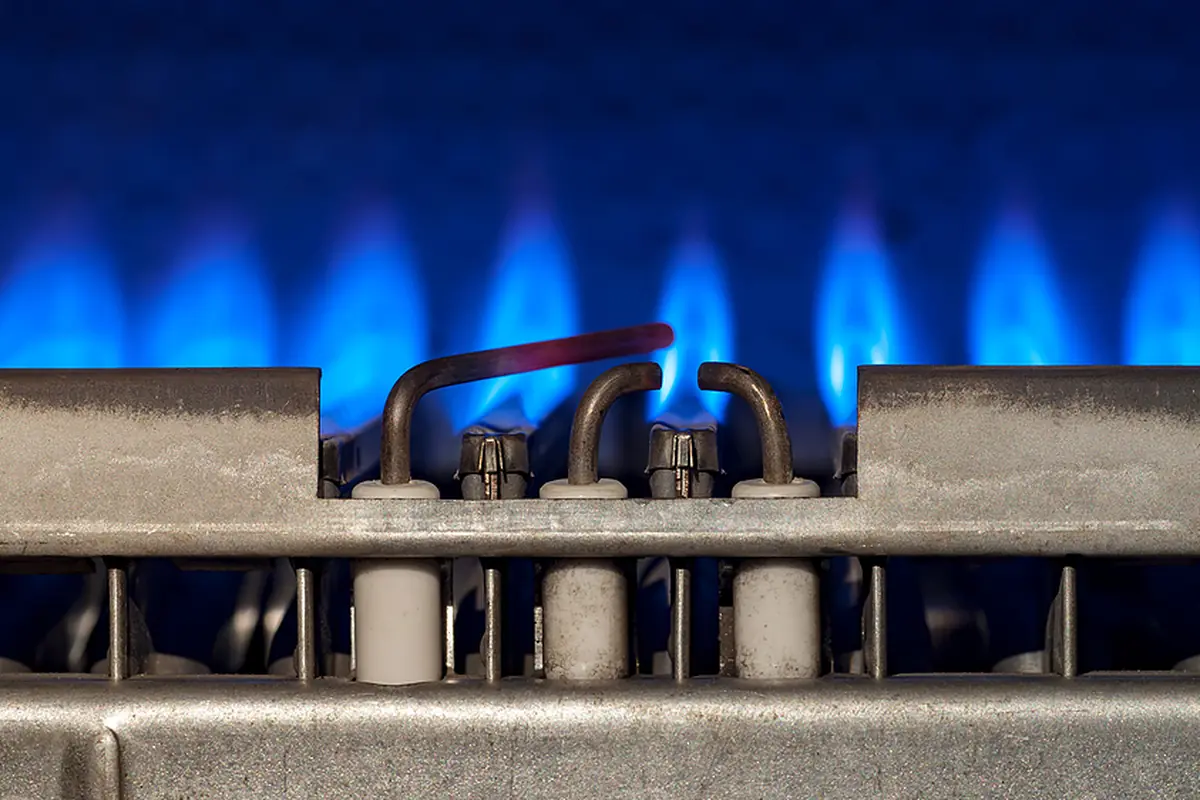
What the Gas Control Valve Does All Day
Think of the gas control valve as three devices in one housing. First, it is a thermostat: a temperature-sensing probe extends from the valve into the tank, and the valve opens the gas supply to the burner whenever the water temperature drops below your dial setting, then closes it when the target is reached. Second, it is a safety shutoff: it monitors the pilot flame through the thermocouple (or thermopile on newer units), and if the pilot goes out, it cuts the gas supply so unburned gas cannot accumulate. Third, on modern units it includes the igniter system — the piezo sparker or hot-surface igniter that lights the pilot without a match.
These valves live a hard life. They sit inches from a burner cycling through intense heat, they handle gas pressure constantly, and their internal diaphragms, springs, and seals age with every heating cycle. A typical valve serves reliably for the better part of a decade, but heat, moisture from a damp basement, and plain mechanical wear eventually take their toll. When the internal thermostat mechanism drifts, you get water that is too hot or too cold regardless of the dial. When the safety shutoff mechanism weakens, the pilot will not stay lit no matter how carefully you follow the relighting instructions.
Because the valve controls gas flow, its failures deserve respect. A valve that sticks open, a pilot assembly that misbehaves, or any smell of gas around the heater should be treated seriously — shut the gas off at the valve and call us rather than repeatedly attempting to relight a stubborn pilot.
Symptoms That Point to the Gas Control Valve
The classic symptom is the pilot that will not stay lit. You follow the lighting instructions perfectly, the pilot catches, you hold the button for the full time — and the moment you release it, the flame dies. Homeowners usually blame the thermocouple, and sometimes they are right, but a thermocouple that tests good while the pilot still will not hold almost always means the valve's internal safety magnet has weakened. We test rather than guess: a multimeter reading on the thermocouple tells us in minutes whether the sensor or the valve is at fault.
A burner that never fires despite a healthy pilot is another valve signature. The pilot proves gas is reaching the unit and the safety circuit is satisfied, but the main valve never opens to feed the burner — the thermostat mechanism inside has failed. Conversely, water that runs scalding hot with the dial set low suggests the thermostat portion is no longer regulating, which is both a comfort problem and a scalding hazard worth fixing promptly.
Then there are the subtler signs: a dial that must be set far higher than it used to be to get the same water temperature, a burner that short-cycles on and off, or a valve body showing corrosion around its fittings. In Attleboro's older basements, where damp air accelerates corrosion on brass and steel alike, we see valve bodies and their connections deteriorate faster than in dry installations. If your gas heater is over eight years old and behaving erratically, the valve belongs high on the suspect list.
How We Replace a Gas Control Valve Safely
Safety governs every step. We begin by shutting off the gas supply to the heater at the dedicated shutoff valve and verifying it is off, then we disconnect the gas line, the pilot tube, and the thermocouple or thermopile leads from the old valve. The temperature probe extends into the tank through a threaded tapping, so we drain the tank down below that level before unscrewing the old valve — the same careful partial-drain procedure we use for any tank penetration.
The new valve must match the old one: same thread size, same probe length, same BTU rating range, and compatibility with the unit's ignition type. We carry the common residential valve models and verify the match before installation — a valve with the wrong probe length reads the wrong temperature, and that is not a mistake we make. The new valve threads in with proper sealant on the gas connections, the pilot assembly and thermocouple are reconnected, and the tank is refilled completely with air purged through a hot tap.
Then comes the critical part: leak testing and operational verification. Every gas connection we touched gets tested with leak-detection solution — no bubbles, no exceptions. We relight the pilot, verify it holds, confirm the burner fires when the thermostat calls for heat and shuts off at the set temperature, and check that the safety shutoff works by testing pilot-outage response. Only when every check passes do we consider the job done. Gas work does not get rushed, and it does not get guessed at.
Valve Failure vs. Thermocouple Failure: Why the Distinction Matters
Because the symptoms overlap so heavily, this distinction deserves its own explanation. The thermocouple is a small, inexpensive sensor — a dissimilar-metal probe that sits in the pilot flame and generates a tiny voltage telling the valve that flame is present. When thermocouples fail, which they do regularly, the valve correctly shuts off the gas because it believes the pilot is out. Replacing the thermocouple is a quick, modest repair.
The valve's internal electromagnet is what the thermocouple's voltage holds open. When that magnet weakens with age and heat, no thermocouple — old or brand new — can hold it. The symptom is identical to a bad thermocouple: pilot lights, pilot dies on release. The difference only shows up in testing, which is why we meter the thermocouple before condemning the valve.
This matters because the two repairs are very different in scope. A thermocouple swap is one of the simplest gas-heater services; a valve replacement involves the gas line, a tank drain-down, and careful recommissioning. An honest diagnosis saves you from paying for a valve you did not need — or from replacing thermocouples repeatedly while the real culprit sits untouched. When you call (833) 713-2101, expect testing first and parts second.
Attleboro Factors That Shorten Valve Life
Several local conditions conspire against gas control valves in this area. Damp basements are the first: many Attleboro homes, particularly the pre-war stock near the city center, have basements that run humid for much of the year, and moisture corrodes valve bodies, pilot assemblies, and electrical connections steadily. A valve in a damp basement ages faster than the same valve in a dry utility room, full stop.
Second is the heating load itself. New England winters mean the water heater works harder for more months of the year — colder incoming water in January demands longer burner cycles to reach temperature, and more cycles mean more wear on the valve's internal mechanisms. A valve that might last twelve years in a mild climate can be tired at eight here.
Third is simply age of installation. With roughly seven in ten Attleboro homes built before 1980, we regularly encounter gas heaters — and valves — that have been in service well past their prime, sometimes on their second valve already. If your heater is approaching or past the decade mark and the valve is original, erratic behavior is wear, not mystery, and replacement restores the precise temperature control the unit was designed to deliver.
After the New Valve: What Changes
The most immediate change is reliability: the pilot stays lit, the burner fires when it should, and the water temperature matches the dial again. Homeowners are often surprised by how much they had adapted to a failing valve — the dial creep, the lukewarm mornings, the relighting ritual that had become routine. A new valve returns the heater to its designed behavior, and the difference is noticeable from the first day.
There is also a safety dividend. A valve with a crisp safety shutoff, a properly functioning thermostat, and verified gas-tight connections is simply a safer appliance than one limping along on worn internals. We set the temperature dial to a safe 120 degrees unless you ask otherwise — hot enough for every household need, cool enough to prevent scalding and to reduce energy waste.
Call (833) 713-2101 if your gas water heater's pilot will not stay lit, the burner will not fire, or the temperature has become unpredictable. We will test the valve and its sensors, tell you exactly what failed, and replace the valve properly — leak-tested, verified, and safe.