Anode Rods in Bellingham: The Local Reality
Bellingham is a town of two waters, and anode rods live very different lives on each side of the line. The older mill-village neighborhoods near the Rhode Island border run mostly on town water — chlorinated, predictable, good for four to six years on a magnesium rod. But the outlying streets and wooded lots on private wells tell another story: granite-country groundwater with low pH that can chew a magnesium rod down to a wire in two to four years. Well-water homes here also run into the classic rotten-egg smell, where sulfur bacteria feed on the magnesium and turn hot water sulfurous. The fix isn't a new tank — it's the right rod: aluminum/zinc alloy for odor-prone wells, or a powered anode that never depletes for the most aggressive supplies. We test, we look at the old rod, and we match the rod to the water, not the other way around.
Reading What Your Hot Water Is Telling You
Most Bellingham tanks we open are running unprotected, and the homeowners had no idea anything was wrong — because a dying anode rod is invisible until it isn't. The early signs are subtle enough to dismiss: hot water with a faint metallic tang, a sulfur note at the hot tap that comes and goes, the occasional rusty tint in the morning shower that clears after a few seconds. Each one means the rod is past its effective life and the tank's steel is now in the corrosion path. In mill-village homes and 1990s subdivisions, we also see the advanced signs: flaking rust around the tank's top fittings, a hex head at the tank top crusted with corrosion, and popping or rumbling from sediment that accumulated while nobody was maintaining the unit. A rod inspection takes minutes and answers the question definitively — we pull it, measure what's left, and show you. If there's meaningful metal remaining, the tank is protected; if it's a bare wire, every additional month is borrowed time.
Bellingham well owners should watch for hot water that smells like rotten eggs — that's the magnesium rod feeding sulfur bacteria, and it means the rod is both failing and causing the odor. On town water, the signs are subtler: rusty first-draw hot water, a tank past year five with no maintenance record, or crust blooming around the hex head.
The Replacement, Step by Step
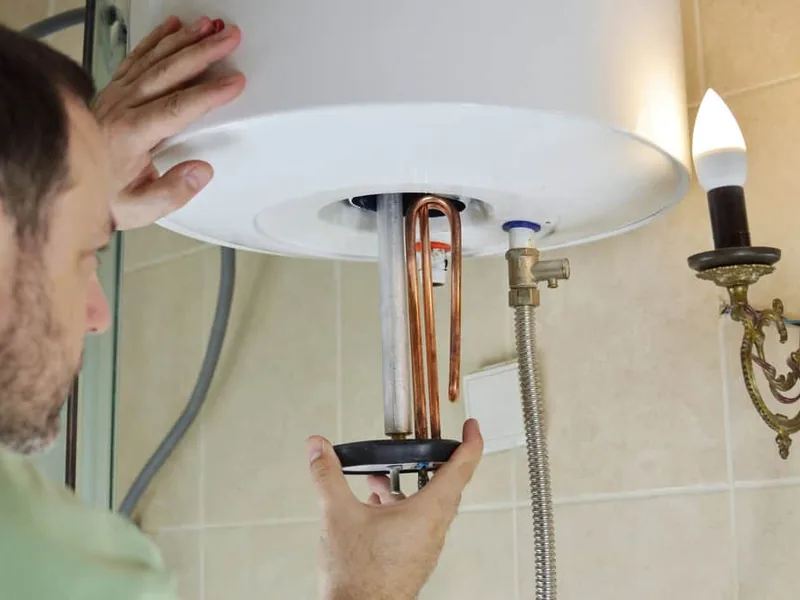
A professional anode rod replacement in a Bellingham home follows a careful sequence, and skipping steps is how DIY attempts go wrong. First we shut off the cold-water inlet and kill power at the breaker — or turn a gas control to pilot — because you never open a live, pressurized tank. Then we relieve pressure through a hot tap and drain a few gallons so the water level drops below the rod port. The old rod unthreads from its hex head at the tank top; on older 02019 tanks this fitting is often seized, which is where an impact wrench and experience matter — brute force in the wrong direction can twist the tank itself. We extract the rod fully, inspect it with you, and thread in the new one with proper sealant. Then the tank refills, air purges from the lines, power or gas comes back on, and we verify clear, odor-free hot water at the tap. Start to finish, most Bellingham jobs run sixty to ninety minutes.
Many Bellingham tanks sit in cramped utility closets in the older mill-village homes, so we stock flexible segmented rods for low-clearance installs. We shut down water and power, relieve pressure, extract the old rod for your inspection, and install the correct alloy for your water — then verify with a hot-water draw at the tap.
Picking the Right Rod for Your Water
Powered anode rods — also called impressed-current anodes — are the definitive answer for Bellingham's most aggressive water. Instead of dissolving sacrificial metal, a powered rod uses a tiny electrical current from a wall outlet to halt corrosion electrochemically. It never depletes, never needs replacement, and it eliminates sulfur odor because there's no degrading magnesium for bacteria to feed on. For well supplies around 02019 that eat a magnesium rod in two to three years, the economics are compelling: one powered rod instead of three or four sacrificial swaps over the tank's life, with continuous protection throughout. Installation is the same ninety-minute visit plus plugging in a small power supply. The upfront part cost is higher than a sacrificial rod, but for aggressive-water homes in mill-village homes and 1990s subdivisions, it's the last anode decision the tank will ever need.
Magnesium rods are the factory default in most tanks, and on kind water they're perfectly fine — magnesium is the most electrochemically active common anode material, which means it protects aggressively. The tradeoff is lifespan: on Bellingham's mix of town water and private wells, a magnesium rod typically gives four to six years, and on aggressive well supplies sometimes half that. The other magnesium quirk matters in Bellingham's well-water neighborhoods: as magnesium degrades, sulfur-reducing bacteria feed on it, producing the rotten-egg hot-water smell. So magnesium is the right call for municipal-water tanks without odor issues — strong protection, standard lifespan, lowest part cost — and the wrong call where well water brings sulfur bacteria or very low pH. We stock magnesium for the tanks it suits and steer the rest toward better options.
Making the Next Rod Last Longer
The replacement is only half the job — the other half is the inspection rhythm that keeps the tank protected from here on. On Bellingham's mix of town water and private wells, the honest intervals are: municipal water, check every four to five years; mixed or moderately aggressive well water, every three; the truly aggressive well supplies around 02019, every two. 'Check' means pulling the rod and looking, not guessing from the calendar — water chemistry varies street by street, and the rod's actual condition is the only reliable gauge. In mill-village homes and 1990s subdivisions, we leave every homeowner with the tank's birthdate from the serial number and a recommended next-check date written down, because the number-one reason rods die unnoticed is that nobody writes anything down. A two-minute inspection every few years is what stands between a twenty-year tank and a ten-year tank.
Here's the candid part: sometimes a new rod isn't the right answer, and we'd rather tell you than sell you. If the tank's bottom seam is already rusting through, if the jacket shows deep exterior corrosion, if the serial number says the unit is past fifteen years on aggressive water — a fresh rod buys months, not years, and the honest recommendation is planning a replacement on your schedule instead of the tank's. In Bellingham's older housing, mill-village homes and 1990s subdivisions included, we have this conversation regularly, and homeowners consistently prefer hearing it before the basement floods. The rod inspection is what makes the call possible: with the old rod out and the tank's condition in front of us, we can distinguish the sound ten-year-old tank that deserves five more years from the terminal fifteen-year-old that doesn't. Either way, the (833) 713-2101 visit ends with a clear plan, not a guess.
One Call, Protected Tank
We serve all of Bellingham and the surrounding towns from our 02019-area base — mill-village homes and 1990s subdivisions, downtown streets, and everything in between — with rod replacements, full water-heater service, and 24/7 emergency leak response on the same trucks. Calls to (833) 713-2101 are answered by people who know water heaters, not a phone tree; describe the rusty water or the sulfur smell and you'll get a straight answer about what it likely is and what it takes to fix. Evenings and weekends included. If your tank is past year five and the rod has never been checked, today's the day to find out what's left in there — before the tank starts telling you with rust. Water Heater Leak Repair Crew: call (833) 713-2101, ask a pro, get it handled.