What Makes 02766 Tough on Anode Rods
Norton straddles two water worlds, and anode rods age differently in each. The town-center neighborhoods on municipal water get the predictable timeline — chlorinated supply, about five years per magnesium rod, then protection lapses. But the rural homesteads on private wells face faster depletion: soft, slightly acidic groundwater that can cut a rod's life to three years, plus the sulfur-bacteria odor that makes magnesium rods a liability rather than an asset. Wheaton College's orbit adds a third pattern — older rental housing with tanks that haven't been serviced in anyone's memory, running unprotected for a decade. The through-line: almost nobody in Norton has ever had the rod checked, and the tanks are paying for it from the inside. We pull the rod, read what the water did to it, and match the replacement to the supply — aluminum/zinc for odor-prone wells, standard magnesium where town water is kind, powered anodes for the most aggressive wells.
How to Tell Your Anode Rod Is Finished
The anode rod's job description is simple: die so the tank may live. It's a magnesium or aluminum/zinc core threaded into the top of the tank, and through basic electrochemistry it draws corrosion to itself instead of the steel lining. Norton's town and well water dissolves a little of it with every gallon heated — there's no way to pause the process, only to replace the rod when it's spent. In Norton homes, the typical magnesium rod lasts four to six years; aluminum/zinc stretches longer, and aggressive well supplies can cut either figure in half. The cruel part is the silence: a depleting rod gives no alarm. The first symptom is usually rusty hot water — the tank itself beginning to contribute rust because its protector is gone — or a sulfur smell as bacteria colonize the degrading magnesium. By the time you notice, the tank has been unprotected for months.
Rotten-egg hot water in Norton's well neighborhoods is the signature magnesium-rod failure. On town water, watch for rusty first-draw water, metallic taste, tanks past year six with no history — and near the college, any tank of unknown age in a rental deserves an inspection on principle.
Ninety Minutes That Add Years to Your Tank
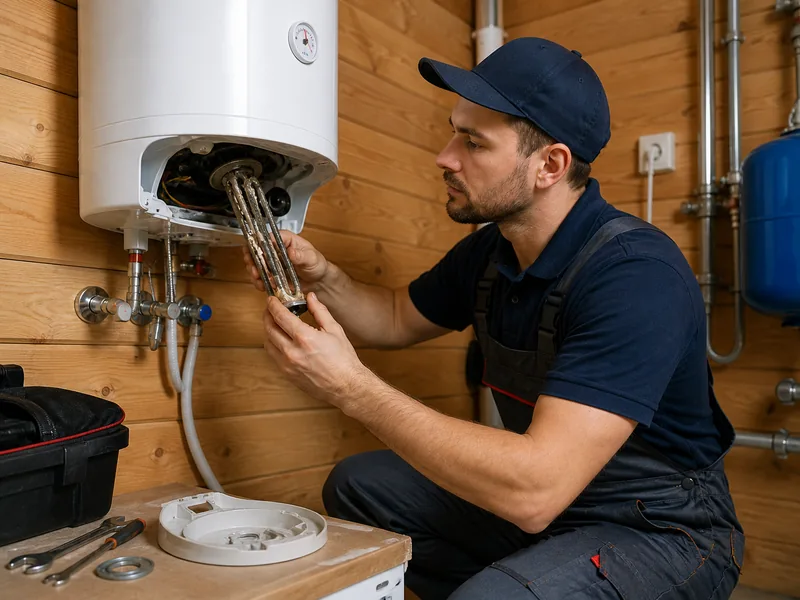
A professional anode rod replacement in a Norton home follows a careful sequence, and skipping steps is how DIY attempts go wrong. First we shut off the cold-water inlet and kill power at the breaker — or turn a gas control to pilot — because you never open a live, pressurized tank. Then we relieve pressure through a hot tap and drain a few gallons so the water level drops below the rod port. The old rod unthreads from its hex head at the tank top; on older 02766 tanks this fitting is often seized, which is where an impact wrench and experience matter — brute force in the wrong direction can twist the tank itself. We extract the rod fully, inspect it with you, and thread in the new one with proper sealant. Then the tank refills, air purges from the lines, power or gas comes back on, and we verify clear, odor-free hot water at the tap. Start to finish, most Norton jobs run sixty to ninety minutes.
Norton jobs range from open farmhouse basements to cramped rental utility closets, so we carry both standard and segmented flex rods. Well pump handled correctly during service, old rod extracted for your inspection, matched alloy installed, system refilled and hot water verified at the tap.
Picking the Right Rod for Your Water
Aluminum/zinc alloy rods are the workhorse upgrade for Norton's problem-water homes. The alloy sacrifices more slowly than pure magnesium, so it lasts longer — often seven-plus years on the same water that eats magnesium in four — and crucially, it doesn't feed sulfur bacteria the way magnesium does. For the rotten-egg hot water complaints we see across 02766's well-water pockets, swapping magnesium for aluminum/zinc frequently ends the odor within days while restoring full corrosion protection. The tradeoff is slightly less aggressive protection than magnesium, which is irrelevant in practice for residential tanks — the alloy still vastly out-protects a depleted rod, which is the actual alternative. When a Norton homeowner reports sulfur smell plus an aging tank, aluminum/zinc is usually our first recommendation, and the results speak at the tap.
The decision framework we use on 02766 service calls is straightforward. Start with the water: municipal supply without odor gets magnesium or aluminum/zinc on a five-year check rhythm. Well water with sulfur smell gets aluminum/zinc or powered — never magnesium, which feeds the odor. Aggressive low-pH well water that has eaten rods in under three years gets powered, full stop. Then consider the tank: a young tank deserves the rod that maximizes its full lifespan; a ten-year-old tank gets the rod that protects its remaining years most economically. And consider access: low-clearance installs in Wheaton-area colonials and rural homesteads may dictate segmented flex rods regardless of alloy. We walk every Norton homeowner through this in plain language, with the old rod in hand as evidence — because the right rod is the one matched to your water, your tank, and your house.
After the Swap: Protecting Your Investment
The anode rod doesn't work alone — it's half of a two-part protection system, and the other half is flushing. Norton's town and well water lays down sediment in every tank: mineral particulate that settles to the bottom, buries the lower heating element or insulates the burner, and creates the popping and rumbling Norton homeowners hear from neglected units. Sediment also matters for the rod's world: a tank choked with sediment runs hotter at the bottom, accelerating the corrosion chemistry the rod is fighting. That's why our 02766 rod visits include a drain-valve check and usually a flush — the fresh rod protects the steel while the flush removes the sediment working against it. Going forward, annual flushing plus the rod-check rhythm above is the complete maintenance program, and it's the difference between tanks that die at ten years and tanks that serve at twenty.
The replacement is only half the job — the other half is the inspection rhythm that keeps the tank protected from here on. On Norton's town and well water, the honest intervals are: municipal water, check every four to five years; mixed or moderately aggressive well water, every three; the truly aggressive well supplies around 02766, every two. 'Check' means pulling the rod and looking, not guessing from the calendar — water chemistry varies street by street, and the rod's actual condition is the only reliable gauge. In Wheaton-area colonials and rural homesteads, we leave every homeowner with the tank's birthdate from the serial number and a recommended next-check date written down, because the number-one reason rods die unnoticed is that nobody writes anything down. A two-minute inspection every few years is what stands between a twenty-year tank and a ten-year tank.
Here's How Easy This Is
Calling (833) 713-2101 takes about two minutes, and here's exactly what happens. First, we ask four quick questions: gas or electric, how old the tank is (the serial number works if you're not sure), whether the hot water smells or runs rusty, and whether you're on town water or a well. Second, we schedule the visit — most Norton rod replacements happen within a day or two, and the job itself runs sixty to ninety minutes. Third, the tech arrives with standard, segmented flex, and powered rods on the truck, inspects your old rod with you, installs the right replacement, flushes the tank, and verifies clear hot water at the tap before leaving. No guesswork, no upsell theater — just the protection your tank should have had all along. Call (833) 713-2101 or ask for us by name: Water Heater Leak Repair Crew.