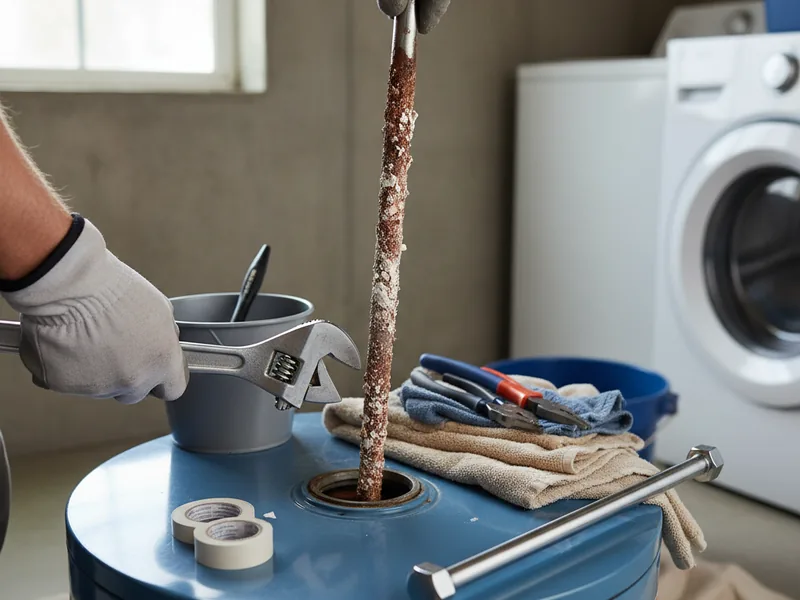
Why Plainville's Water Shortens Anode Rod Life
Plainville's postwar ranches are anode-rod time capsules. The neighborhoods built in the fifties and sixties run tanks that have been replaced once or twice — and almost never had the rod serviced in between. On the town's mixed water picture, depletion runs at two speeds: the municipal-supplied streets see the standard five-year magnesium lifespan, while the well-water pockets chew through rods in three to four years on softer, more acidic groundwater. The newer subdivisions have their own timeline — tanks from the 2000s building wave now entering the depletion window together. What we find in Plainville, consistently, is tanks running unprotected: rods reduced to wire, tank linings pitting, bottom welds rusting. The symptom homeowners notice first is usually rusty hot water in the morning, dismissed as old pipes. A fresh rod — magnesium for town water, aluminum/zinc for odor-prone wells — stops the internal corrosion and routinely adds five years to a sound tank.
Is Your Tank Running Without Protection?
The anode rod's job description is simple: die so the tank may live. It's a magnesium or aluminum/zinc core threaded into the top of the tank, and through basic electrochemistry it draws corrosion to itself instead of the steel lining. Plainville's mixed town and well water dissolves a little of it with every gallon heated — there's no way to pause the process, only to replace the rod when it's spent. In Plainville homes, the typical magnesium rod lasts four to six years; aluminum/zinc stretches longer, and aggressive well supplies can cut either figure in half. The cruel part is the silence: a depleting rod gives no alarm. The first symptom is usually rusty hot water — the tank itself beginning to contribute rust because its protector is gone — or a sulfur smell as bacteria colonize the degrading magnesium. By the time you notice, the tank has been unprotected for months.
Morning rusty-first-draw water in Plainville's ranches is the classic signal. Also: metallic or sulfur notes at the hot tap, tanks past year six (town water) or year four (well water) with no service record, and corrosion crusting the hex head.
From Inspection to Hot Water: The Process
The complication in postwar ranches and newer subdivisions is clearance: anode rods are long — often over forty inches — and many Plainville tanks sit under low ceilings, beneath stairs, or in closets where a rigid rod physically cannot be inserted. That's why we carry segmented flexible rods, which thread in section by section and perform identically once installed. The other common complication on 02762 service calls is the seized hex head — years of mineral exposure weld the fitting in place, and the correct answer is controlled torque with the tank properly braced, not a bigger cheater bar. We also manage the details homeowners forget: well-pump isolation on well-system homes so the pump doesn't dead-head during drain-down, thermal expansion considerations on closed systems, and a check of the temperature-and-pressure relief valve while we're at the tank. It's a small job done with full professionalism — because the tank's next five years depend on these details.
Ranch-house utility areas in Plainville are usually accessible with decent headroom — quick, clean rod swaps. We shut down water and power, relieve pressure, pull the old rod for your inspection, install the alloy matched to your street's water, and verify with a hot-water draw before we leave.
Not All Anode Rods Are the Same
Magnesium rods are the factory default in most tanks, and on kind water they're perfectly fine — magnesium is the most electrochemically active common anode material, which means it protects aggressively. The tradeoff is lifespan: on Plainville's mixed town and well water, a magnesium rod typically gives four to six years, and on aggressive well supplies sometimes half that. The other magnesium quirk matters in Plainville's well-water neighborhoods: as magnesium degrades, sulfur-reducing bacteria feed on it, producing the rotten-egg hot-water smell. So magnesium is the right call for municipal-water tanks without odor issues — strong protection, standard lifespan, lowest part cost — and the wrong call where well water brings sulfur bacteria or very low pH. We stock magnesium for the tanks it suits and steer the rest toward better options.
Aluminum/zinc alloy rods are the workhorse upgrade for Plainville's problem-water homes. The alloy sacrifices more slowly than pure magnesium, so it lasts longer — often seven-plus years on the same water that eats magnesium in four — and crucially, it doesn't feed sulfur bacteria the way magnesium does. For the rotten-egg hot water complaints we see across 02762's well-water pockets, swapping magnesium for aluminum/zinc frequently ends the odor within days while restoring full corrosion protection. The tradeoff is slightly less aggressive protection than magnesium, which is irrelevant in practice for residential tanks — the alloy still vastly out-protects a depleted rod, which is the actual alternative. When a Plainville homeowner reports sulfur smell plus an aging tank, aluminum/zinc is usually our first recommendation, and the results speak at the tap.
Keeping the Tank Protected Year After Year
The replacement is only half the job — the other half is the inspection rhythm that keeps the tank protected from here on. On Plainville's mixed town and well water, the honest intervals are: municipal water, check every four to five years; mixed or moderately aggressive well water, every three; the truly aggressive well supplies around 02762, every two. 'Check' means pulling the rod and looking, not guessing from the calendar — water chemistry varies street by street, and the rod's actual condition is the only reliable gauge. In postwar ranches and newer subdivisions, we leave every homeowner with the tank's birthdate from the serial number and a recommended next-check date written down, because the number-one reason rods die unnoticed is that nobody writes anything down. A two-minute inspection every few years is what stands between a twenty-year tank and a ten-year tank.
The anode rod doesn't work alone — it's half of a two-part protection system, and the other half is flushing. Plainville's mixed town and well water lays down sediment in every tank: mineral particulate that settles to the bottom, buries the lower heating element or insulates the burner, and creates the popping and rumbling Plainville homeowners hear from neglected units. Sediment also matters for the rod's world: a tank choked with sediment runs hotter at the bottom, accelerating the corrosion chemistry the rod is fighting. That's why our 02762 rod visits include a drain-valve check and usually a flush — the fresh rod protects the steel while the flush removes the sediment working against it. Going forward, annual flushing plus the rod-check rhythm above is the complete maintenance program, and it's the difference between tanks that die at ten years and tanks that serve at twenty.
One Call, Protected Tank
Calling (833) 713-2101 takes about two minutes, and here's exactly what happens. First, we ask four quick questions: gas or electric, how old the tank is (the serial number works if you're not sure), whether the hot water smells or runs rusty, and whether you're on town water or a well. Second, we schedule the visit — most Plainville rod replacements happen within a day or two, and the job itself runs sixty to ninety minutes. Third, the tech arrives with standard, segmented flex, and powered rods on the truck, inspects your old rod with you, installs the right replacement, flushes the tank, and verifies clear hot water at the tap before leaving. No guesswork, no upsell theater — just the protection your tank should have had all along. Call (833) 713-2101 or ask for us by name: Water Heater Leak Repair Crew.