Why Raynham's Water Shortens Anode Rod Life
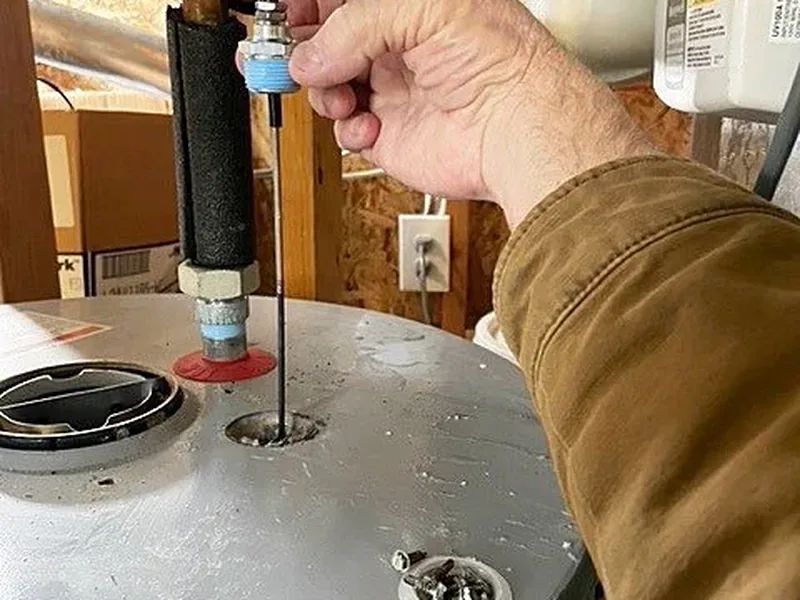
Raynham's suburban build-out stocked the town with water heaters that are now marching through the anode-depletion window in formation. The colonials and split-levels off the Route 44 corridor mostly date from the eighties through the 2000s, which puts their tanks at eight to twenty-plus years — and on the town's treated municipal water, a magnesium rod lasts about five to six years. Do the math and most Raynham tanks are running on their second or third depleted rod, which is to say, on no protection at all. The decision point we see constantly here: a ten-year-old tank with rusty hot water, where the homeowner assumes replacement is the only option. Often it isn't — if the tank bottom is still sound, a fresh rod halts the internal corrosion and buys five more years for a fraction of replacement cost. We make that call honestly, with the old rod in your hand and the tank's condition in front of us. In Raynham, the rod check is the most underused diagnostic in the house.
How to Tell Your Anode Rod Is Finished
Most Raynham tanks we open are running unprotected, and the homeowners had no idea anything was wrong — because a dying anode rod is invisible until it isn't. The early signs are subtle enough to dismiss: hot water with a faint metallic tang, a sulfur note at the hot tap that comes and goes, the occasional rusty tint in the morning shower that clears after a few seconds. Each one means the rod is past its effective life and the tank's steel is now in the corrosion path. In suburban colonials and split-levels off the Route 44 corridor, we also see the advanced signs: flaking rust around the tank's top fittings, a hex head at the tank top crusted with corrosion, and popping or rumbling from sediment that accumulated while nobody was maintaining the unit. A rod inspection takes minutes and answers the question definitively — we pull it, measure what's left, and show you. If there's meaningful metal remaining, the tank is protected; if it's a bare wire, every additional month is borrowed time.
Rusty first-draw hot water in the morning is Raynham's tell. Also: metallic taste, tanks in the 8-to-15-year range with no maintenance history, popping from sediment buildup, and visible corrosion around the tank's top fittings.
What Our Rod Replacement Visit Looks Like
What separates a proper rod replacement from a quick swap is everything we check while the tank is open in front of us. On every Raynham visit we read the serial number and date the tank, assess the bottom seam and welds for rust-through risk, check the drain valve's condition (a seized valve gets flagged before it becomes an emergency), test the T&P relief valve, and look at the inlet and outlet connections for the slow weeps that precede bigger leaks. Raynham's municipal water leaves readable signatures — the rod's condition tells us about pH and mineral load, sediment volume tells us about flushing history — and we translate all of it into plain guidance: how much life the tank likely has, what maintenance interval fits your water, and whether any companion work is worth doing now. You get a protected tank and a clear picture of its future, not just a part swapped in silence.
Raynham's suburban utility rooms and basement installs are typically straightforward — good access, full headroom. Water and power off, pressure relieved, old rod extracted and shown to you, new rod matched to the tank and water, system refilled, and hot water tested at the tap. Usually under ninety minutes.
The Rod Decision, Explained Plainly
Aluminum/zinc alloy rods are the workhorse upgrade for Raynham's problem-water homes. The alloy sacrifices more slowly than pure magnesium, so it lasts longer — often seven-plus years on the same water that eats magnesium in four — and crucially, it doesn't feed sulfur bacteria the way magnesium does. For the rotten-egg hot water complaints we see across 02767's well-water pockets, swapping magnesium for aluminum/zinc frequently ends the odor within days while restoring full corrosion protection. The tradeoff is slightly less aggressive protection than magnesium, which is irrelevant in practice for residential tanks — the alloy still vastly out-protects a depleted rod, which is the actual alternative. When a Raynham homeowner reports sulfur smell plus an aging tank, aluminum/zinc is usually our first recommendation, and the results speak at the tap.
Powered anode rods — also called impressed-current anodes — are the definitive answer for Raynham's most aggressive water. Instead of dissolving sacrificial metal, a powered rod uses a tiny electrical current from a wall outlet to halt corrosion electrochemically. It never depletes, never needs replacement, and it eliminates sulfur odor because there's no degrading magnesium for bacteria to feed on. For well supplies around 02767 that eat a magnesium rod in two to three years, the economics are compelling: one powered rod instead of three or four sacrificial swaps over the tank's life, with continuous protection throughout. Installation is the same ninety-minute visit plus plugging in a small power supply. The upfront part cost is higher than a sacrificial rod, but for aggressive-water homes in suburban colonials and split-levels off the Route 44 corridor, it's the last anode decision the tank will ever need.
Keeping the Tank Protected Year After Year
The anode rod doesn't work alone — it's half of a two-part protection system, and the other half is flushing. Raynham's municipal water lays down sediment in every tank: mineral particulate that settles to the bottom, buries the lower heating element or insulates the burner, and creates the popping and rumbling Raynham homeowners hear from neglected units. Sediment also matters for the rod's world: a tank choked with sediment runs hotter at the bottom, accelerating the corrosion chemistry the rod is fighting. That's why our 02767 rod visits include a drain-valve check and usually a flush — the fresh rod protects the steel while the flush removes the sediment working against it. Going forward, annual flushing plus the rod-check rhythm above is the complete maintenance program, and it's the difference between tanks that die at ten years and tanks that serve at twenty.
Here's the candid part: sometimes a new rod isn't the right answer, and we'd rather tell you than sell you. If the tank's bottom seam is already rusting through, if the jacket shows deep exterior corrosion, if the serial number says the unit is past fifteen years on aggressive water — a fresh rod buys months, not years, and the honest recommendation is planning a replacement on your schedule instead of the tank's. In Raynham's older housing, suburban colonials and split-levels off the Route 44 corridor included, we have this conversation regularly, and homeowners consistently prefer hearing it before the basement floods. The rod inspection is what makes the call possible: with the old rod out and the tank's condition in front of us, we can distinguish the sound ten-year-old tank that deserves five more years from the terminal fifteen-year-old that doesn't. Either way, the (833) 713-2101 visit ends with a clear plan, not a guess.
Talk to a Tech Today
Calling (833) 713-2101 takes about two minutes, and here's exactly what happens. First, we ask four quick questions: gas or electric, how old the tank is (the serial number works if you're not sure), whether the hot water smells or runs rusty, and whether you're on town water or a well. Second, we schedule the visit — most Raynham rod replacements happen within a day or two, and the job itself runs sixty to ninety minutes. Third, the tech arrives with standard, segmented flex, and powered rods on the truck, inspects your old rod with you, installs the right replacement, flushes the tank, and verifies clear hot water at the tap before leaving. No guesswork, no upsell theater — just the protection your tank should have had all along. Call (833) 713-2101 or ask for us by name: Water Heater Leak Repair Crew.