What Makes 02769 Tough on Anode Rods
Rehoboth is the most demanding water in our entire service area for anode rods, and it's not close. The town runs almost entirely on private wells drawing from granite bedrock — soft, often acidic groundwater that dissolves magnesium anodes with startling speed. A rod rated for six years on municipal water can be a bare wire in twenty-four to thirty months here. Rehoboth's horse properties compound it: high hot-water demand means more water cycling through the tank, more fresh corrosive water meeting the rod, faster depletion. And the sulfur bacteria common in these wells turn degrading magnesium rods into rotten-egg odor factories — the smell that convinces homeowners their well has gone bad when it's actually the water heater. For Rehoboth, we almost never recommend another magnesium rod. Aluminum/zinc alloy handles the odor; powered anodes — which protect with electrical current instead of dissolving metal — are the definitive answer for the most aggressive wells, never needing replacement at all. Given what Rehoboth water does to tanks, the rod decision is the single highest-leverage maintenance call in the house.
The Warning Signs Most Homeowners Miss
The anode rod's job description is simple: die so the tank may live. It's a magnesium or aluminum/zinc core threaded into the top of the tank, and through basic electrochemistry it draws corrosion to itself instead of the steel lining. Rehoboth's private well water dissolves a little of it with every gallon heated — there's no way to pause the process, only to replace the rod when it's spent. In Rehoboth homes, the typical magnesium rod lasts four to six years; aluminum/zinc stretches longer, and aggressive well supplies can cut either figure in half. The cruel part is the silence: a depleting rod gives no alarm. The first symptom is usually rusty hot water — the tank itself beginning to contribute rust because its protector is gone — or a sulfur smell as bacteria colonize the degrading magnesium. By the time you notice, the tank has been unprotected for months.
In Rehoboth, inspect rods every two years — not five. Rotten-egg hot water, rusty first-draw water, tanks past year three on well water with no service history, and rumbling sediment are all urgent signals that protection is gone.
How We Swap a Rod Without the Drama
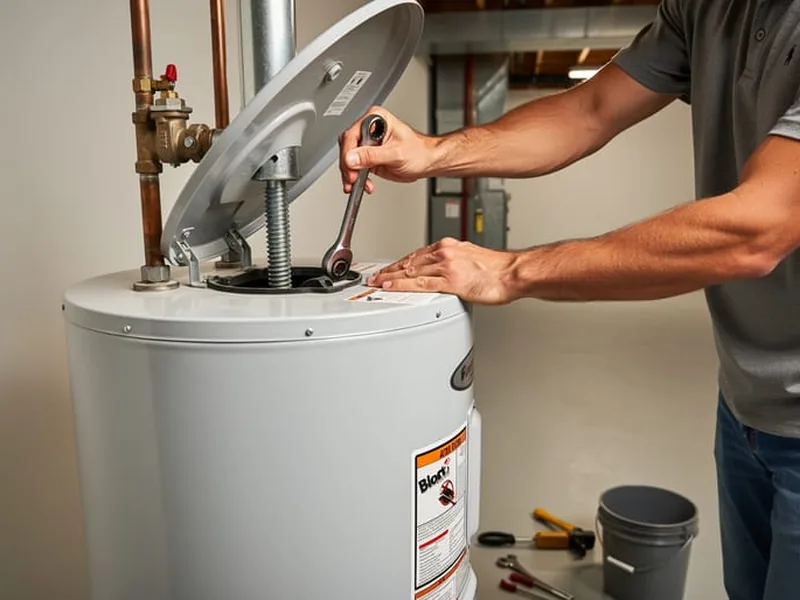
The complication in antique colonials and horse properties on well-and-septic acreage is clearance: anode rods are long — often over forty inches — and many Rehoboth tanks sit under low ceilings, beneath stairs, or in closets where a rigid rod physically cannot be inserted. That's why we carry segmented flexible rods, which thread in section by section and perform identically once installed. The other common complication on 02769 service calls is the seized hex head — years of mineral exposure weld the fitting in place, and the correct answer is controlled torque with the tank properly braced, not a bigger cheater bar. We also manage the details homeowners forget: well-pump isolation on well-system homes so the pump doesn't dead-head during drain-down, thermal expansion considerations on closed systems, and a check of the temperature-and-pressure relief valve while we're at the tank. It's a small job done with full professionalism — because the tank's next five years depend on these details.
Rehoboth's farmhouses and colonials usually give us good working room, and we manage the well pump correctly through every drain-down. Old rod out and shown to you — you'll see exactly what the well did to it — then the matched alloy or powered unit goes in, and we verify odor-free, clear hot water at the tap.
Which Rod Your Tank Actually Wants
Aluminum/zinc alloy rods are the workhorse upgrade for Rehoboth's problem-water homes. The alloy sacrifices more slowly than pure magnesium, so it lasts longer — often seven-plus years on the same water that eats magnesium in four — and crucially, it doesn't feed sulfur bacteria the way magnesium does. For the rotten-egg hot water complaints we see across 02769's well-water pockets, swapping magnesium for aluminum/zinc frequently ends the odor within days while restoring full corrosion protection. The tradeoff is slightly less aggressive protection than magnesium, which is irrelevant in practice for residential tanks — the alloy still vastly out-protects a depleted rod, which is the actual alternative. When a Rehoboth homeowner reports sulfur smell plus an aging tank, aluminum/zinc is usually our first recommendation, and the results speak at the tap.
The decision framework we use on 02769 service calls is straightforward. Start with the water: municipal supply without odor gets magnesium or aluminum/zinc on a five-year check rhythm. Well water with sulfur smell gets aluminum/zinc or powered — never magnesium, which feeds the odor. Aggressive low-pH well water that has eaten rods in under three years gets powered, full stop. Then consider the tank: a young tank deserves the rod that maximizes its full lifespan; a ten-year-old tank gets the rod that protects its remaining years most economically. And consider access: low-clearance installs in antique colonials and horse properties on well-and-septic acreage may dictate segmented flex rods regardless of alloy. We walk every Rehoboth homeowner through this in plain language, with the old rod in hand as evidence — because the right rod is the one matched to your water, your tank, and your house.
After the Swap: Protecting Your Investment
The anode rod doesn't work alone — it's half of a two-part protection system, and the other half is flushing. Rehoboth's private well water lays down sediment in every tank: mineral particulate that settles to the bottom, buries the lower heating element or insulates the burner, and creates the popping and rumbling Rehoboth homeowners hear from neglected units. Sediment also matters for the rod's world: a tank choked with sediment runs hotter at the bottom, accelerating the corrosion chemistry the rod is fighting. That's why our 02769 rod visits include a drain-valve check and usually a flush — the fresh rod protects the steel while the flush removes the sediment working against it. Going forward, annual flushing plus the rod-check rhythm above is the complete maintenance program, and it's the difference between tanks that die at ten years and tanks that serve at twenty.
The replacement is only half the job — the other half is the inspection rhythm that keeps the tank protected from here on. On Rehoboth's private well water, the honest intervals are: municipal water, check every four to five years; mixed or moderately aggressive well water, every three; the truly aggressive well supplies around 02769, every two. 'Check' means pulling the rod and looking, not guessing from the calendar — water chemistry varies street by street, and the rod's actual condition is the only reliable gauge. In antique colonials and horse properties on well-and-septic acreage, we leave every homeowner with the tank's birthdate from the serial number and a recommended next-check date written down, because the number-one reason rods die unnoticed is that nobody writes anything down. A two-minute inspection every few years is what stands between a twenty-year tank and a ten-year tank.
Here's How Easy This Is
Calling (833) 713-2101 takes about two minutes, and here's exactly what happens. First, we ask four quick questions: gas or electric, how old the tank is (the serial number works if you're not sure), whether the hot water smells or runs rusty, and whether you're on town water or a well. Second, we schedule the visit — most Rehoboth rod replacements happen within a day or two, and the job itself runs sixty to ninety minutes. Third, the tech arrives with standard, segmented flex, and powered rods on the truck, inspects your old rod with you, installs the right replacement, flushes the tank, and verifies clear hot water at the tap before leaving. No guesswork, no upsell theater — just the protection your tank should have had all along. Call (833) 713-2101 or ask for us by name: Water Heater Leak Repair Crew.