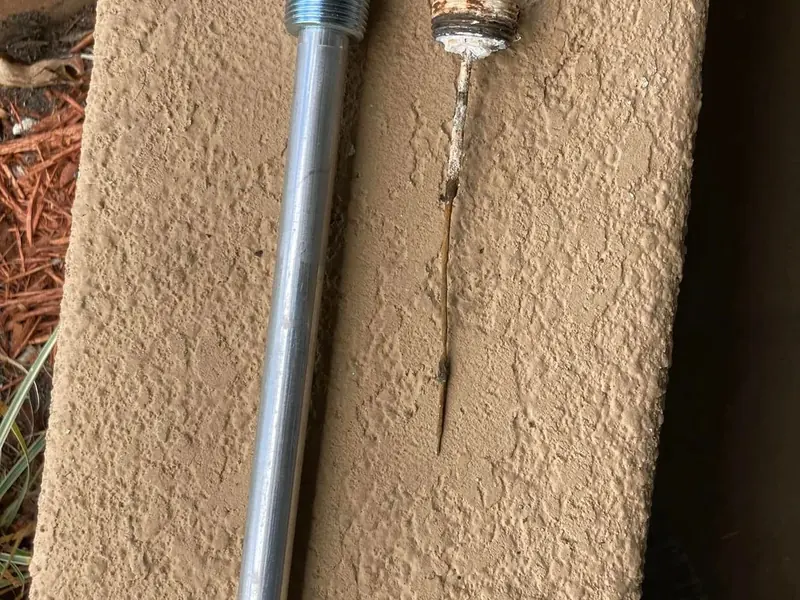
Why Seekonk's Water Shortens Anode Rod Life
Seekonk's position on the Providence line gives it a split water personality that shows up directly in anode-rod life. The neighborhoods on district water get the steady municipal timeline — chlorinated supply, roughly five to six years per magnesium rod, predictable and manageable. But Seekonk's well-water pockets tell the faster story: softer, sometimes acidic groundwater that can halve a rod's life, plus the sulfur-bacteria odor that turns a degrading magnesium rod into a rotten-egg problem at the hot tap. The town's ranches and colonials run the full age range — postwar originals with tanks old enough to vote, alongside newer builds with mid-life units entering the depletion window. Across all of it, the pattern holds: nobody has checked the rod, and the tank is paying for it internally. We pull the old rod, read your water's signature in its condition, and install the match — magnesium where district water is kind, aluminum/zinc where wells bring odor, powered anodes where the water is truly aggressive.
Is Your Tank Running Without Protection?
The anode rod's job description is simple: die so the tank may live. It's a magnesium or aluminum/zinc core threaded into the top of the tank, and through basic electrochemistry it draws corrosion to itself instead of the steel lining. Seekonk's district and well water dissolves a little of it with every gallon heated — there's no way to pause the process, only to replace the rod when it's spent. In Seekonk homes, the typical magnesium rod lasts four to six years; aluminum/zinc stretches longer, and aggressive well supplies can cut either figure in half. The cruel part is the silence: a depleting rod gives no alarm. The first symptom is usually rusty hot water — the tank itself beginning to contribute rust because its protector is gone — or a sulfur smell as bacteria colonize the degrading magnesium. By the time you notice, the tank has been unprotected for months.
Sulfur smell at the hot tap in Seekonk's well pockets is the headline symptom. Elsewhere: rusty first-draw water, metallic taste, tanks past year six (district) or year four (well) with no service history, and crust on the hex head.
The Replacement, Step by Step
A professional anode rod replacement in a Seekonk home follows a careful sequence, and skipping steps is how DIY attempts go wrong. First we shut off the cold-water inlet and kill power at the breaker — or turn a gas control to pilot — because you never open a live, pressurized tank. Then we relieve pressure through a hot tap and drain a few gallons so the water level drops below the rod port. The old rod unthreads from its hex head at the tank top; on older 02771 tanks this fitting is often seized, which is where an impact wrench and experience matter — brute force in the wrong direction can twist the tank itself. We extract the rod fully, inspect it with you, and thread in the new one with proper sealant. Then the tank refills, air purges from the lines, power or gas comes back on, and we verify clear, odor-free hot water at the tap. Start to finish, most Seekonk jobs run sixty to ninety minutes.
Seekonk's ranch utility areas and basement installs are typically accessible — clean, quick swaps. We handle well-pump isolation correctly on well-system calls, extract the old rod for your inspection, install the matched alloy or powered unit, and confirm clear, odor-free hot water at the tap.
Which Rod Your Tank Actually Wants
Aluminum/zinc alloy rods are the workhorse upgrade for Seekonk's problem-water homes. The alloy sacrifices more slowly than pure magnesium, so it lasts longer — often seven-plus years on the same water that eats magnesium in four — and crucially, it doesn't feed sulfur bacteria the way magnesium does. For the rotten-egg hot water complaints we see across 02771's well-water pockets, swapping magnesium for aluminum/zinc frequently ends the odor within days while restoring full corrosion protection. The tradeoff is slightly less aggressive protection than magnesium, which is irrelevant in practice for residential tanks — the alloy still vastly out-protects a depleted rod, which is the actual alternative. When a Seekonk homeowner reports sulfur smell plus an aging tank, aluminum/zinc is usually our first recommendation, and the results speak at the tap.
Powered anode rods — also called impressed-current anodes — are the definitive answer for Seekonk's most aggressive water. Instead of dissolving sacrificial metal, a powered rod uses a tiny electrical current from a wall outlet to halt corrosion electrochemically. It never depletes, never needs replacement, and it eliminates sulfur odor because there's no degrading magnesium for bacteria to feed on. For well supplies around 02771 that eat a magnesium rod in two to three years, the economics are compelling: one powered rod instead of three or four sacrificial swaps over the tank's life, with continuous protection throughout. Installation is the same ninety-minute visit plus plugging in a small power supply. The upfront part cost is higher than a sacrificial rod, but for aggressive-water homes in suburban ranches and colonials near the Providence line, it's the last anode decision the tank will ever need.
Keeping the Tank Protected Year After Year
Here's the candid part: sometimes a new rod isn't the right answer, and we'd rather tell you than sell you. If the tank's bottom seam is already rusting through, if the jacket shows deep exterior corrosion, if the serial number says the unit is past fifteen years on aggressive water — a fresh rod buys months, not years, and the honest recommendation is planning a replacement on your schedule instead of the tank's. In Seekonk's older housing, suburban ranches and colonials near the Providence line included, we have this conversation regularly, and homeowners consistently prefer hearing it before the basement floods. The rod inspection is what makes the call possible: with the old rod out and the tank's condition in front of us, we can distinguish the sound ten-year-old tank that deserves five more years from the terminal fifteen-year-old that doesn't. Either way, the (833) 713-2101 visit ends with a clear plan, not a guess.
The anode rod doesn't work alone — it's half of a two-part protection system, and the other half is flushing. Seekonk's district and well water lays down sediment in every tank: mineral particulate that settles to the bottom, buries the lower heating element or insulates the burner, and creates the popping and rumbling Seekonk homeowners hear from neglected units. Sediment also matters for the rod's world: a tank choked with sediment runs hotter at the bottom, accelerating the corrosion chemistry the rod is fighting. That's why our 02771 rod visits include a drain-valve check and usually a flush — the fresh rod protects the steel while the flush removes the sediment working against it. Going forward, annual flushing plus the rod-check rhythm above is the complete maintenance program, and it's the difference between tanks that die at ten years and tanks that serve at twenty.
Here's How Easy This Is
You don't need to prepare anything before we arrive — but two things help the visit go faster. First, clear a working path to the tank; in suburban ranches and colonials near the Providence line that sometimes means shifting stored items in a basement or utility room, and the tech will need about three feet of headroom (we bring flex rods where that's impossible). Second, know your water: town or well, and whether the hot water has smelled like sulfur — that single detail often determines the rod alloy before we even pull the old one. Everything else we handle: water and power shutdown, pressure relief, the seized-fitting wrestling that older 02771 tanks always provide, sealant, refill, and testing. When we're done, you'll have seen your old rod, you'll know your tank's real condition, and you'll have a next-check date. That's the whole job. Reach us at (833) 713-2101.