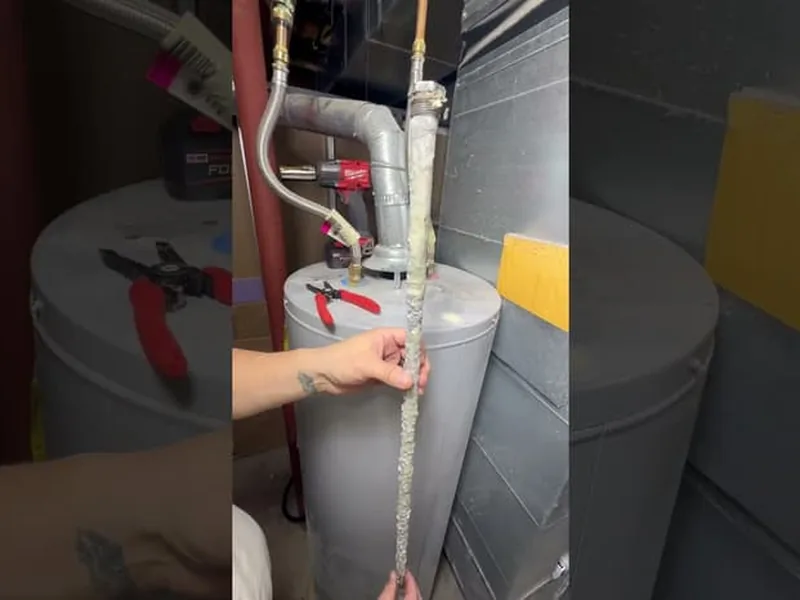
What Makes 02726 Tough on Anode Rods
Somerset's riverfront location writes a two-front corrosion story. Inside the tank, the town's treated municipal water consumes magnesium anodes on the standard five-to-six-year timeline — predictable, manageable, and almost universally ignored. Outside the tank, the Taunton River humidity works the jacket, the top fittings, and the piping connections: riverfront cottages and low-lying homes run damp basements where exterior corrosion advances faster than inland. The combination means Somerset tanks get attacked from both sides, and the anode rod is the only defense for the interior — the side you can't see. We see Somerset tanks where the exterior looks rough but the interior was saved by a timely rod swap, and plenty where both sides lost. The riverfront cottages deserve special attention: older, smaller tanks in humid utility spaces, often past year ten with original rods long gone. A fresh rod plus attention to the exterior corrosion is the move — and we do both in one visit.
Is Your Tank Running Without Protection?
Most Somerset tanks we open are running unprotected, and the homeowners had no idea anything was wrong — because a dying anode rod is invisible until it isn't. The early signs are subtle enough to dismiss: hot water with a faint metallic tang, a sulfur note at the hot tap that comes and goes, the occasional rusty tint in the morning shower that clears after a few seconds. Each one means the rod is past its effective life and the tank's steel is now in the corrosion path. In riverfront cottages and mid-century homes along the Taunton River, we also see the advanced signs: flaking rust around the tank's top fittings, a hex head at the tank top crusted with corrosion, and popping or rumbling from sediment that accumulated while nobody was maintaining the unit. A rod inspection takes minutes and answers the question definitively — we pull it, measure what's left, and show you. If there's meaningful metal remaining, the tank is protected; if it's a bare wire, every additional month is borrowed time.
In Somerset, check both sides of the tank: rusty hot water or metallic taste (interior protection gone) plus visible rust blooming on the jacket or fittings (exterior humidity winning). Tanks past year six with no service history — especially riverfront — need a rod inspection.
From Inspection to Hot Water: The Process
A professional anode rod replacement in a Somerset home follows a careful sequence, and skipping steps is how DIY attempts go wrong. First we shut off the cold-water inlet and kill power at the breaker — or turn a gas control to pilot — because you never open a live, pressurized tank. Then we relieve pressure through a hot tap and drain a few gallons so the water level drops below the rod port. The old rod unthreads from its hex head at the tank top; on older 02726 tanks this fitting is often seized, which is where an impact wrench and experience matter — brute force in the wrong direction can twist the tank itself. We extract the rod fully, inspect it with you, and thread in the new one with proper sealant. Then the tank refills, air purges from the lines, power or gas comes back on, and we verify clear, odor-free hot water at the tap. Start to finish, most Somerset jobs run sixty to ninety minutes.
Riverfront installs sometimes mean tight cottage utility spaces or damp basements — we bring segmented flex rods and work clean. Water and power off, pressure relieved, old rod extracted for your inspection, matched new rod installed, and we flag any exterior corrosion or piping issues we spot while we're in there.
Not All Anode Rods Are the Same
The decision framework we use on 02726 service calls is straightforward. Start with the water: municipal supply without odor gets magnesium or aluminum/zinc on a five-year check rhythm. Well water with sulfur smell gets aluminum/zinc or powered — never magnesium, which feeds the odor. Aggressive low-pH well water that has eaten rods in under three years gets powered, full stop. Then consider the tank: a young tank deserves the rod that maximizes its full lifespan; a ten-year-old tank gets the rod that protects its remaining years most economically. And consider access: low-clearance installs in riverfront cottages and mid-century homes along the Taunton River may dictate segmented flex rods regardless of alloy. We walk every Somerset homeowner through this in plain language, with the old rod in hand as evidence — because the right rod is the one matched to your water, your tank, and your house.
Magnesium rods are the factory default in most tanks, and on kind water they're perfectly fine — magnesium is the most electrochemically active common anode material, which means it protects aggressively. The tradeoff is lifespan: on Somerset's municipal water, a magnesium rod typically gives four to six years, and on aggressive well supplies sometimes half that. The other magnesium quirk matters in Somerset's well-water neighborhoods: as magnesium degrades, sulfur-reducing bacteria feed on it, producing the rotten-egg hot-water smell. So magnesium is the right call for municipal-water tanks without odor issues — strong protection, standard lifespan, lowest part cost — and the wrong call where well water brings sulfur bacteria or very low pH. We stock magnesium for the tanks it suits and steer the rest toward better options.
What to Do Differently From Here On
The replacement is only half the job — the other half is the inspection rhythm that keeps the tank protected from here on. On Somerset's municipal water, the honest intervals are: municipal water, check every four to five years; mixed or moderately aggressive well water, every three; the truly aggressive well supplies around 02726, every two. 'Check' means pulling the rod and looking, not guessing from the calendar — water chemistry varies street by street, and the rod's actual condition is the only reliable gauge. In riverfront cottages and mid-century homes along the Taunton River, we leave every homeowner with the tank's birthdate from the serial number and a recommended next-check date written down, because the number-one reason rods die unnoticed is that nobody writes anything down. A two-minute inspection every few years is what stands between a twenty-year tank and a ten-year tank.
The anode rod doesn't work alone — it's half of a two-part protection system, and the other half is flushing. Somerset's municipal water lays down sediment in every tank: mineral particulate that settles to the bottom, buries the lower heating element or insulates the burner, and creates the popping and rumbling Somerset homeowners hear from neglected units. Sediment also matters for the rod's world: a tank choked with sediment runs hotter at the bottom, accelerating the corrosion chemistry the rod is fighting. That's why our 02726 rod visits include a drain-valve check and usually a flush — the fresh rod protects the steel while the flush removes the sediment working against it. Going forward, annual flushing plus the rod-check rhythm above is the complete maintenance program, and it's the difference between tanks that die at ten years and tanks that serve at twenty.
Talk to a Tech Today
You don't need to prepare anything before we arrive — but two things help the visit go faster. First, clear a working path to the tank; in riverfront cottages and mid-century homes along the Taunton River that sometimes means shifting stored items in a basement or utility room, and the tech will need about three feet of headroom (we bring flex rods where that's impossible). Second, know your water: town or well, and whether the hot water has smelled like sulfur — that single detail often determines the rod alloy before we even pull the old one. Everything else we handle: water and power shutdown, pressure relief, the seized-fitting wrestling that older 02726 tanks always provide, sealant, refill, and testing. When we're done, you'll have seen your old rod, you'll know your tank's real condition, and you'll have a next-check date. That's the whole job. Reach us at (833) 713-2101.