Swansea Water vs. Your Anode Rod
Swansea's housing splits between year-round suburbia and the bay-side cottages of Gardners Neck, and anode rods matter in both — differently. The suburban colonials run on district water with the standard five-to-six-year magnesium timeline; most are mid-life tanks whose rods are due or overdue. The Gardners Neck cottages are the special case: older, smaller tanks, some in seasonal or part-time homes where the water sits stagnant for weeks — stagnant water accelerates the bacterial activity that degrades magnesium rods and produces sulfur odor. A cottage tank that sits unused all winter can come back to rotten-egg hot water in spring, and the culprit is usually the rod, not the well or the district supply. Seasonal homes also run tanks in unheated spaces, where cold ambient air works the exterior while the interior protection quietly lapses. For Swansea, the rod check belongs on the seasonal open-up checklist alongside everything else — a fresh rod in spring means odor-free, protected hot water all summer.
How to Tell Your Anode Rod Is Finished
Here's the honest diagnostic we run on every 02777 service call: we read the tank's serial number for its age, check the water type feeding it, and pull the anode rod for direct inspection. A healthy rod looks like a solid metal core, maybe pitted. A dying one is thin, deeply pitted, or coated in calcium. A dead one is a bare steel wire with the sacrificial metal completely gone — and in Swansea, on Swansea's district water, we find dead ones in tanks as young as four years when well water is aggressive. The inspection also tells us about the tank: heavy rust staining around the rod port or the top fittings suggests the corrosion has spread beyond what a new rod can reverse. That's the fork in the road — a sound tank gets a fresh rod and five more years; a tank that's already rusting through gets an honest recommendation instead of a part it can't use. Either way, you get the truth, not a sales pitch.
Rotten-egg hot water when opening a seasonal cottage is Swansea's signature rod symptom — stagnant water plus degrading magnesium. Year-round homes: rusty first-draw water, metallic taste, tanks past year six with no history, and cottage tanks of unknown age.
The Replacement, Step by Step
The complication in Gardners Neck cottages and suburban colonials near Mount Hope Bay is clearance: anode rods are long — often over forty inches — and many Swansea tanks sit under low ceilings, beneath stairs, or in closets where a rigid rod physically cannot be inserted. That's why we carry segmented flexible rods, which thread in section by section and perform identically once installed. The other common complication on 02777 service calls is the seized hex head — years of mineral exposure weld the fitting in place, and the correct answer is controlled torque with the tank properly braced, not a bigger cheater bar. We also manage the details homeowners forget: well-pump isolation on well-system homes so the pump doesn't dead-head during drain-down, thermal expansion considerations on closed systems, and a check of the temperature-and-pressure relief valve while we're at the tank. It's a small job done with full professionalism — because the tank's next five years depend on these details.
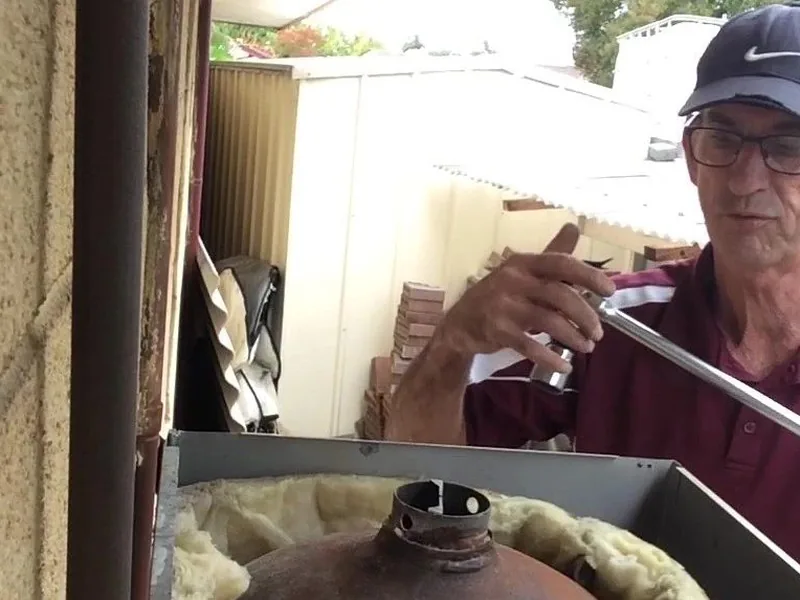
Cottage utility spaces can be tight — low crawlspaces, closet installs — so segmented flex rods are standard kit for Swansea. Water and power off, pressure relieved, old rod out for inspection, matched alloy or powered unit in, system refilled and hot water verified clear and odor-free at the tap.
Magnesium, Aluminum/Zinc, or Powered: Choosing Your Rod
Powered anode rods — also called impressed-current anodes — are the definitive answer for Swansea's most aggressive water. Instead of dissolving sacrificial metal, a powered rod uses a tiny electrical current from a wall outlet to halt corrosion electrochemically. It never depletes, never needs replacement, and it eliminates sulfur odor because there's no degrading magnesium for bacteria to feed on. For well supplies around 02777 that eat a magnesium rod in two to three years, the economics are compelling: one powered rod instead of three or four sacrificial swaps over the tank's life, with continuous protection throughout. Installation is the same ninety-minute visit plus plugging in a small power supply. The upfront part cost is higher than a sacrificial rod, but for aggressive-water homes in Gardners Neck cottages and suburban colonials near Mount Hope Bay, it's the last anode decision the tank will ever need.
Aluminum/zinc alloy rods are the workhorse upgrade for Swansea's problem-water homes. The alloy sacrifices more slowly than pure magnesium, so it lasts longer — often seven-plus years on the same water that eats magnesium in four — and crucially, it doesn't feed sulfur bacteria the way magnesium does. For the rotten-egg hot water complaints we see across 02777's well-water pockets, swapping magnesium for aluminum/zinc frequently ends the odor within days while restoring full corrosion protection. The tradeoff is slightly less aggressive protection than magnesium, which is irrelevant in practice for residential tanks — the alloy still vastly out-protects a depleted rod, which is the actual alternative. When a Swansea homeowner reports sulfur smell plus an aging tank, aluminum/zinc is usually our first recommendation, and the results speak at the tap.
After the Swap: Protecting Your Investment
The replacement is only half the job — the other half is the inspection rhythm that keeps the tank protected from here on. On Swansea's district water, the honest intervals are: municipal water, check every four to five years; mixed or moderately aggressive well water, every three; the truly aggressive well supplies around 02777, every two. 'Check' means pulling the rod and looking, not guessing from the calendar — water chemistry varies street by street, and the rod's actual condition is the only reliable gauge. In Gardners Neck cottages and suburban colonials near Mount Hope Bay, we leave every homeowner with the tank's birthdate from the serial number and a recommended next-check date written down, because the number-one reason rods die unnoticed is that nobody writes anything down. A two-minute inspection every few years is what stands between a twenty-year tank and a ten-year tank.
Here's the candid part: sometimes a new rod isn't the right answer, and we'd rather tell you than sell you. If the tank's bottom seam is already rusting through, if the jacket shows deep exterior corrosion, if the serial number says the unit is past fifteen years on aggressive water — a fresh rod buys months, not years, and the honest recommendation is planning a replacement on your schedule instead of the tank's. In Swansea's older housing, Gardners Neck cottages and suburban colonials near Mount Hope Bay included, we have this conversation regularly, and homeowners consistently prefer hearing it before the basement floods. The rod inspection is what makes the call possible: with the old rod out and the tank's condition in front of us, we can distinguish the sound ten-year-old tank that deserves five more years from the terminal fifteen-year-old that doesn't. Either way, the (833) 713-2101 visit ends with a clear plan, not a guess.
Here's How Easy This Is
We serve all of Swansea and the surrounding towns from our 02777-area base — Gardners Neck cottages and suburban colonials near Mount Hope Bay, downtown streets, and everything in between — with rod replacements, full water-heater service, and 24/7 emergency leak response on the same trucks. Calls to (833) 713-2101 are answered by people who know water heaters, not a phone tree; describe the rusty water or the sulfur smell and you'll get a straight answer about what it likely is and what it takes to fix. Evenings and weekends included. If your tank is past year five and the rod has never been checked, today's the day to find out what's left in there — before the tank starts telling you with rust. Water Heater Leak Repair Crew: call (833) 713-2101, ask a pro, get it handled.