Gas Control Valve Problems: Symptoms, Diagnosis, and Safety
The gas control valve is the brain of a gas water heater — it meters fuel, holds the pilot, and guards against overheati
On a gas water heater, one component does most of the thinking: the gas control valve. That box on the front with the temperature dial meters gas to the burner, keeps the pilot lit via the thermocouple circuit, and shuts everything down if the water overheats. When it starts failing, the symptoms range from annoying (lukewarm water) to genuinely dangerous (gas odors). Knowing the difference matters.
This guide covers how the valve works, the symptoms of failure, how to rule out simpler causes like a bad thermocouple, and the safety lines you should never cross. Gas work has hard limits for DIY — when in doubt, call Water Heater Leak Repair Crew at (833) 713-2101.
What the Gas Control Valve Does
The valve is really three devices in one housing. The thermostat portion senses tank temperature through a probe and opens the main gas flow when the water cools below your setpoint, closing it when the target is reached. The pilot safety circuit holds a small electromagnet open as long as the thermocouple — heated by the pilot flame — generates its tiny voltage; if the pilot goes out, the magnet releases and gas flow stops. The high-limit (ECO) switch cuts gas entirely if the water exceeds about 190 degrees, and once tripped, most residential valves will not reset — the valve must be replaced.
7 Symptoms of a Failing Gas Control Valve
- No hot water at all, pilot lit: The thermostat section is not calling for heat or not opening the main valve.
- Water far too hot or far too cool regardless of dial setting: The temperature regulation has lost calibration — a classic end-of-life sign.
- Burner will not stay on / short-cycles: The valve opens, then drops out. Rule out venting and thermocouple issues first (see below).
- pilot that will not stay lit even with a new thermocouple: If a fresh thermocouple does not fix it, the valve's pilot electromagnet is the likely culprit.
- Visible damage or corrosion on the valve body: Water dripping onto the valve from above corrodes it; a corroded valve is unreliable and should be replaced.
- Gas smell near the valve: Stop. Do not troubleshoot. Leave the area and call your gas utility.
- Water overheating past the setpoint: A thermostat that will not shut off is dangerous — scalding risk and tank stress. Shut the gas off and call for service.
Rule Out the Thermocouple First
Before condemning an expensive gas valve, check the cheap part that mimics its failure. A weak or dirty thermocouple causes the exact same pilot-outage symptom as a bad valve magnet. The thermocouple is the thin copper probe sitting in the pilot flame. Soot buildup, a bent probe sitting outside the flame, or simple age can weaken its millivolt output below what the valve needs. Cleaning the probe with fine emery cloth and repositioning it squarely in the pilot flame fixes a surprising number of no-hot-water calls. If a new thermocouple — properly installed, with clean tight connections — still will not hold the pilot, the valve itself is the problem.
The Safety Lines You Do Not Cross
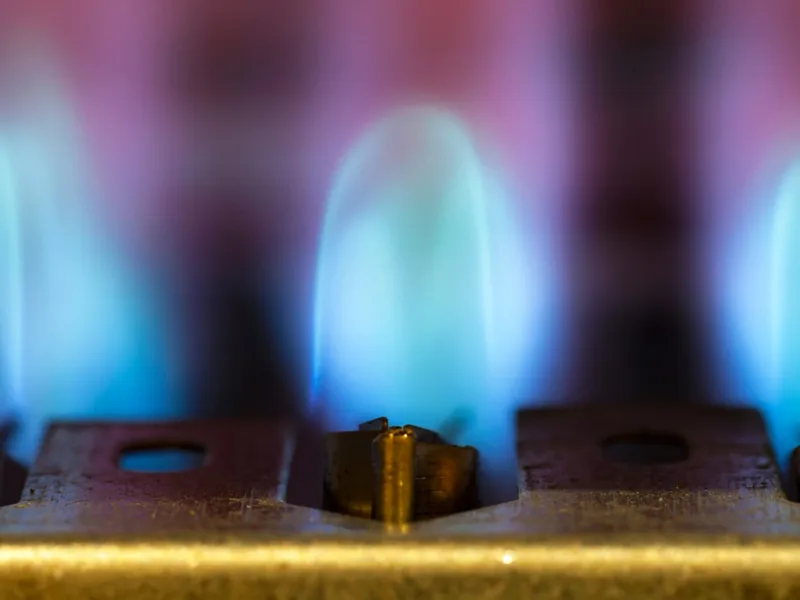
Some gas valve work is firmly in professional territory. Do not disassemble the valve body, do not attempt to bypass the high-limit switch, and do not adjust anything sealed at the factory. If you smell gas — the rotten-egg odorant — do not flip switches, do not relight anything, and do not use your phone near the heater. Leave the house and call the gas utility from outside. For suspected carbon monoxide (headaches, nausea, dizziness near the heater, or a CO alarm sounding), get everyone out and call emergency services. A yellow, lazy burner flame instead of a crisp blue one can indicate combustion problems worth a professional look.
What Replacement Involves
Replacing a gas control valve means shutting off the gas supply, disconnecting the gas line, pilot tube, thermocouple, and burner assembly, unthreading the valve from the tank, and installing the new one with proper thread sealant rated for gas. The burner must then be checked for correct flame pattern and the system tested for leaks with a proper leak-detection solution — never a flame. Because it involves breaking into the gas line and verifying safe combustion afterward, most homeowners are better off having a technician do it. The part must also match your heater's BTU rating and gas type (natural gas vs. propane) — they are not interchangeable.
Attleboro Note: Basement Installations and Combustion Air
Many Attleboro homes — especially the area's capes, ranches, and older colonials — keep the water heater in a basement utility corner, sometimes in a small enclosed room. Gas burners need adequate combustion air; a heater starved of air burns poorly, soots up, and can trip safety devices in ways that look exactly like valve failure. If your heater lives in a tight closet, make sure the combustion-air vents are open and unblocked before assuming the valve is bad. Lint, storage boxes, and even a new dryer in the same room can change the air balance.
Suspect your gas valve? Water Heater Leak Repair Crew diagnoses gas water heater problems safely and replaces failed valves with the correct match for your unit. Call (833) 713-2101 — day or night, Attleboro and nearby towns.