Hard Water Effects on Water Heaters: The Attleboro Guide
Hard water is slowly taxing your water heater — sediment, scaled elements, depleted anodes, choked tankless exchangers.
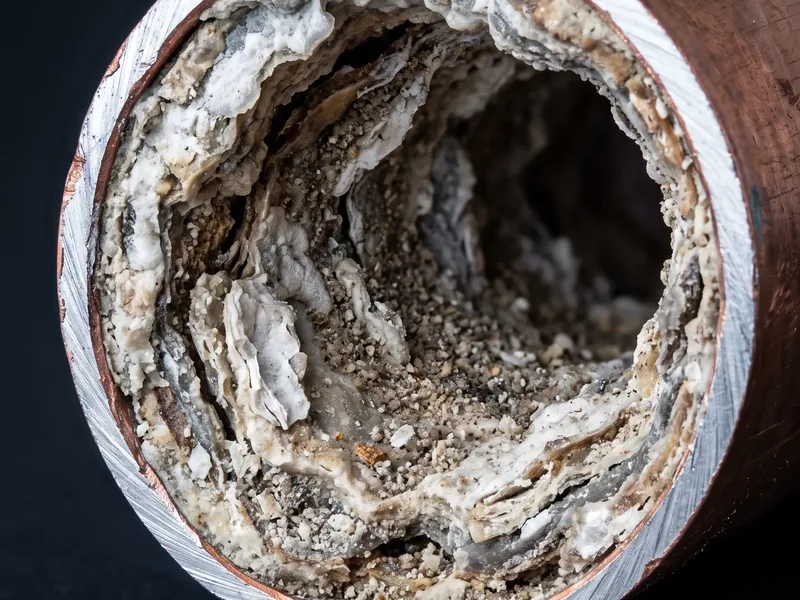
Hard water is the invisible force shaping your water heater's entire life. You cannot see dissolved calcium and magnesium flowing through your pipes, but you see their effects everywhere: the white crust on faucets, the spots on glassware, the popping water heater, the element that failed at year four. In Attleboro, where the municipal supply runs moderately hard and many surrounding homes draw from mineral-rich wells, hard water is not an abstract concern — it is the operating environment your water heater lives in.
This guide explains exactly how hard water attacks water heaters, how to tell if your water is hard, and what you can do about it — from simple maintenance to whole-house treatment. For an assessment of what your water is doing to your heater, call Water Heater Leak Repair Crew at (833) 713-2101.
How Hard Is Attleboro Water?
Water hardness is measured in grains per gallon (gpg) or parts per million. Under 3.5 gpg is soft; 3.5 to 7 is moderately hard; above 7 is hard; above 10.5 is very hard. Attleboro's municipal supply typically falls in the moderately hard range — enough to leave scale steadily over the years. Private wells in the area vary widely and often run harder, sometimes with significant iron content on top. The practical point: even moderately hard water deposits meaningful scale over a water heater's lifetime. It is a slow tax, not a sudden event — which is why it gets ignored until the heater complains.
Attack Vector 1: Sediment Blankets the Tank Bottom
Heating water forces dissolved minerals to precipitate as solid scale. In a tank heater, that scale settles to the bottom and accumulates into a sediment blanket — sometimes inches thick in neglected heaters. The blanket insulates the water from the burner or lower element, forcing longer, hotter heating cycles. On gas units, the tank bottom overheats, weakening the steel and warping it; on electric units, the buried lower element overheats and burns out. Sediment also displaces water (less hot water per tank), harbors odor-causing bacteria, and accelerates tank corrosion. Annual flushing is the direct countermeasure — it removes sediment before it hardens into scale.
Attack Vector 2: Scale Coats Heating Elements
Electric elements run hot enough to bake minerals directly onto their sheaths as a hard, whitish crust. Scaled elements cannot shed heat into the water, so they run progressively hotter until the sheath fails — the reason elements in hard-water areas die young. If you are replacing elements every few years, the elements are not the problem; the water is. Flushing helps, but heavy scaling ultimately points toward treating the water itself.
Attack Vector 3: Anode Rods Deplete Faster
Dissolved minerals make water more electrically conductive, which accelerates the galvanic corrosion reaction the anode rod exists to absorb. In hard water, magnesium rods can be substantially consumed in 3 years — and softened water (the common treatment) is actually more aggressive toward anodes, a trade-off softener owners should know. The practical response: inspect anode rods every 2 years in hard-water homes rather than the generic 3-to-5-year guidance, and consider aluminum/zinc or powered rods for longevity.
Attack Vector 4: Tankless Heat Exchangers Choke
Tankless units are the least forgiving of hard water. Their heat exchangers contain narrow passages that scale narrows further — restricting flow, creating hot spots, triggering overheat error codes, and eventually cracking the exchanger. A never-descaled tankless unit in hard water can fail in half its expected life. Annual descaling circulation through the service valves is not optional maintenance here; it is the price of admission for tankless in Attleboro.
Attack Vector 5: Valves, Fittings, and Fixtures
Scale does not stop at the heater. It stiffens shutoff valves (the inlet valve you need in an emergency), crusts faucet aerators and showerheads, narrows supply lines, and makes the T&P relief valve's seat gritty and unreliable. Whole-system effects are why hard water is a plumbing problem, not just a water heater problem — though the heater, as the hottest point in the system, always suffers most.
How to Tell If Your Water Is Hard
- White scale on faucets and fixtures: The visible signature. Heavy buildup means harder water.
- Spots on dishes and glassware: Classic hard-water spotting from the dishwasher.
- Soap does not lather well: Hard water binds with soap, reducing lather and leaving film.
- Stiff laundry and dry skin: Mineral deposits in fabric and on skin after bathing.
- Water test: Hardware-store test strips give a rough reading; a lab test or a professional assessment gives exact grains per gallon plus iron, pH, and other relevant chemistry. For well owners, a full lab test every few years is just good practice.
What You Can Do: The Options
Maintenance discipline (free): Annual tank flushing, biennial anode checks, and annual tankless descaling neutralize most of hard water's damage without any equipment. This is the baseline every Attleboro homeowner should do regardless of treatment decisions.
Water softener: The standard whole-house treatment — ion exchange removes calcium and magnesium, protecting the heater, plumbing, and fixtures. Trade-offs: softened water accelerates anode rod consumption (inspect rods more often), adds sodium to the water, and requires salt and maintenance. For most hard-water homes, the heater-life benefits outweigh the trade-offs.
Scale inhibitors (TAC/crystallization): Salt-free alternatives that do not remove minerals but change their crystal structure so they do not adhere as scale. Less proven than softening for severe hardness, but maintenance-free and worth considering for moderate hardness.
Sediment pre-filter: A simple whole-house sediment filter catches sand and particulate before it reaches the heater — cheap, effective, and especially valuable for well-water homes. It does not soften water, but it keeps grit out of valves and the tank.
Point-of-use treatment: For renters or tight budgets, showerhead filters and appliance-scale management help at the fixture level without plumbing changes.
The Bottom Line for Attleboro Homeowners
Hard water is not an emergency — it is a condition to manage. The homeowners whose water heaters last 14 years in this area are not lucky; they flush annually, watch their anode rods, descale their tankless units, and many treat their water. The ones replacing at year 7 are not unlucky either — they just never connected the white crust on the faucet to the popping noise in the basement. Now you have.
Worried about what hard water is doing to your heater? Water Heater Leak Repair Crew assesses water-related wear, flushes and descales, and advises honestly on treatment options for Attleboro homes. Call (833) 713-2101.