Preventing Water Damage from Water Heater Leaks in Attleboro, MA
Published October 12, 2026 — Water Heater Leak Repair Crew
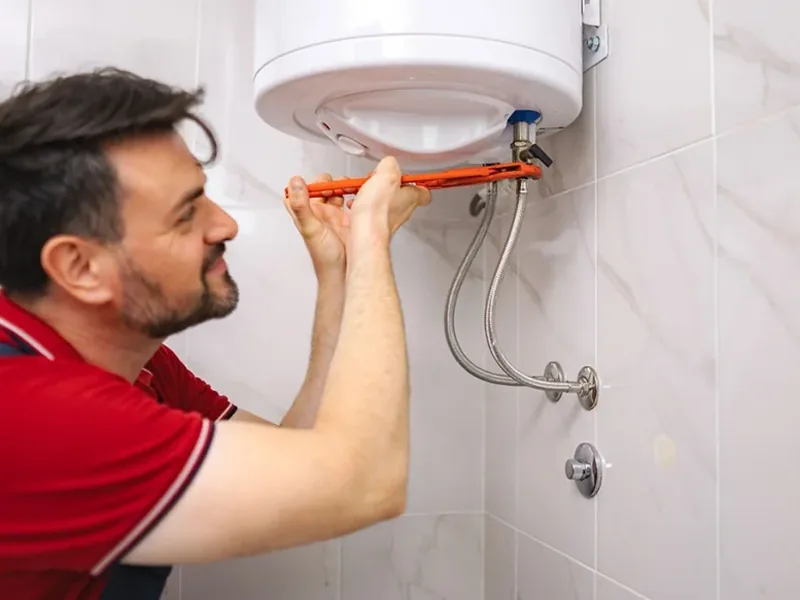
A standard tank water heater holds 40 to 80 gallons of water, and it sits there pressurized, day and night, for a decade or more. When it finally fails — often as a slow drip that goes unnoticed for weeks, or occasionally as a sudden burst — the damage adds up fast: soaked carpet, ruined drywall, warped flooring, and in a New England basement, the mold that follows dampness. Water heater leaks are one of the most common sources of residential water damage, and nearly all of the worst outcomes are preventable.
This guide walks through practical prevention for Attleboro-area homes: knowing your shutoffs, containing leaks before they spread, catching drips early with alarms and automatic shutoffs, maintaining the pressure system, and protecting the finished basements so many Bristol County homes have. None of this requires a plumber — just an afternoon of attention.
Know Your Shutoffs Before You Need Them
The single most important thing you can do costs nothing. Locate these three controls on your water heater and make sure everyone in the household knows them:
- Cold-water inlet valve: usually a lever or gate valve on the pipe entering the top of the tank. Closing it stops new water from entering the heater — your first move in any leak.
- Main house shutoff: where the water line enters the home, often near the front foundation wall in Attleboro basements. If the heater's own valve is stuck or broken, this is your backup.
- Fuel or power shutoff: the gas control knob on the heater itself, or the dedicated breaker in the panel for electric models.
Test each valve gently once a year. Gate valves that sit untouched for a decade often seize; a valve that won't turn in an emergency is almost as bad as no valve. Label them with a tag or a marker so nobody has to think during a 2 a.m. discovery.
Install a Drain Pan with a Real Drain Line
A drain pan under the heater catches slow drips from fittings, the TPR valve discharge, and early tank seepage — but only if the water has somewhere to go. A pan with no drain simply fills up and overflows onto the same floor you were trying to protect. Run the pan's drain line to a floor drain, a laundry tub, or a sump pit. If your heater sits where none of those are reachable, even a shallow pan paired with a water alarm (see below) buys you critical early warning.
Pan installation is straightforward when a heater is being replaced, since the tank has to be moved anyway. Retrofitting a pan under an existing heater is harder — the unit must be lifted — so if your heater is approaching replacement age, plan the pan as part of the replacement job.
Add Leak Detection: Alarms and Automatic Shutoffs
A battery-powered water alarm puck sitting on the floor beside the heater costs less than a pizza and screams when water touches it. Place one at the heater base, one under the pan edge if you have one, and one near the floor drain. For finished basements — where carpet and furniture sit feet away from the tank — consider Wi-Fi-connected sensors that alert your phone, since a leak discovered while you're at work or away from home is far worse than one found the same hour.
The next step up is an automatic shutoff valve: a sensor on the floor wired to a valve on the water line, which closes the supply the moment water is detected. These are especially worthwhile for heaters tucked in finished spaces, second-floor closets, or homes that sit empty during the day. They don't stop the tank's stored water from draining out, but they stop the unlimited supply behind it — the difference between a mop-up and a flood.
Maintain the Pressure System
Excess pressure is a quiet leak accelerator. Two components matter most:
- The TPR (temperature and pressure relief) valve: this safety valve on the side or top of the tank must have a discharge pipe that runs downward and terminates a few inches above the floor — never capped, never threaded shut, and never discharging into a hidden wall cavity. Check that the pipe is intact and pointed somewhere visible, so if the valve ever opens, you'll see the water instead of soaking the wall.
- The expansion tank: on closed plumbing systems (common where there's a pressure-reducing valve or check valve on the main), the small expansion tank above the heater absorbs pressure spikes. If it waterlogs or loses its air charge, pressure hammering accelerates fitting leaks and TPR weeping. Tap it: the top should ring hollow and the bottom sound solid. A fully waterlogged expansion tank needs attention.
The Five-Minute Monthly Inspection
Most catastrophic water heater damage started as a visible drip weeks earlier. Once a month, take a flashlight and look:
- Around the base of the tank — any moisture, rust streaks, or white mineral deposits on the floor?
- At every visible fitting on top — inlet, outlet, and the TPR valve — any dampness or corrosion?
- At the end of the TPR discharge pipe — water stains or drips?
- Under and around the heater if it's upstairs — any ceiling staining below it?
- A sniff test — a musty smell near the heater that wasn't there before often means moisture is hiding behind or under something.
Also glance at the floor drain near the heater periodically. A clogged floor drain turns a contained leak into standing water; keep it clear of sediment and debris.
Winter and Vacation Precautions
New England winters add a specific risk: freezing. If you leave the house for more than a couple of days in winter, keep the thermostat at 55 degrees or higher — pipes feeding the heater can freeze and burst in an unheated basement or garage, and the damage reveals itself when everything thaws. Insulate the first few feet of hot and cold pipe near the heater and any piping in unconditioned spaces. If you leave for several weeks in deep winter, some homeowners have the heater drained and the water shut off entirely — but refilling and relighting (and never dry-firing an electric element) makes this a job to plan carefully rather than improvise at the airport.
Protecting Finished Basements
So many homes in Attleboro, North Attleboro, Mansfield, and Franklin have finished basements with carpet, drywall, and stored belongings within a few feet of the water heater. If that's your setup: keep storage in plastic bins rather than cardboard, keep the floor drain accessible (not buried behind boxes), consider elevating the heater on a platform if it's being replaced, and prioritize a Wi-Fi leak sensor — the earlier the alert, the smaller the repair.
What to Do the Moment You Spot a Leak
Don't wait to see if it stops. Slow drips don't self-heal. Follow this order:
- Close the cold-water inlet valve to the heater. If it won't budge, shut the main house valve.
- Turn off the fuel — gas knob to pilot/off, or the breaker off for electric.
- Contain the water: towels, a bucket under the drip, a wet-vac if you have one. Move valuables out of the splash zone.
- Call for repair. A leaking fitting, drain valve, or TPR valve is usually fixable; water seeping from the tank shell itself means the tank is failing and needs replacement.
Water Heater Leak Repair Crew responds 24/7 across Attleboro, MA 02703 and the surrounding Bristol County towns — Norton, Taunton, Seekonk, Rehoboth, Plainville, Wrentham, and Franklin. If you're staring at water where it shouldn't be, call (833) 713-2101.