Water Heater Thermostat Troubleshooting: Electric and Gas
Water too hot, too cold, or swinging between both? Your thermostat is the likely culprit. This guide covers electric and
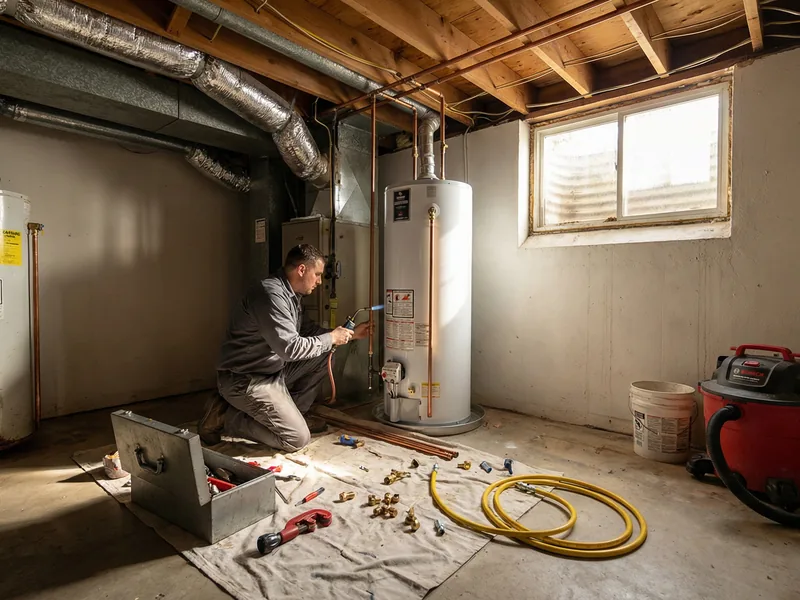
Your water heater's thermostat is the difference between a comfortable shower and a scalding hazard — or a lukewarm disappointment. Whether you have an electric unit with its pair of thermostats or a gas unit with the dial on the control valve, thermostat trouble shows up as water that is too hot, too cold, or wildly inconsistent. The fixes range from a simple dial adjustment to a full thermostat replacement you can do yourself.
This guide covers both electric and gas thermostat systems: how they work, the symptoms of failure, safe testing, and replacement. For anything involving gas controls or repeated electrical tripping, call Water Heater Leak Repair Crew at (833) 713-2101.
How Electric Water Heater Thermostats Work
Electric heaters use two thermostats — upper and lower — working as a team with the two heating elements. The upper thermostat has the priority: when cold water enters the tank, the upper thermostat senses the drop and powers the upper element first. Once the top of the tank reaches the setpoint, the upper thermostat clicks over and hands power to the lower thermostat, which then runs the lower element to heat the bulk of the tank. Each thermostat has a small temperature dial, usually behind the access panel, and a high-limit reset button (the red button) that trips if the water overheats.
How Gas Thermostats Differ
On a gas heater, the thermostat is integrated into the gas control valve — the dial on the front marked with temperature settings or Warm/Hot/Very Hot. A temperature probe extends from the valve into the tank; as water temperature changes, the probe moves the valve mechanism to open or close gas flow to the burner. There is no separate replaceable thermostat on most residential gas units — thermostat failure means gas valve replacement, which is professional work involving the gas line.
7 Thermostat Trouble Symptoms
- Water too hot regardless of setting: A thermostat stuck in the calling-for-heat position, or one that has lost calibration. Scalding risk — turn the setting down and if it does not respond, shut the unit down and call for service.
- Water never gets hot enough: Thermostat set too low, miscalibrated, or (electric) a failed lower thermostat that never powers the lower element.
- Hot water runs out fast: On electric units, a dead lower thermostat mimics a dead lower element — the bottom two-thirds of the tank never heats.
- No hot water at all (electric): A failed upper thermostat never initiates the heating sequence.
- High-limit reset keeps tripping: The red button pops repeatedly. This means the water is actually overheating — a stuck thermostat is the prime suspect. Do not just keep resetting it; find the cause.
- Burner or elements cycle constantly: A thermostat with a failed differential (the gap between on and off temperatures) short-cycles the system.
- Inconsistent temperatures swing hot to cold: Thermostat sensing erratically, or sediment burying the lower thermostat's sensor area.
First Checks Before Replacing Anything
Start simple. Confirm the thermostat dials are actually set where you think — 120 degrees Fahrenheit is the recommended setting, hot enough for comfort and dishwashing, cool enough to prevent scalding and slow mineral buildup. On electric units, both thermostats should be set to the same temperature. Check whether the high-limit reset button has tripped (press it firmly; if it clicks, it had tripped — and ask why). And consider sediment: a thick sediment layer insulates the lower thermostat from the water it is trying to sense, causing overheating at the bottom and lukewarm delivery. A flush sometimes resolves what looks like thermostat trouble.
Testing Electric Thermostats
With the breaker OFF and verified off, remove the access panels and insulation. Thermostats can be tested with a multimeter for continuity in their switching function, but the practical homeowner test is often simpler: if the elements test good (see our heating element guide) and the high-limit keeps tripping or one stage never heats, the thermostat is the likely fault. Thermostats are inexpensive, and many technicians replace the thermostat and element as a pair on the suspect stage since both are cheap and the labor overlaps.
Replacing an Electric Thermostat
With power verified off, disconnect the wires (photograph or label them first — the wiring must go back exactly), unclip the old thermostat from its mounting bracket against the tank, clip the new one in ensuring flat contact with the tank wall, and reconnect the wires. Set both thermostats to the same temperature — 120 degrees. Restore power and verify operation over the next heating cycle. The whole job takes about 30 minutes. Match the replacement to your heater: thermostats are mostly universal for residential electrics, but confirm the style (snap-in bracket) matches.
The Scalding Safety Note
This deserves emphasis because thermostat failure can be dangerous: water above 140 degrees scalds in seconds, and children and elderly family members are most vulnerable. If your water is suddenly much hotter than your setting — or if anyone has been scalded — treat it as urgent. Turn the thermostat down, and if the temperature does not follow the setting, shut the heater down and call for service the same day. A runaway thermostat is not a wait-and-see problem.
Temperature trouble in Attleboro? Water Heater Leak Repair Crew diagnoses thermostat, element, and gas valve issues and fixes them in one visit. Call (833) 713-2101 — we are here around the clock.