Water Heater Age and Lifespan: How Long Yours Should Last
How long do water heaters last — and how old is yours? Learn realistic lifespans, how to read your unit's age, what shor
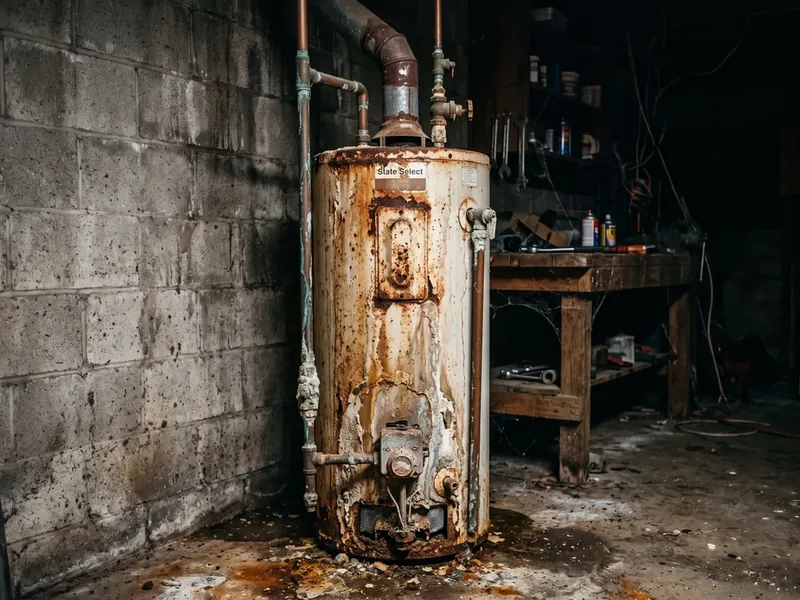
How old is your water heater? Most homeowners cannot answer that — until it starts leaking, and then the age suddenly matters a lot. Age determines whether a repair is worth doing, whether maintenance can still extend its life, and whether you should be budgeting for replacement before an emergency forces your hand. The good news: finding your heater's age takes two minutes, and knowing the typical lifespans turns guesswork into planning.
This guide covers realistic lifespans for every water heater type, how to read your unit's age, what shortens or extends life (with Attleboro-specific factors), and how to decide between repairing and replacing. For a straight assessment of your unit, call Water Heater Leak Repair Crew at (833) 713-2101.
Typical Water Heater Lifespans
- Tank gas or electric, with average maintenance: 8 to 12 years. This is the workhorse range for the vast majority of Attleboro homes.
- Tank with diligent maintenance (annual flushes, anode rod replacements): 12 to 15 years, sometimes more. Maintenance genuinely moves the needle.
- Tank with zero maintenance in hard water: As little as 6 to 8 years. Neglect is expensive.
- Tankless (on-demand): 15 to 20+ years — but only with regular descaling. A never-descaled tankless unit in hard water can fail far earlier.
- Heat pump / hybrid: 10 to 15 years, with the compressor being the long-term question mark.
- Solar thermal with tank: Tank follows tank rules; collectors last longer.
These are medians, not guarantees. Individual units vary widely based on water quality, usage, installation quality, and luck.
How to Find Your Water Heater's Age
Every water heater has a rating plate — usually a sticker on the side — listing the manufacturer, model, serial number, and often the manufacture date printed plainly. If the date is not printed, the serial number encodes it, but the code differs by manufacturer: some use the first two digits for the year and the next two for the week, others use a letter for the month. The reliable move is to search the manufacturer's website for serial number date decoding, or simply call the manufacturer's support line with the serial number. Two minutes, definitive answer. While you are there, photograph the rating plate — having the model and serial handy speeds up every future service call and parts order.
What Shortens Water Heater Life
Hard water: The number-one life-shortener in Attleboro. Mineral scale insulates, overheats, and corrodes. Moderately hard municipal water plus skipped flushing is the classic recipe for a 7-year tank.
Never replacing the anode rod: The rod is the tank's corrosion shield. Once it is gone, the tank itself becomes the sacrificial metal. Heaters that get fresh rods every few years routinely outlive neglected ones by a third or more.
Excessive pressure: Failed expansion tanks and high municipal pressure stress every joint and the tank shell. Chronic relief-valve dripping is the visible symptom.
Oversized or undersized for the household: An undersized heater cycles far more often, wearing components faster. Constantly running out of hot water is not just annoying — it is a sizing signal.
Harsh installation environments: Damp basements accelerate exterior corrosion; tight closets starve gas burners of air; unheated spaces risk freezing.
What Extends Water Heater Life
The life-extension list is short and proven: flush sediment annually, inspect and replace the anode rod every 2 to 3 years, keep the thermostat at 120 degrees (less thermal stress and less scale), maintain the expansion tank's air charge, test the relief valve yearly, and fix small leaks at fittings before they corrode the tank top. None of this is exotic. It is just consistent, and it is the difference between replacing at year 8 and replacing at year 14.
The Repair-or-Replace Decision by Age
Use age as your framework, not your only input:
- Under 6 years: Repair almost always makes sense. Failed elements, thermostats, thermocouples, valves, and fittings are all worth fixing on a young tank.
- 6 to 10 years: Repair if the tank shell is sound and the unit has been maintained. Get honest about accumulated issues — a heater needing its third repair in two years is telling you something regardless of age.
- Over 10 years: Weigh every repair against replacement. A 12-year-old tank with a failed gas valve is usually better replaced than repaired, because the tank itself is near end of life.
- Any age with a shell leak: Replace. Tank-body leaks are never repairable, at any age.
- Over 15 years and still running: Congratulations — and start budgeting. Every additional year is borrowed time, and emergency replacements cost more in stress than planned ones.
Planning a Replacement on Your Schedule
The cheapest replacement is the one you plan. If your heater is past 10 years, start the conversation early: note your fuel type, capacity needs (household size and simultaneous uses), venting situation, and physical space constraints. Consider whether your household's needs changed since the unit was installed — a finished basement with a new bathroom, or kids becoming teenagers, changes hot water demand. Planning ahead also lets you consider efficiency upgrades rather than making a panicked like-for-like decision at 9 PM with water on the floor.
Not sure how much life your heater has left? Water Heater Leak Repair Crew gives honest assessments — we will tell you when a repair is worthwhile and when your money is better put toward replacement. Call (833) 713-2101 in the Attleboro area.