What Makes 02375 Brutal on Drain Valves
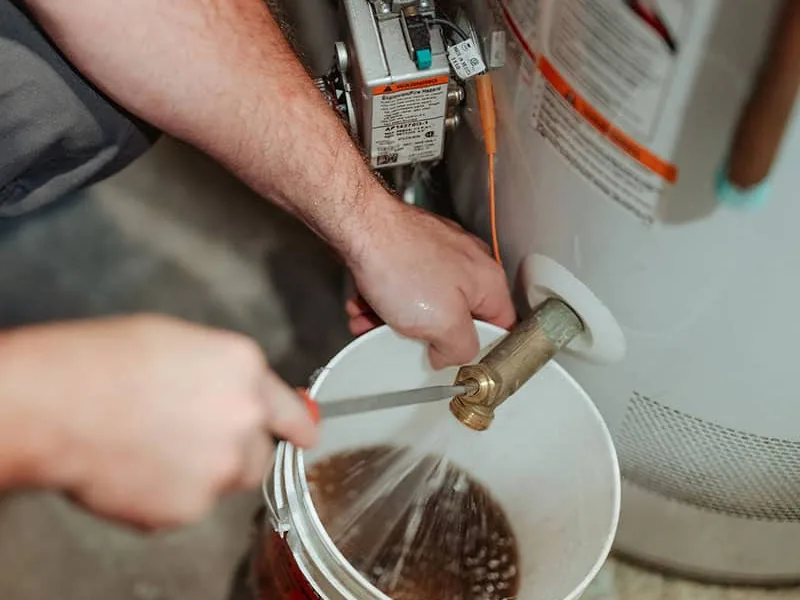
Easton's well water leaves its signature inside every tank: iron sediment that settles to the bottom and stains everything it touches. The factory drain valve sits in that sediment layer, and over the years it clogs, corrodes, and eventually weeps rusty water onto the floor — the orange stain under the valve is a familiar sight in Easton utility rooms. Homeowners who try a DIY flush discover the valve passes only a trickle, because iron sediment has packed it solid. A full-port brass ball valve transforms this: the wide bore passes iron sediment instead of choking, the brass body shrugs off the mineral exposure that killed the plastic original, and annual flushing actually works — which matters in Easton, because iron sediment baked onto the tank bottom overheats burners and elements and shortens tank life measurably. It's a modest part that punches far above its weight in well-water homes.
How to Tell Your Drain Valve Is Failing
The factory drain valve on your water heater is a simple plastic spigot with a hard life: it sits at the tank's lowest point, submerged in the most mineral-laden water in the system, and Easton's well water spends every year hardening its seals and embrittling its body. In Easton homes the failure announces itself in stages. First the weep — a slow drip from the spout or the stem that leaves a mineral stain on the floor. Then the stiffness — the handle that used to turn now needs pliers. Then the terminal event: a flush attempt where the handle snaps, or the valve passes only a trickle because sediment has packed the bore solid. In wooded-subdivision colonials and historic homes, we see all three stages weekly. The weep is the warning; the snap is the emergency. A valve at any stage deserves replacement, because plastic valves don't recover — they only deteriorate.
Orange or rusty weeping from the valve spout, a flush that produces only a trickle, a handle that crumbles, or iron staining spreading across the floor beneath the tank — Easton's classic valve-failure pattern, and a clear case for brass replacement.
Our Replacement Process
A proper drain-valve replacement in a Easton home is a methodical job, not a quick twist. First we shut off the cold-water inlet and kill power at the breaker — or set gas to pilot — then let the tank cool, because draining a scalding tank is how people get hurt. We attach a hose and drain the tank below the valve level (fully, if sediment demands it), which on 02375's older tanks can take a while through a clogged valve — we bring clearing tools for exactly this. Then the failed valve comes out: seized plastic gets controlled heat and the right wrench, never brute force that could damage the tank's threads. Threads get cleaned of mineral scale, the new full-port brass ball valve threads in with quality sealant, and the tank refills. We purge air, restore power or gas, pressure-test every connection, and finish with a proper flush so the new valve demonstrates full-bore flow immediately.
Iron-packed valves need clearing before the tank can drain, so we bring the tools for it. Old valve out, threads cleaned of iron scale, full-port brass valve in with proper sealant — then a thorough flush until the water runs clear, proving the new valve does what the old one couldn't.
Plastic vs. Brass: No Contest
The practical differences show up from the first use. Draining a tank through the old plastic valve — when it works at all — is a slow, sputtering affair; through a full-port brass valve, it's a strong, steady flow that actually carries sediment out instead of leaving it behind. Flushing becomes a twenty-minute annual task instead of a fight, which means Easton homeowners actually do it — and tanks that get flushed annually live measurably longer on Easton's well water. Emergency draining, the scenario nobody plans for, goes from impossible to quick: a quarter turn and the tank empties at full bore. And the valve's own reliability transforms — no weeping stem, no crumbling handle, no freeze-cracked body. Across 02375, the brass valve is the rare repair that makes every future interaction with the tank easier, cheaper, and safer.
The full-port brass ball valve we install is a different species entirely. 'Full-port' means the bore through the valve is the same diameter as the pipe — no restriction, so sediment-laden water passes instead of packing. 'Ball valve' means a quarter-turn handle rotates a brass ball with a hole through it: open or closed, no washers to wear, no stem packing to weep, no multi-turn threading to seize. 'Brass' means a body that ignores the mineral exposure and temperature cycling that destroyed the plastic original — the valves we install in Easton today will still be operating smoothly when the tank itself is replaced. For wooded-subdivision colonials and historic homes, where valves face everything from heavy well sediment to freeze-prone utility spaces, brass isn't a luxury; it's the only valve material that reliably survives the full service life.
What Changes With a Working Valve
The new brass valve's first job is the flush the tank has been missing — possibly for years. On Easton calls we flush until the water runs clear, and on 02375's long-neglected tanks that can mean an astonishing volume of sediment: mineral sand, scale flakes, and rust particulate the tank has carried since installation. The effect is immediate and audible — the popping and rumbling quiets, recovery gets faster, and the burner or elements stop overheating. Going forward, the maintenance rhythm for Easton's well water is annual flushing: attach a hose, open the brass valve full-bore for several minutes until clear, close it with the same quarter turn. Twenty minutes, once a year, no tools beyond a garden hose. Tanks on this rhythm in Easton routinely outlive their rated life; tanks without it die of sediment and corrosion years early. The valve makes the rhythm possible.
Here's the maintenance pairing that matters most in Easton: the drain valve and the anode rod work as a system. The rod fights internal corrosion electrochemically; flushing removes the sediment that accelerates that corrosion physically. A tank with a fresh rod but no flushing still dies early from sediment-insulated overheating; a tank that's flushed but running on a dead rod still rusts from the inside. On Easton's well water, the complete program is annual flushing plus a rod check every three to five years (closer to three on aggressive wells). In wooded-subdivision colonials and historic homes, we set homeowners up with both dates after the valve visit — because the valve replacement is the moment the tank becomes maintainable, and maintainable tanks are the ones that reach twenty years. Skip either half and you're protecting the tank with one hand tied behind your back.
Talk to a Tech Today
Calling (833) 713-2101 takes two minutes. We ask what's happening — dripping, seized, snapped, or trickling — plus gas or electric and the tank's rough age, then schedule the visit: most Easton valve replacements happen within a few days, faster if it's actively leaking. The tech arrives with full-port brass valves in the standard sizes, plus clearing tools for sediment-packed 02375 tanks and thread-restoration tooling for the worst seizures. Ninety minutes to two hours later, the tank is flushed, the brass valve is pressure-tested, and you have a written note of the flushing rhythm your water needs. No return visits, no temporary fixes — the plastic era of your tank is over. Water Heater Leak Repair Crew: call (833) 713-2101.