What Makes 02767 Brutal on Drain Valves
Raynham's corridor suburbs are full of tanks with builder-grade drain valves that have quietly reached the end of their design life. The plastic spigot installed when the tank was new — ten, fifteen, twenty years ago — doesn't age gracefully: it embrittles, the seals harden, and it starts weeping at the stem or seizing solid. In Raynham's split-levels, where tanks often sit in finished lower levels, even a slow valve drip becomes a drywall and flooring problem. And the deeper issue is maintenance: a dead valve means the tank can't be flushed, so years of the town water's mineral content settle into sediment that insulates the tank bottom, overheats the burner or elements, and accelerates corrosion. Swapping in a full-port brass ball valve is a small job that restores the tank's entire maintenance future — quarter-turn operation, full-bore flow, and a body that will outlast the tank. In Raynham, we recommend it proactively on any tank past year ten.
Reading Your Valve's Warning Signs
The factory drain valve on your water heater is a simple plastic spigot with a hard life: it sits at the tank's lowest point, submerged in the most mineral-laden water in the system, and Raynham's municipal water spends every year hardening its seals and embrittling its body. In Raynham homes the failure announces itself in stages. First the weep — a slow drip from the spout or the stem that leaves a mineral stain on the floor. Then the stiffness — the handle that used to turn now needs pliers. Then the terminal event: a flush attempt where the handle snaps, or the valve passes only a trickle because sediment has packed the bore solid. In suburban colonials and split-levels off the Route 44 corridor, we see all three stages weekly. The weep is the warning; the snap is the emergency. A valve at any stage deserves replacement, because plastic valves don't recover — they only deteriorate.
A valve that drips constantly, a handle that's stiff or broken, mineral crust caking the spout, or a flush attempt that yields a trickle — Raynham's aging builder-grade valves fail predictably, and brass replacement is the lasting fix.
What the Service Visit Involves
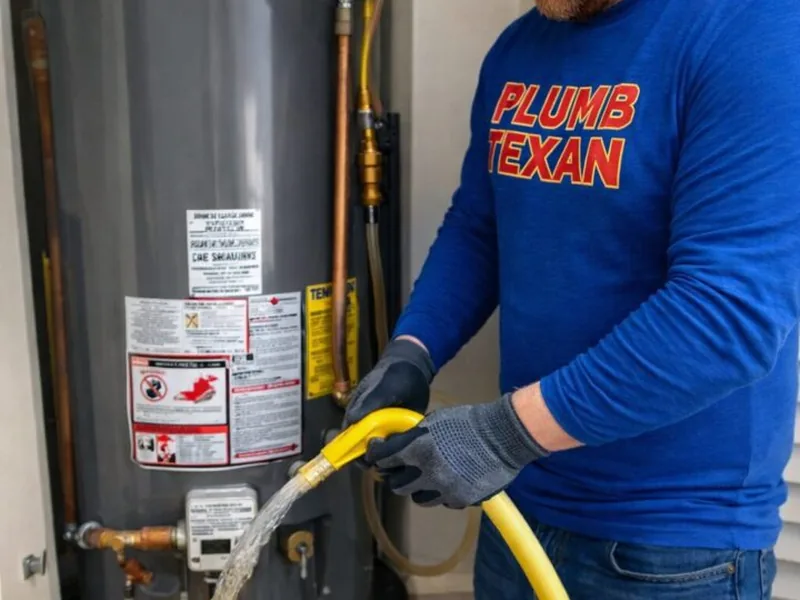
A proper drain-valve replacement in a Raynham home is a methodical job, not a quick twist. First we shut off the cold-water inlet and kill power at the breaker — or set gas to pilot — then let the tank cool, because draining a scalding tank is how people get hurt. We attach a hose and drain the tank below the valve level (fully, if sediment demands it), which on 02767's older tanks can take a while through a clogged valve — we bring clearing tools for exactly this. Then the failed valve comes out: seized plastic gets controlled heat and the right wrench, never brute force that could damage the tank's threads. Threads get cleaned of mineral scale, the new full-port brass ball valve threads in with quality sealant, and the tank refills. We purge air, restore power or gas, pressure-test every connection, and finish with a proper flush so the new valve demonstrates full-bore flow immediately.
Finished lower levels get full protection before we start — drop cloths and containment as standard. Tank cooled, drained below the valve, old plastic valve removed, threads cleaned, full-port brass installed with quality sealant. Then a proper flush and pressure test at every connection.
Why Full-Port Brass Beats Plastic Every Time
The practical differences show up from the first use. Draining a tank through the old plastic valve — when it works at all — is a slow, sputtering affair; through a full-port brass valve, it's a strong, steady flow that actually carries sediment out instead of leaving it behind. Flushing becomes a twenty-minute annual task instead of a fight, which means Raynham homeowners actually do it — and tanks that get flushed annually live measurably longer on Raynham's municipal water. Emergency draining, the scenario nobody plans for, goes from impossible to quick: a quarter turn and the tank empties at full bore. And the valve's own reliability transforms — no weeping stem, no crumbling handle, no freeze-cracked body. Across 02767, the brass valve is the rare repair that makes every future interaction with the tank easier, cheaper, and safer.
The factory valve is plastic for one reason: it costs pennies at the factory. It's a narrow-bore nylon or PVC spigot with a multi-turn stem, small seals, and a body that embrittles with heat and mineral exposure — a part designed to survive the warranty period, not the tank's life. In Raynham, on Raynham's municipal water, that design life expires right on schedule: the seals harden and weep, the body chalks and cracks, the narrow bore clogs with the first serious sediment. We've removed hundreds of these across 02767, and the failure pattern never varies — only the timeline, which runs faster wherever water is hardest or most sediment-laden. Nobody should mourn the plastic valve. It was never meant to last, and replacing it isn't an upgrade so much as a correction.
The Maintenance Your Tank Can Finally Get
A word of honest scope: the brass valve solves the valve problem completely, but it can't reverse damage already done. If years without flushing have left the tank bottom deeply pitted, if the anode rod died half a decade ago, if the serial number says fifteen-plus years on hard water — the valve still gets replaced (a working valve is valuable on any tank), but we'll tell you plainly where the tank stands overall. In Raynham's older housing, suburban colonials and split-levels off the Route 44 corridor included, we regularly find tanks where the valve swap is worth doing and the tank still has years left, and tanks where the valve swap should be weighed against planning a replacement. The drained tank in front of us makes the call evidence-based, not speculative. Either way, the (833) 713-2101 visit ends with a straight answer and a clear next step.
Here's the maintenance pairing that matters most in Raynham: the drain valve and the anode rod work as a system. The rod fights internal corrosion electrochemically; flushing removes the sediment that accelerates that corrosion physically. A tank with a fresh rod but no flushing still dies early from sediment-insulated overheating; a tank that's flushed but running on a dead rod still rusts from the inside. On Raynham's municipal water, the complete program is annual flushing plus a rod check every three to five years (closer to three on aggressive wells). In suburban colonials and split-levels off the Route 44 corridor, we set homeowners up with both dates after the valve visit — because the valve replacement is the moment the tank becomes maintainable, and maintainable tanks are the ones that reach twenty years. Skip either half and you're protecting the tank with one hand tied behind your back.
Book Your Valve Replacement
Calling (833) 713-2101 takes two minutes. We ask what's happening — dripping, seized, snapped, or trickling — plus gas or electric and the tank's rough age, then schedule the visit: most Raynham valve replacements happen within a few days, faster if it's actively leaking. The tech arrives with full-port brass valves in the standard sizes, plus clearing tools for sediment-packed 02767 tanks and thread-restoration tooling for the worst seizures. Ninety minutes to two hours later, the tank is flushed, the brass valve is pressure-tested, and you have a written note of the flushing rhythm your water needs. No return visits, no temporary fixes — the plastic era of your tank is over. Water Heater Leak Repair Crew: call (833) 713-2101.