A Small Mill Town's Big Retrofit Challenge
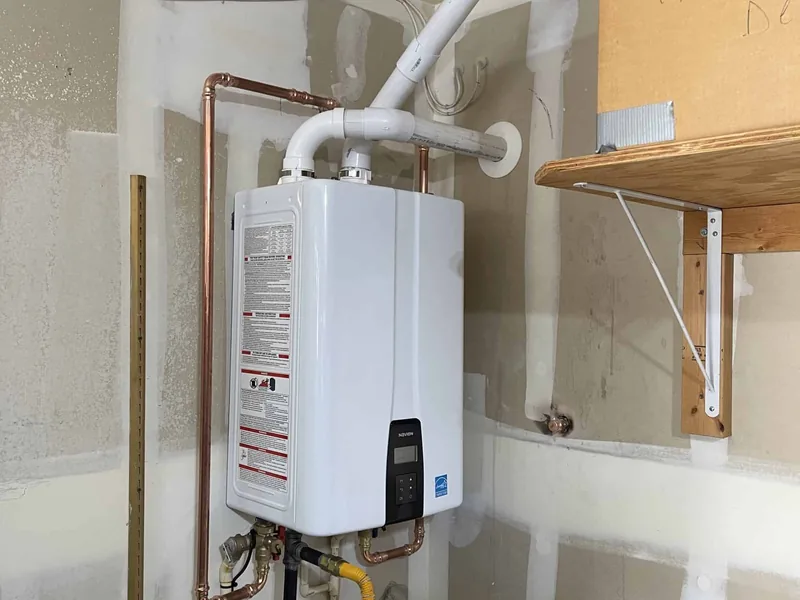
Millville's housing stock is concentrated and old: compact mill-era homes near the former mill sites, many with fieldstone or early-concrete foundations, low basement headroom, and plumbing systems modified piecemeal across a century. Nearly every tankless unit in town is a retrofit, and retrofits in these houses face the same three frictions. Gas supply: the existing line was sized for a 40,000-BTU tank heater, while the tankless unit demands 150,000 to 199,000 BTU at full fire — starved burners short-cycle, and short-cycling stresses heat exchangers toward pinhole leaks. Venting: sealed, properly sloped vent runs must thread through structures built for chimneys; we find vents forced through old flues, sagging runs that trap acidic condensate, and joints eaten through from the inside. Space: low ceilings and cramped mechanical corners make proper condensate drainage with continuous downhill slope genuinely difficult, so installers compromise — and compromised drains fail as houses settle.
In a larger town these patterns scatter across neighborhoods; in Millville they concentrate, because the housing is uniformly of the era. When a Millville unit leaks, our diagnostic starts with the installation — gas pressure under full fire, vent material and slope, drain routing — because the odds favor an installation weakness expressing itself as a leak. The unit's components get the same thorough inspection, but the house leads.
Where Tankless Leaks Come From
The component-level sources are universal. The heat exchanger develops pinhole leaks from thermal stress, scale hotspots, or corrosion — drips from inside the cabinet, mineral tracks on the metal. The condensate system fails most often: clogged traps, sagging hoses, saturated neutralizer cartridges, frozen drain lines. Inlet and outlet unions weep as seals age and thermal cycling loosens them — crusty buildup on the pipes beneath the unit. Internal O-rings at the flow sensor and water control valve harden and seep. Vent joints drip condensate backward when slope is wrong. Freeze damage splits exchangers in unconditioned spaces. In Millville's retrofits we weight condensate and venting causes heavily, since adapted installations fail there first — but we check everything, because a Millville unit can also simply have an aged gasket like any other. The homeowner's pre-call test: dry the area, run hot water five minutes, watch where the first fresh drip forms, and report the location when calling (833) 713-2101.
Low Basements, Stone Foundations, and Hidden Leaks
Millville's old basements hide leaks in two ways. Low headroom means the unit often sits where it is hard to see and harder to service — drips run down inside a cramped corner, and nobody inspects what requires a crouch. Stone and early-concrete foundations wick moisture sideways, so a slow weep spreads as general dampness rather than a telltale puddle; the leak's origin can be feet from the visible moisture. River proximity keeps some of these basements damp seasonally, adding camouflage: in a basement that always feels moist, a new slow leak blends in until the cabinet base rusts or the wall stains.
Our approach in these basements assumes the visible moisture may be far from the source. We trace methodically — drying, watching, checking the wall behind the unit and the floor across the room — rather than assuming the wettest spot is the leak. We inspect the full condensate path, not just the trap, because compromised routing is the norm in tight stone basements. And we check the cabinet and mounting for external corrosion, since chronic dampness attacks from outside while the water chemistry works inside; both factor into the repair-versus-replace judgment. Millville homeowners: the monthly glance under the unit matters more in a basement that hides things. Make it a habit, and keep the mechanical corner clear enough to see.
Reading Drip Evidence Before You Call
You can narrow the diagnosis before we arrive, and it makes the visit sharper. After drying the area and running hot water for five minutes: water at the small plastic drain hose points to the condensate path — trap, hose, or neutralizer. Drips or crust on the large pipe unions at the unit's bottom point to fitting weeps. Water from behind the front cover or staining on the wall behind the unit implicates the heat exchanger or internal seals. Timing adds information: condensate appears during and shortly after firing; exchanger and fitting leaks often continue with the unit idle. Color helps: clear water near the drain hose is likely condensate; green tints suggest copper corrosion; rusty tones suggest steel components or old upstream piping. In Millville's multifamily mill buildings, check the ceiling below a mechanical closet too — slow leaks stain downward before the upstairs owner notices. Note what you observe and tell us when you call (833) 713-2101.
Our Diagnostic and Repair Process
Diagnosis before quotation, always. We begin with the house — retrofit history, foundation type, basement conditions, unit placement — then the unit. Gas pressure under full fire is measured on retrofits; an undersized line reveals itself immediately and explains exchanger stress. The vent run is inspected for material, slope, and joint staining. Then the component inspection: heat exchanger under bright light for pinholes and mineral tracks; condensate trap removed and flushed; drain slope verified with a level; neutralizer media tested; unions checked under full pressure; O-rings at the water valve and flow sensor inspected. Error history is reviewed for corroboration.
Repairs follow root causes, in root-cause order. A condensate overflow from a sagging hose gets the hose re-routed with true continuous slope, not merely a trap cleaning. Fitting weeps get new gaskets torqued to spec. Exchanger pinholes: repair where isolated and accessible, replacement where pitting is widespread — damage shown to you, recommendation transparent. Installation corrections — gas line upsizing, vent re-routing — are explained plainly when the leak points to them; fixing the drip without fixing the starved burner or the condensate-trap vent is a temporary patch. Every job ends with full-fire test cycles and a verified-dry unit before we leave.
Maintenance for Millville's Mill-Era Homes
The maintenance calendar here has two tiers: the unit and the installation. The unit: neutralizer media on schedule, descaling every 18-24 months (annually if any well water feeds the house), annual trap cleaning, monthly under-unit glance for fresh drips or new crust, vent termination kept clear, freeze protection verified each fall for units in unconditioned spaces. The installation: gas pressure rechecked every couple of years on retrofits, vent slope and joints inspected as the old house settles, condensate drain routing verified — houses move, and a drain that sloped correctly five years ago may sag today. In damp river-proximate basements, a dehumidifier near the mechanical area slows external corrosion and makes new leaks visible. Keep the mechanical corner clear of storage so drips stay visible. Millville's houses are old and honest; they reward the same qualities in maintenance — regular, observant, and complete.
What Happens When You Call (833) 713-2101
Call the Water Heater Leak Repair Crew from Millville and describe the house along with the leak — the building's age, the basement conditions, the unit's placement and history. We will ask where the water appears and when, the unit's brand and age if known, and whether the installation was a retrofit (in Millville, it almost always was). Active leaks get priority. On arrival we assess the installation and the unit together, find the source, show you the evidence, and explain both the repair and any underlying installation weakness it revealed. Most leak repairs — condensate rebuilds, reseals, gasket replacements — complete in one visit; exchanger or installation work gets honest timing. We fire the unit through full cycles, verify it dry, and walk you through the maintenance your old house needs. One call to (833) 713-2101 brings Millville's mill-era homes modern, careful tankless care.