Signs Your Water Heater Is Leaking Before You See Water
Most leaks announce themselves quietly. The first sign is often a musty or damp smell in the utility area that was not there last month. Next comes visual evidence: rust streaks running down the tank jacket, a white or green crust on copper fittings, or a darkened ring on the concrete around the tank base. Your water bill may creep upward without any change in habits, and on gas units the pilot may start going out as moisture reaches the burner assembly. Listen, too: new popping or rumbling during heating often means sediment has built up, insulating the tank bottom and stressing the steel. None of these signs means panic, but every one of them means look closer. A flashlight inspection of the tank base, the drain valve, and the pipes overhead takes two minutes and catches most leaks while they are still small enough to manage on your schedule. In Attleboro, heaters usually sit in basements, sometimes tucked behind finished walls where a slow leak can run for weeks unnoticed, so catching a leak early makes all the difference.
Water Heater Leak Detection in Attleboro: The Local Picture
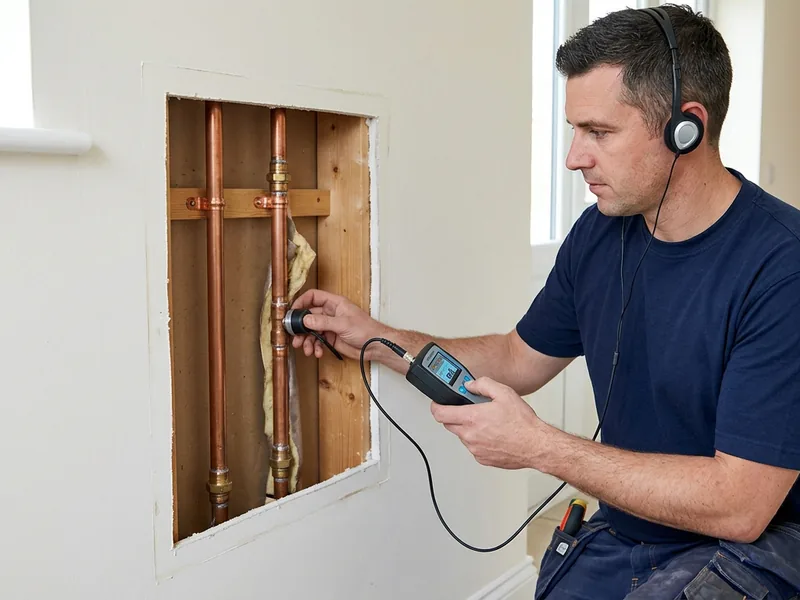
In Attleboro, leak detection starts with knowing where the heater hides. Many homes here have full basements, and when a basement gets finished, the water heater often ends up behind a new wall or inside a utility closet with a louvered door nobody opens. We check those concealed installs first, because a slow tank-seam weep can soak the bottom plate of a finished wall for a month before the carpet feels damp. The Ten Mile River and Bungay River keep humidity high in low-lying streets, which means surface rust on a tank can look like age when it is actually active seepage, and only a moisture meter tells the difference. Mill-era homes add another wrinkle: old galvanized supply lines sweat and drip onto the heater top, mimicking a tank leak. Our detection process separates condensation and pipe sweat from genuine tank failure, tracing each wet spot to its source with thermal imaging and targeted pressure checks instead of guessing. For Attleboro homeowners, that means no unnecessary replacement when the real culprit is a five-dollar fitting.
The Usual Suspects: Common Water Heater Leak Points
Not every wet heater has a failed tank, and the distinction saves real money. Supply-line fittings above the heater are prime suspects: a pinhole in an old copper elbow can mist downward for weeks, landing on the tank jacket and running down to the base, creating a perfect illusion of tank failure. Dielectric unions, the special fittings that join copper to steel, are designed to prevent galvanic corrosion but eventually corrode themselves. The cold-water inlet dip tube area and the hot-water outlet nipple both see constant thermal stress and are common weep points. Then there is the relief valve, which discharges for legitimate reasons, high pressure, overheating, and for illegitimate ones, a tired spring. We test each suspect independently: drying, isolating, and observing, rather than condemning the whole heater on a first glance. For Attleboro homeowners the takeaway is practical: heaters usually sit in basements, sometimes tucked behind finished walls where a slow leak can run for weeks unnoticed, and a quick professional check settles the question.
How Professional Leak Detection Works
Good detection is as much about ruling out as ruling in. A damp basement has many possible water sources, and we systematically eliminate them: groundwater seepage, which follows rain and appears at walls and floor joints; condensation, which follows humidity and coats cold surfaces; appliance leaks from nearby washers or softeners; and roof or plumbing leaks from above that travel down framing to appear near the heater. Only after these are excluded do we focus on the heater itself, working through fittings, valves, and tank in order. This discipline is what separates professional detection from a quick glance. We have seen heaters replaced for leaks that turned out to be a washing machine hose, and we have seen fitting leaks misdiagnosed as tank failures. The methodical approach takes a little more time and prevents far bigger problems. That matters in Attleboro, because heaters usually sit in basements, sometimes tucked behind finished walls where a slow leak can run for weeks unnoticed.
What That Little Leak Is Really Doing
The math of a slow leak surprises most homeowners. A drip every few seconds adds up to gallons per week, and a thin but steady weep can reach dozens of gallons over a month, all of it going exactly where you do not want it. Unlike a burst pipe, which announces itself immediately, a slow leak buys time for secondary damage: mold colonies establish in 24 to 48 hours on damp drywall, wood framing absorbs moisture and invites rot, and concrete wicks water outward to areas far from the heater. Documentation adds another wrinkle: sudden failures are straightforward to explain, while long-term seepage that a homeowner should have addressed raises harder questions. Documenting when you discovered the leak and acting promptly protects both your home and your position. Damage that never happens needs no repair, which is why finding the leak early matters most. Because in Attleboro, heaters usually sit in basements, sometimes tucked behind finished walls where a slow leak can run for weeks unnoticed, early detection is worth far more than late repair.
What Happens When You Call
When you call (833) 713-2101, here is what happens. We schedule a detection visit at a time that works for you, and our technician arrives with the full diagnostic toolkit: moisture meters, thermal imaging, and pressure testing gear. The visit usually takes under an hour. We trace the moisture to its exact source, show you the evidence, and explain your options plainly: repair, monitor, or plan a replacement. There is no pressure and no obligation beyond the diagnosis. If the fix is simple, we can often handle it on the spot. If the tank is failing, we will give you a straight assessment of timing so you can plan rather than panic. Serving Attleboro, MA 02703 and surrounding towns, we answer when you call.