The Usual Suspects: Common Water Heater Leak Points
Condensation deserves its own mention because it causes so many false alarms. Cold water entering the tank chills the steel, and in humid conditions moisture condenses on the jacket and fittings, dripping down exactly like a leak. Flue gas condensation on gas units adds another mimic, especially with short or cool venting. We distinguish condensation from leakage with simple, reliable tests: wiping the tank dry and watching whether moisture returns in step with the heater's firing cycle or with the weather, and checking whether the water is on cold supply pipes, which sweat, versus the tank base, which should stay dry. Getting this right matters because the fixes are completely different: condensation calls for ventilation or insulation, while a real leak calls for repair or replacement. Accurate detection means never paying for the wrong fix. That matters in Bellingham, because heaters commonly live in unfinished basements or garage utility corners, where drips stain concrete long before anyone looks.
How Professional Leak Detection Works
Every detection visit ends with documentation and straight talk. We photograph what we find, record moisture readings, and show you the evidence, not just the conclusion. Then we lay out options in plain terms: what can be repaired, what should be monitored, and what needs replacement, with the reasoning for each. If the tank itself is failing, we explain why repair is not viable and what a planned replacement involves, so you can decide on timing rather than being forced into an emergency. If the problem is a fitting or valve, we explain the repair and what to watch afterward. We also flag contributing conditions, high system pressure, a failed expansion tank, aggressive water chemistry, because fixing the leak without addressing the cause invites a repeat. You leave the visit knowing exactly where you stand. Because in Bellingham, heaters commonly live in unfinished basements or garage utility corners, where drips stain concrete long before anyone looks, early detection is worth far more than late repair.
Water Heater Leak Detection in Bellingham: The Local Picture
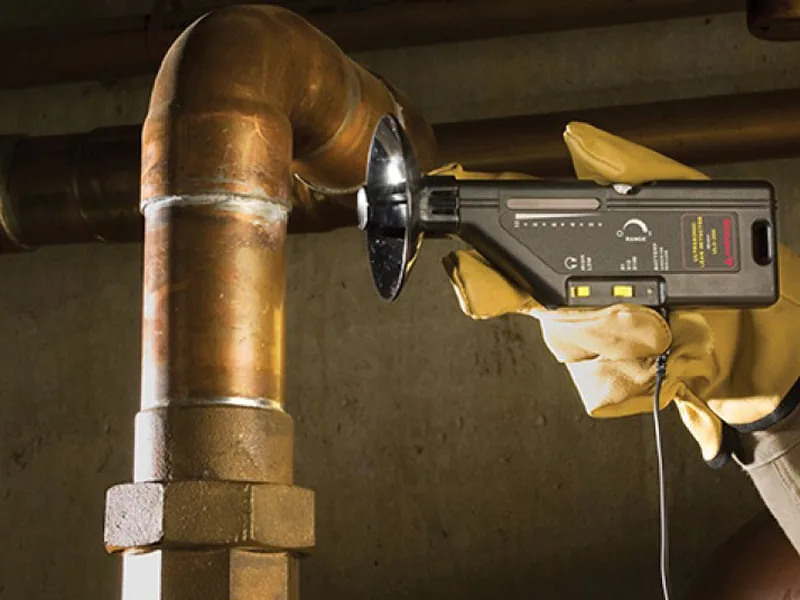
Bellingham's housing mix shapes how we hunt leaks. The 1960s and 1970s capes and ranches here often have their heaters in unfinished basements, which sounds easy, but those basements double as workshops and storage, and a heater buried behind shelving can drip for a season unnoticed. We start detection with a full visual sweep, moving stored items enough to see the tank base, the drain valve, and the temperature-pressure relief discharge line. Spring runoff in the upper Charles River watershed keeps many Bellingham sump pumps cycling, and we have learned to distinguish sump discharge moisture from heater leaks, since both leave the same damp concrete. In newer two-story developments, heaters sometimes sit in garage utility corners where road salt and humidity corrode fittings faster. Thermal imaging picks up the cold signature of an active drip against a warm tank, and moisture readings around the base confirm whether the pan area is wet from the heater or from general basement dampness.
What That Little Leak Is Really Doing
A slow leak is patient, and patience is what makes it expensive. Water wicks into drywall, subfloor, and framing, and once materials stay damp, mold follows, often inside walls where you cannot see it. A drip of a cup a day does not sound like much until you multiply it across weeks: gallons of water absorbed into building materials, each gallon carrying minerals that stain and corrode. Flooring is usually the first casualty, with laminate swelling, hardwood cupping, and carpet padding becoming a mold reservoir. The heater itself suffers too: chronic moisture rusts the jacket, the burner assembly on gas units, and the electrical components on electric ones, turning a repairable fitting leak into a heater replacement. Early detection interrupts this chain while the damage is still measured in a repair visit rather than a renovation. In Bellingham, heaters commonly live in unfinished basements or garage utility corners, where drips stain concrete long before anyone looks, so catching a leak early makes all the difference.
Ready When You Are: What Happens Next
Reaching us at (833) 713-2101 is the fastest way to turn worry into a plan. We will set up a detection visit, arrive prepared, and get to the bottom of the moisture, usually within the hour. You will see what we see: meter readings, thermal images, and the actual leak point, followed by honest guidance on next steps. For Bellingham, MA 02019 homeowners, that guidance might be a simple repair, a watch-and-wait with a monitoring plan, or a scheduled replacement with time to choose the right equipment. Whatever the outcome, you will know exactly where you stand. Water heater problems reward early action and punish delay, so make the call while the problem is still small.
Signs Your Water Heater Is Leaking Before You See Water
Most leaks announce themselves quietly. The first sign is often a musty or damp smell in the utility area that was not there last month. Next comes visual evidence: rust streaks running down the tank jacket, a white or green crust on copper fittings, or a darkened ring on the concrete around the tank base. Your water bill may creep upward without any change in habits, and on gas units the pilot may start going out as moisture reaches the burner assembly. Listen, too: new popping or rumbling during heating often means sediment has built up, insulating the tank bottom and stressing the steel. None of these signs means panic, but every one of them means look closer. A flashlight inspection of the tank base, the drain valve, and the pipes overhead takes two minutes and catches most leaks while they are still small enough to manage on your schedule. For Bellingham homeowners the takeaway is practical: heaters commonly live in unfinished basements or garage utility corners, where drips stain concrete long before anyone looks, and a quick professional check settles the question.