How Professional Leak Detection Works
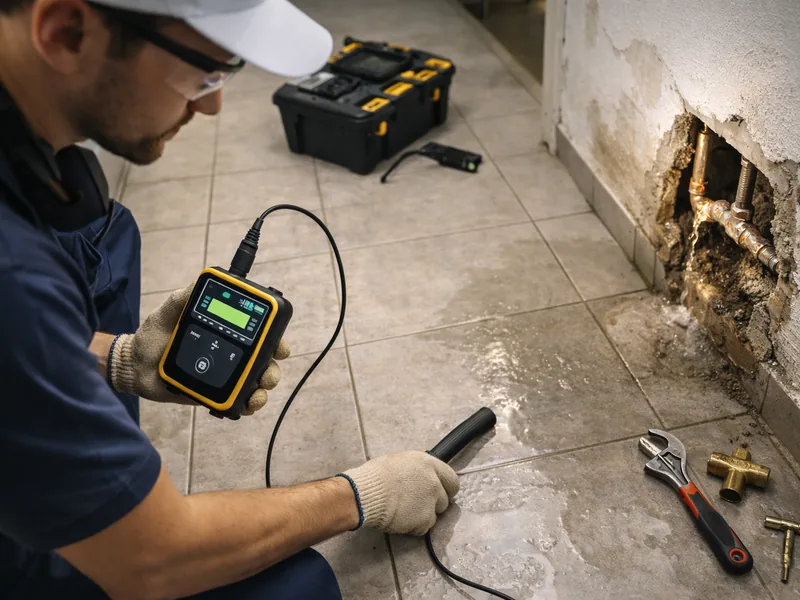
The toolkit matters, but the method matters more. We begin by drying every suspect surface, because you cannot trace a leak through old wetness. Then we watch: fresh moisture appearing at a specific joint or seam is definitive in a way that a generally damp area never is. Moisture meters give us numbers, and numbers let us compare: the tank base versus the foundation wall three feet away tells us whether we are seeing a plumbing leak or background dampness. Thermal cameras excel at finding what eyes miss, a cold drip line inside a wall cavity, or the cool signature of water under a jacket. For intermittent leaks, we may ask about timing: a leak that appears only after showers points to pressure or temperature triggers. The whole process usually takes under an hour, and it ends with a clear statement of what is leaking, how urgently it needs attention, and what the fix options are. In Foxborough, heaters often sit in finished-basement utility rooms where a leak threatens flooring, drywall, and stored belongings first, so catching a leak early makes all the difference.
Water Heater Leak Detection in Foxborough: The Local Picture
Foxborough detection work centers on finished basements. So many homes here have finished their lower levels in the last two decades that the water heater now backs directly onto living space, and a slow leak does not just waste water, it ruins carpet, baseboards, and stored belongings. Our detection protocol for finished basements starts non-invasive: thermal imaging of the walls around the utility room, moisture readings at the baseboard line, and inspection of the ceiling below if the heater sits on an upper floor. Only then do we open access panels or pull the heater forward. Gillette Stadium area homes see the same pattern, and we have found that homeowners often discover the leak only when a musty smell develops, which means mold may already be starting. We document moisture levels room by room so the homeowner has a clear record, and we trace every wet spot to either the heater or an unrelated source like a foundation crack, because fixing the wrong one wastes everyone's time.
What That Little Leak Is Really Doing
Small leaks attack in ways you do not expect. Water traveling along a pipe can emerge feet from the heater, staining a ceiling in the room below or a wall in the next room, and homeowners often repair the stain without finding the source, guaranteeing a repeat. On gas heaters, persistent moisture corrodes the burner and pilot assembly, leading to outages that get misdiagnosed as gas supply problems. On electric units, water reaching wiring or thermostats creates both a failure risk and a safety concern that demands immediate attention. Even the floor suffers structurally: a concrete slab wicks leak water outward under finished flooring, and by the time the laminate buckles, the affected area is far larger than the puddle ever was. Every week a known leak continues is a week of compounding damage, which is why detection followed by prompt action is the whole game. For Foxborough homeowners the takeaway is practical: heaters often sit in finished-basement utility rooms where a leak threatens flooring, drywall, and stored belongings first, and a quick professional check settles the question.
Signs Your Water Heater Is Leaking Before You See Water
Leaks rarely start with a puddle. They start with clues. Discolored hot water, even slightly rusty, tells you the anode rod is exhausted and the tank steel is now corroding. Warm spots on the floor near the heater, or a patch of concrete that never quite dries, point to a slow base leak wicking outward. Check the temperature-pressure relief valve discharge pipe: any dripping there means the valve is weeping or the system pressure is running high. Look up, as well: water stains on the ceiling below an upstairs heater, or on the wall behind the tank, trace back to fitting leaks that spray a fine mist. In humid weather, be careful not to confuse pipe condensation with a leak; condensation follows the weather, while a real leak persists in dry conditions. When in doubt, dry everything with a towel and check again in a few hours. Fresh wetness is your answer. That matters in Foxborough, because heaters often sit in finished-basement utility rooms where a leak threatens flooring, drywall, and stored belongings first.
The Usual Suspects: Common Water Heater Leak Points
Condensation deserves its own mention because it causes so many false alarms. Cold water entering the tank chills the steel, and in humid conditions moisture condenses on the jacket and fittings, dripping down exactly like a leak. Flue gas condensation on gas units adds another mimic, especially with short or cool venting. We distinguish condensation from leakage with simple, reliable tests: wiping the tank dry and watching whether moisture returns in step with the heater's firing cycle or with the weather, and checking whether the water is on cold supply pipes, which sweat, versus the tank base, which should stay dry. Getting this right matters because the fixes are completely different: condensation calls for ventilation or insulation, while a real leak calls for repair or replacement. Accurate detection means never paying for the wrong fix. Because in Foxborough, heaters often sit in finished-basement utility rooms where a leak threatens flooring, drywall, and stored belongings first, early detection is worth far more than late repair.
What Happens When You Call
When you call (833) 713-2101, here is what happens. We schedule a detection visit at a time that works for you, and our technician arrives with the full diagnostic toolkit: moisture meters, thermal imaging, and pressure testing gear. The visit usually takes under an hour. We trace the moisture to its exact source, show you the evidence, and explain your options plainly: repair, monitor, or plan a replacement. There is no pressure and no obligation beyond the diagnosis. If the fix is simple, we can often handle it on the spot. If the tank is failing, we will give you a straight assessment of timing so you can plan rather than panic. Serving Foxborough, MA 02035 and surrounding towns, we answer when you call.