The Usual Suspects: Common Water Heater Leak Points
Not every wet heater has a failed tank, and the distinction saves real money. Supply-line fittings above the heater are prime suspects: a pinhole in an old copper elbow can mist downward for weeks, landing on the tank jacket and running down to the base, creating a perfect illusion of tank failure. Dielectric unions, the special fittings that join copper to steel, are designed to prevent galvanic corrosion but eventually corrode themselves. The cold-water inlet dip tube area and the hot-water outlet nipple both see constant thermal stress and are common weep points. Then there is the relief valve, which discharges for legitimate reasons, high pressure, overheating, and for illegitimate ones, a tired spring. We test each suspect independently: drying, isolating, and observing, rather than condemning the whole heater on a first glance. That matters in Mendon, because heaters often live in farmhouse basements or crawlspaces that are dark, cramped, and rarely visited.
Water Heater Leak Detection in Mendon: The Local Picture
Mendon detection calls often start with a vague symptom: rusty hot water, a pilot that will not stay lit, or a damp smell in a basement nobody visits weekly. Rural homes here hide heaters in dark farmhouse basements and cramped crawlspaces, and the well water does its damage quietly, eating anode rods and tank linings until the steel gives way. Our detection process for well-water homes includes checking the anode port and inspecting the first few gallons drawn from the drain valve, since heavy sediment and metallic content tell us how the tank is failing from the inside. Moisture probes go into soil and masonry around dirt-floor cellars, where leaks vanish downward instead of pooling. Lake Nipmuc area homes add humidity to the mix, and we separate condensation on cold pipes from genuine leaks with dry-cloth testing. Because these basements are rarely visited, we focus on finding not just the current leak but the conditions that will cause the next one.
How Professional Leak Detection Works
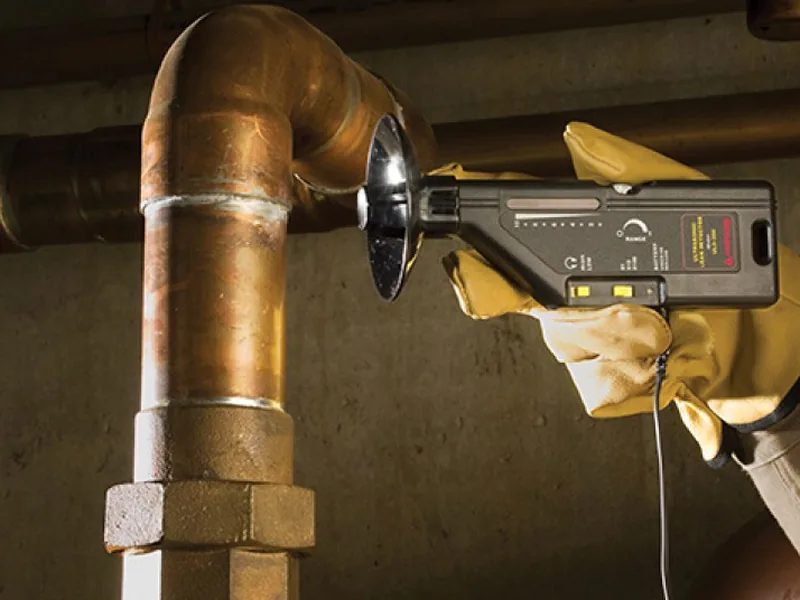
Professional detection is a process of elimination, and it starts before we touch a meter. We interview the symptom: when did you first notice it, does it change with weather or hot water use, has anything changed in the house. Then comes the visual inspection with strong lighting, top to base, including the pipes overhead and the floor around the tank. Next we deploy instruments: pin and pinless moisture meters quantify dampness in concrete, drywall, and wood, establishing what is wet and how wet. Thermal imaging shows temperature differences, revealing the cold track of active water against warm surroundings. If the source is still ambiguous, we isolate: shutting valves to test the hot side versus the cold side, or capping the relief discharge to see if dripping stops. Dye tracing is the last resort for truly hidden paths. Each step narrows the field until only the true source remains. Because in Mendon, heaters often live in farmhouse basements or crawlspaces that are dark, cramped, and rarely visited, early detection is worth far more than late repair.
What That Little Leak Is Really Doing
There is also the hidden toll of waiting: the emergency premium. A leak found early becomes a scheduled repair or a planned replacement, done on your timeline with time to choose equipment and get the details right. The same leak found late becomes an emergency call, water extraction, potential mold remediation, and a replacement chosen in a hurry. We have watched this play out hundreds of times, and the difference in total outlay is dramatic, often several times over. Beyond money, there is the disruption: a planned replacement takes a few hours, while a flood recovery takes weeks of drying equipment, contractor visits, and displaced living space. When you notice the first sign, a damp smell, a rust streak, a suspicious stain, that is the moment when you have the most options and the lowest outlay. Acting then is the wisest move in home maintenance. In Mendon, heaters often live in farmhouse basements or crawlspaces that are dark, cramped, and rarely visited, so catching a leak early makes all the difference.
Ready When You Are: What Happens Next
Calling (833) 713-2101 starts a simple process. First, we listen: you describe what you have noticed, and we ask the questions that narrow the possibilities before we arrive. Then we inspect, using visual examination plus moisture meters and thermal imaging to find the true source of the water. Then we explain: what is leaking, why it is happening, how urgent it is, and what each option involves. Homeowners in Mendon, MA 01756 tell us they appreciate the plain talk, especially when the news is that the problem is smaller than feared. Many suspected tank failures turn out to be fittings or valves, and saying so honestly is part of the job. One call gets you an accurate diagnosis and a clear path forward.
Signs Your Water Heater Is Leaking Before You See Water
The subtle signs are the ones that matter most, because they buy you time. A water heater that takes longer to recover, or runs out of hot water faster than it used to, may have a compromised dip tube or heavy sediment, both of which stress the tank toward failure. Moisture on the tank jacket that returns after wiping, especially near the base seam, is a classic early tank failure signature. On electric units, a tripped reset button or a breaker that starts nuisance-tripping can indicate water reaching electrical components. Do not ignore the area around the heater either: peeling paint on nearby walls, swollen baseboards, or a cardboard box that feels damp on the bottom all point to moisture that has been present for a while. Any one of these deserves a closer look, and a professional detection visit is a small step compared with the flooring a hidden leak destroys. For Mendon homeowners the takeaway is practical: heaters often live in farmhouse basements or crawlspaces that are dark, cramped, and rarely visited, and a quick professional check settles the question.