The Usual Suspects: Common Water Heater Leak Points
Tank leaks themselves follow a pattern worth understanding. Steel tanks corrode from the inside out, which means the jacket can look acceptable while the steel beneath is failing. The bottom seam and the area around the drain valve go first, because sediment settles there, trapping moisture against the steel and accelerating corrosion. Glass-lined tanks resist this until the lining cracks, usually at welds and fittings, and then corrosion concentrates at the breach. Once a tank seam weeps, it does not heal; the leak only grows, sometimes slowly for months, sometimes suddenly. That is why we treat any confirmed tank-base moisture as a replacement conversation, not a repair: patching a tank is not a real option, and the question becomes timing. A planned replacement on your schedule always beats an emergency one on the leak's schedule. That matters in Sharon, because heaters in lake-area homes often sit in basements that already fight groundwater, so any added leak is trouble fast.
How Professional Leak Detection Works
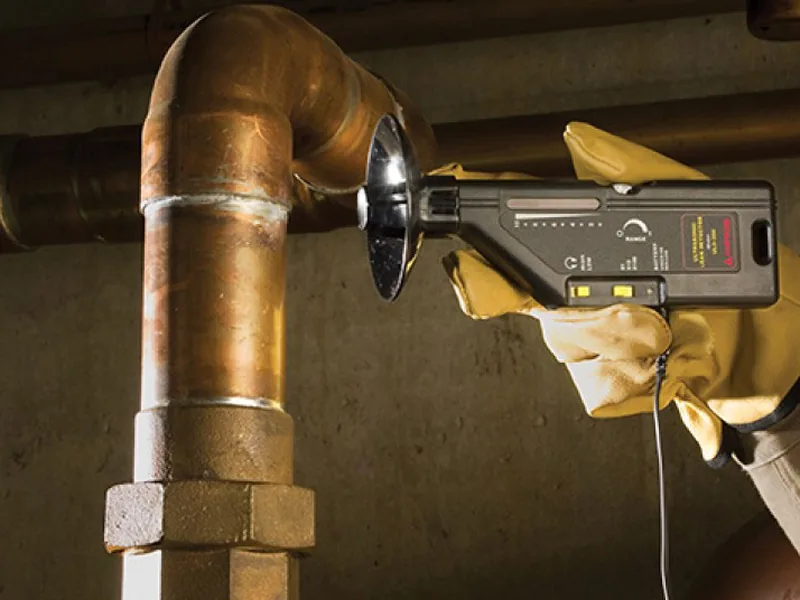
Professional detection is a process of elimination, and it starts before we touch a meter. We interview the symptom: when did you first notice it, does it change with weather or hot water use, has anything changed in the house. Then comes the visual inspection with strong lighting, top to base, including the pipes overhead and the floor around the tank. Next we deploy instruments: pin and pinless moisture meters quantify dampness in concrete, drywall, and wood, establishing what is wet and how wet. Thermal imaging shows temperature differences, revealing the cold track of active water against warm surroundings. If the source is still ambiguous, we isolate: shutting valves to test the hot side versus the cold side, or capping the relief discharge to see if dripping stops. Dye tracing is the last resort for truly hidden paths. Each step narrows the field until only the true source remains. Because in Sharon, heaters in lake-area homes often sit in basements that already fight groundwater, so any added leak is trouble fast, early detection is worth far more than late repair.
What That Little Leak Is Really Doing
Small leaks attack in ways you do not expect. Water traveling along a pipe can emerge feet from the heater, staining a ceiling in the room below or a wall in the next room, and homeowners often repair the stain without finding the source, guaranteeing a repeat. On gas heaters, persistent moisture corrodes the burner and pilot assembly, leading to outages that get misdiagnosed as gas supply problems. On electric units, water reaching wiring or thermostats creates both a failure risk and a safety concern that demands immediate attention. Even the floor suffers structurally: a concrete slab wicks leak water outward under finished flooring, and by the time the laminate buckles, the affected area is far larger than the puddle ever was. Every week a known leak continues is a week of compounding damage, which is why detection followed by prompt action is the whole game. In Sharon, heaters in lake-area homes often sit in basements that already fight groundwater, so any added leak is trouble fast, so catching a leak early makes all the difference.
Water Heater Leak Detection in Sharon: The Local Picture
Sharon's lake neighborhoods reshape leak detection priorities. Around Lake Massapoag, high water tables mean basements already fight groundwater, and many homes run sump systems continuously in wet seasons. When we arrive for a suspected heater leak, we first determine whether the sump is masking the evidence by carrying leak water away before it pools, checking discharge timing and pit water levels against heater operation. Thermal imaging is especially valuable here, cutting through the background dampness to show the distinct cold signature of a fresh drip. Mid-century ranches and capes often have heaters in basements with decades of moisture history, so we calibrate readings against that background rather than treating every damp reading as a leak. Newer construction near the town center usually has cleaner installs, but we still verify expansion tank pressure and relief valve function, since closed municipal systems stress those components. Sharon homeowners with finished basements get our non-invasive-first protocol to protect their living space.
Ready When You Are: What Happens Next
When you call (833) 713-2101, here is what happens. We schedule a detection visit at a time that works for you, and our technician arrives with the full diagnostic toolkit: moisture meters, thermal imaging, and pressure testing gear. The visit usually takes under an hour. We trace the moisture to its exact source, show you the evidence, and explain your options plainly: repair, monitor, or plan a replacement. There is no pressure and no obligation beyond the diagnosis. If the fix is simple, we can often handle it on the spot. If the tank is failing, we will give you a straight assessment of timing so you can plan rather than panic. Serving Sharon, MA 02067 and surrounding towns, we answer when you call.
Signs Your Water Heater Is Leaking Before You See Water
Most leaks announce themselves quietly. The first sign is often a musty or damp smell in the utility area that was not there last month. Next comes visual evidence: rust streaks running down the tank jacket, a white or green crust on copper fittings, or a darkened ring on the concrete around the tank base. Your water bill may creep upward without any change in habits, and on gas units the pilot may start going out as moisture reaches the burner assembly. Listen, too: new popping or rumbling during heating often means sediment has built up, insulating the tank bottom and stressing the steel. None of these signs means panic, but every one of them means look closer. A flashlight inspection of the tank base, the drain valve, and the pipes overhead takes two minutes and catches most leaks while they are still small enough to manage on your schedule. For Sharon homeowners the takeaway is practical: heaters in lake-area homes often sit in basements that already fight groundwater, so any added leak is trouble fast, and a quick professional check settles the question.