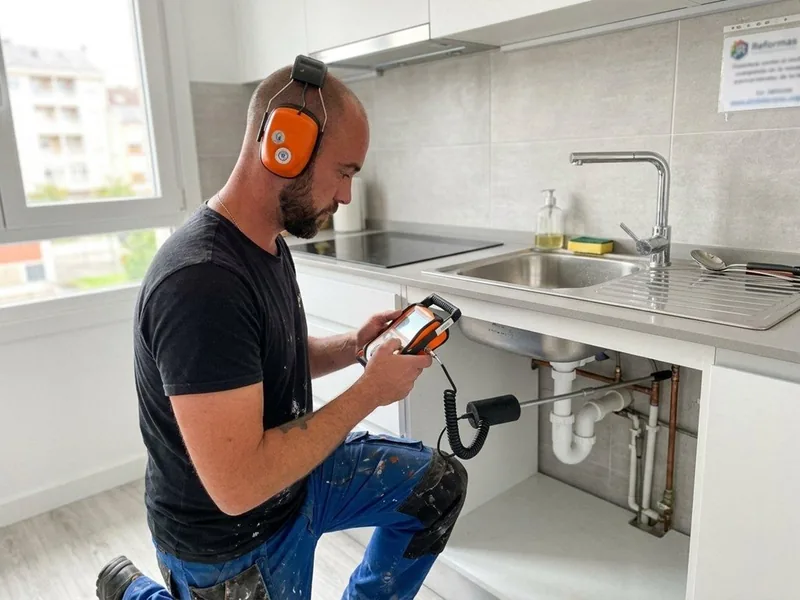
How Professional Leak Detection Works
Good detection is as much about ruling out as ruling in. A damp basement has many possible water sources, and we systematically eliminate them: groundwater seepage, which follows rain and appears at walls and floor joints; condensation, which follows humidity and coats cold surfaces; appliance leaks from nearby washers or softeners; and roof or plumbing leaks from above that travel down framing to appear near the heater. Only after these are excluded do we focus on the heater itself, working through fittings, valves, and tank in order. This discipline is what separates professional detection from a quick glance. We have seen heaters replaced for leaks that turned out to be a washing machine hose, and we have seen fitting leaks misdiagnosed as tank failures. The methodical approach takes a little more time and prevents far bigger problems. In Somerset, heaters near the water face constant humidity that accelerates exterior rust, while inland homes mirror typical suburban setups, so catching a leak early makes all the difference.
Water Heater Leak Detection in Somerset: The Local Picture
Somerset's waterfront setting adds a corrosion dimension to leak detection. Homes near the Taunton River live with constant humidity that accelerates exterior rust on tanks and fittings, so we never diagnose by appearance: every rust patch gets a dry test and a moisture reading to separate cosmetic corrosion from active seepage. Waterfront basements also see more condensation on cold supply pipes, which can drip onto the heater top and mimic a tank leak; our protocol dries and isolates each pipe run to identify the true source. Inland subdivisions mirror typical suburban detection work, with heaters in utility rooms and the standard full check of valves, unions, and the relief discharge line. Brayton Point area homes with older infrastructure get extra attention on supply-line condition, since aging street-side plumbing can deliver pressure spikes that stress heater fittings. Across Somerset, we document exterior rust progression with photos, giving homeowners a visual record to compare at the next service.
What That Little Leak Is Really Doing
A slow leak is patient, and patience is what makes it expensive. Water wicks into drywall, subfloor, and framing, and once materials stay damp, mold follows, often inside walls where you cannot see it. A drip of a cup a day does not sound like much until you multiply it across weeks: gallons of water absorbed into building materials, each gallon carrying minerals that stain and corrode. Flooring is usually the first casualty, with laminate swelling, hardwood cupping, and carpet padding becoming a mold reservoir. The heater itself suffers too: chronic moisture rusts the jacket, the burner assembly on gas units, and the electrical components on electric ones, turning a repairable fitting leak into a heater replacement. Early detection interrupts this chain while the damage is still measured in a repair visit rather than a renovation. For Somerset homeowners the takeaway is practical: heaters near the water face constant humidity that accelerates exterior rust, while inland homes mirror typical suburban setups, and a quick professional check settles the question.
Signs Your Water Heater Is Leaking Before You See Water
The subtle signs are the ones that matter most, because they buy you time. A water heater that takes longer to recover, or runs out of hot water faster than it used to, may have a compromised dip tube or heavy sediment, both of which stress the tank toward failure. Moisture on the tank jacket that returns after wiping, especially near the base seam, is a classic early tank failure signature. On electric units, a tripped reset button or a breaker that starts nuisance-tripping can indicate water reaching electrical components. Do not ignore the area around the heater either: peeling paint on nearby walls, swollen baseboards, or a cardboard box that feels damp on the bottom all point to moisture that has been present for a while. Any one of these deserves a closer look, and a professional detection visit is a small step compared with the flooring a hidden leak destroys. That matters in Somerset, because heaters near the water face constant humidity that accelerates exterior rust, while inland homes mirror typical suburban setups.
The Usual Suspects: Common Water Heater Leak Points
Not every wet heater has a failed tank, and the distinction saves real money. Supply-line fittings above the heater are prime suspects: a pinhole in an old copper elbow can mist downward for weeks, landing on the tank jacket and running down to the base, creating a perfect illusion of tank failure. Dielectric unions, the special fittings that join copper to steel, are designed to prevent galvanic corrosion but eventually corrode themselves. The cold-water inlet dip tube area and the hot-water outlet nipple both see constant thermal stress and are common weep points. Then there is the relief valve, which discharges for legitimate reasons, high pressure, overheating, and for illegitimate ones, a tired spring. We test each suspect independently: drying, isolating, and observing, rather than condemning the whole heater on a first glance. Because in Somerset, heaters near the water face constant humidity that accelerates exterior rust, while inland homes mirror typical suburban setups, early detection is worth far more than late repair.
What Happens When You Call
Reaching us at (833) 713-2101 is the fastest way to turn worry into a plan. We will set up a detection visit, arrive prepared, and get to the bottom of the moisture, usually within the hour. You will see what we see: meter readings, thermal images, and the actual leak point, followed by honest guidance on next steps. For Somerset, MA 02726 homeowners, that guidance might be a simple repair, a watch-and-wait with a monitoring plan, or a scheduled replacement with time to choose the right equipment. Whatever the outcome, you will know exactly where you stand. Water heater problems reward early action and punish delay, so make the call while the problem is still small.