What a Water Heater Pan Actually Does
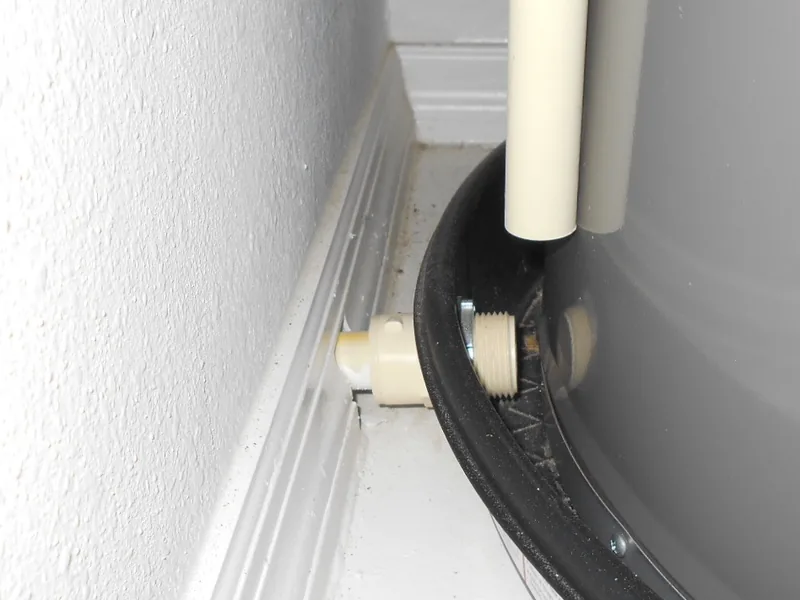
A water heater pan is a wide, shallow, rigid tray that sits directly under the water heater. Its job is to catch slow leaks, drips from fittings, relief valve discharges, and condensation, and to direct that water into a drain line instead of letting it spread across your floor. Think of the leaks a pan handles: the weeping tank seam, the dripping drain valve, the sweating fitting. These are the leaks that run for weeks unnoticed, and a pan intercepts every one of them at the source. What a pan cannot do is contain a catastrophic tank rupture; if 50 gallons let go at once, the pan overflows. But catastrophic ruptures are rare, while slow leaks are the norm, and for the leaks you are actually likely to get, a pan changes everything. Paired with a leak sensor, it turns a potential disaster into a maintenance notification. In Attleboro, heaters usually sit in basements, sometimes tucked behind finished walls where a slow leak can run for weeks unnoticed, which is exactly the situation a proper pan is made for.
Pan Installation in Attleboro: Local Conditions That Shape the Job
Attleboro homes present the classic pan-installation challenge: heaters concealed behind finished basement walls. A pan only protects if its drain actually carries water somewhere safe, and in finished basements that means routing the drain line through or behind finished surfaces to a floor drain, sump pit, or exterior termination without tearing the room apart. We plan the route before the pan goes in, using the shortest path with proper pitch, and we favor aluminum pans here because the Ten Mile River humidity rusts lesser metals. Mill-era homes add a wrinkle: uneven basement floors that need shimming so the pan sits level and the drain truly drains. For Attleboro homeowners finishing a basement, we recommend installing the pan and sensor before the drywall goes up; retrofitting afterward takes more work and never looks as clean.
Why the Drain Line Makes or Breaks the Pan
Choosing where the pan drains is a site-specific decision, and we make it carefully. A floor drain is ideal when one exists near the heater; the run is short and gravity does the work. A sump pit is an excellent termination in homes that have one, but we verify the pump works and the pit has capacity before relying on it, and we route so the pan drain cannot interfere with the pump's operation. Exterior termination through the foundation wall works well when interior options do not exist, but the outlet must be protected from freeze, mulch, and pests, and positioned where discharging water will not undermine the foundation or flood a walkway. What we never do is terminate a pan drain where the water has nowhere to go, or tie it into a line that could back-feed. The right termination is the one that works in the worst conditions, not just on installation day. For Attleboro homes, where heaters usually sit in basements, sometimes tucked behind finished walls where a slow leak can run for weeks unnoticed, a pan with a real drain is the sensible baseline.
Pan Materials and Sizing: Getting the Details Right
The heater's placement within the pan deserves the same care as the pan's placement in the room. The unit should sit centered, so clearance is even all around and the drain fitting is at the pan's true low point. On uneven floors, and many basement floors are uneven, we build a level platform first: shimming a pan directly is a short-term fix that shifts over time, while a proper rigid platform stays true. The platform also lifts the pan slightly out of ambient floor dampness, which extends the life of both the pan and the heater base. For heaters on existing stands, we verify the stand is sound and level before the pan goes under it. These foundation details are invisible once the job is done, which is exactly why they get skipped by careless installers, and exactly why we do them. That matters in Attleboro, because heaters usually sit in basements, sometimes tucked behind finished walls where a slow leak can run for weeks unnoticed.
Sensors and Shutoffs That Watch When You Cannot
The automatic shutoff valve is the next step up, and for many homes it is the right one. This valve installs on the water supply to the heater and closes automatically when the sensor detects water, stopping the leak at its source rather than just managing the water after the fact. Consider the difference: without a shutoff, a supply-side leak can run for hours, overwhelming even a well-drained pan; with a shutoff, the flow stops within moments of detection. We recommend shutoff valves especially for finished basements, homes empty during workdays, vacation properties, and rentals, anywhere that a leak might run unattended. The valve is a mechanical device with a long service life, and we install full-port valves that do not restrict normal water flow. It is the closest thing to a guarantee that a heater leak stays small. In Attleboro, heaters usually sit in basements, sometimes tucked behind finished walls where a slow leak can run for weeks unnoticed, so the pan, drain, and sensor earn their keep.
What Happens When You Call
When you call (833) 713-2101 for a pan installation, here is what to expect. We discuss your heater's location and your home's layout, then schedule a visit. Our technician measures the heater and the space, confirms the right drain route, and installs the aluminum pan level with a properly pitched full-size drain to a floor drain, sump pit, or exterior termination. A leak sensor goes in every pan, and we will discuss whether an automatic shutoff valve suits your situation. We test the drain and the sensor before leaving, show you the termination point, and tag your main water shutoff. Serving Attleboro, MA 02703, we leave the work area clean and the system verified. One visit, permanent protection.