Why the Drain Line Makes or Breaks the Pan
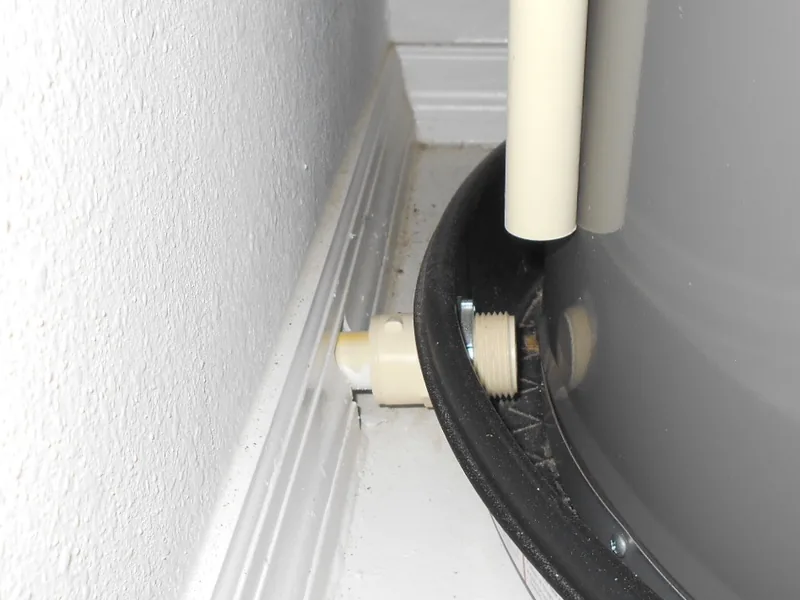
Here is the open secret of the pan industry: most pans fail not because the pan is wrong but because the drain is. A pan with no drain is a shallow bowl; once it fills, water goes over the edge exactly as if the pan were not there. A pan with a drain that runs uphill, ties into a blocked line, or terminates where water cannot go is barely better. Our installations treat the drain as the main event. We run full-size drain piping, typically three-quarter inch minimum, with consistent pitch along the entire run, no sags, no traps that are not supposed to be there. The termination goes to a floor drain, a sump pit, or an exterior point, chosen for that specific home. We test the drain by pouring water into the pan and watching it leave, because a drain that has never been tested is a guess, not a system. That matters in Wrentham, because heaters in newer subdivisions sit in tidy utility rooms, while center-town colonials keep them in old basements.
Pan Installation in Wrentham: Local Conditions That Shape the Job
Wrentham pan work spans historic colonials and new subdivisions. Center-town colonials with old stone basements need the full retrofit approach: level platform on uneven floors, aluminum pan for damp resistance, and a drain routed surface-mounted to a sump pit or sleeved through the foundation wall. Lake Pearl area humidity pushes us toward interior drain terminations that wetland-adjacent groundwater cannot reverse. In the large newer subdivisions, heaters sit in tidy utility rooms where installs are clean and fast: level pan, pitched full-size drain to a floor drain or exterior wall, sensor puck at the low point. We use the visit to verify relief valve discharge routing too, since that is the most commonly misrouted component in new construction. Across Wrentham, finished basements get the shutoff valve recommendation, and every install leaves with the main water shutoff tagged, because the pan manages the water while a quick shutoff ends the event.
Pan Materials and Sizing: Getting the Details Right
Not all pans are equal, and the differences matter in a basement environment. We install rigid aluminum pans as our standard, because aluminum resists corrosion in damp basements, holds its shape under a full heater, and does not become brittle with age the way some plastics can in cold, damp conditions. Plastic pans have their place and meet code in many situations, but in the humid basements common around here, aluminum's durability wins. Galvanized steel pans exist but we avoid them; the galvanizing eventually fails in constant dampness and then the pan itself rusts. Depth matters too: a deeper pan holds more water before the drain must keep up, buying margin during a fast leak. We select the pan for the heater's footprint and the space's conditions, prioritizing fit and durability. In Wrentham, heaters in newer subdivisions sit in tidy utility rooms, while center-town colonials keep them in old basements, so the pan, drain, and sensor earn their keep.
Sensors and Shutoffs That Watch When You Cannot
A pan without a sensor is a silent guardian; it handles the water but never tells you it did. That is why every pan we install includes a leak sensor puck placed at the pan's low point, where water will reach it first. Basic sensors sound a local audible alarm, which is enough if someone is home to hear it. Smart sensors go further, sending alerts to your phone, which matters for households empty all day, frequent travelers, and rental properties. The sensor's job is simple and vital: convert a hidden leak into a notification within minutes instead of a discovery weeks later. We test every sensor at installation by wetting it, because an untested sensor is a hope, not a device. Placement matters as much as the device itself, and we position it where the pan's drainage pattern will actually deliver water to it. In Wrentham, heaters in newer subdivisions sit in tidy utility rooms, while center-town colonials keep them in old basements, which is exactly the situation a proper pan is made for.
Ready When You Are: What Happens Next
Here is our standard when you dial (833) 713-2101: the right pan for the space, installed level, drained properly, sensored, and tested. No shortcuts on pitch, no drain to nowhere, no untested sensor. Our technician will show you the drain termination, demonstrate the sensor alarm, and explain the simple annual checks that keep the system reliable. For Wrentham, MA 02093 homes with finished basements, we will give you a straight recommendation on the automatic shutoff valve based on how the home is used, not on upsell targets. We treat your home carefully throughout, and we stand behind the workmanship. A pan installation is a small job; we treat it with the care of a big one.
What a Water Heater Pan Actually Does
Homeowners sometimes ask whether a pan is worth it for an older heater that might be replaced soon. Our answer is yes, twice over. First, older heaters are the most likely to leak, which is exactly when you want the protection. Second, the pan stays: when the new heater goes in, it sits in the same pan, already drained and sensored, making the replacement better from day one. We install pans under existing heaters and as part of new installations with equal care. The retrofit case needs a level base built on the existing floor and a drain route worked around the current setup; the new-install case is cleaner, with the pan placed before the heater. Either way, the result is the same: the next leak gets caught, drained, and reported instead of spreading silently. For Wrentham homes, where heaters in newer subdivisions sit in tidy utility rooms, while center-town colonials keep them in old basements, a pan with a real drain is the sensible baseline.