Getting the Size Right Matters More Than the Brand
Your home's infrastructure constrains the choices, and we verify it before recommending. Gas line capacity must support the new unit's BTU demand, especially when moving from a standard tank to a high-input tankless; an undersized gas line starves the burner and creates real problems. Electrical service must handle electric or heat pump models, including the dedicated circuit and breaker sizing. Venting must suit the unit: conventional gas tanks need proper flue draft, power-vent and direct-vent models need their specific terminations, and tankless units need correctly sized intake and exhaust. Space and clearances matter too, particularly in tight utility closets or low crawlspaces. We check all of this during assessment, because the right heater on paper is worthless if your home cannot support it, and discovering constraints on installation day is how jobs go wrong. That is the reality in Plainville, where heaters usually occupy basement utility areas, often sharing space with the washer and dryer.
Tank, Tankless, or Heat Pump: Choosing Honestly
Tankless, on-demand heaters earn their place in the right situations. They heat water only when you call for it, eliminating standby loss, and they can deliver endless hot water within their flow capacity, which large households love. They also last longer than tanks and free up floor space with wall mounting. The honest trade-offs: higher upfront investment, potential gas line and venting upgrades, a cold-water sandwich effect in some installations, and minimum flow requirements that can complicate tiny draws. In Massachusetts, winter groundwater temperatures demand serious heating capacity, so proper sizing is non-negotiable; an undersized tankless is a miserable experience in January. We recommend tankless where the household's usage, infrastructure, and long-term plans align, and we say so plainly where they do not. In Plainville, heaters usually occupy basement utility areas, often sharing space with the washer and dryer, so getting the replacement right the first time pays off.
Replacing a Water Heater in Plainville: Local Realities
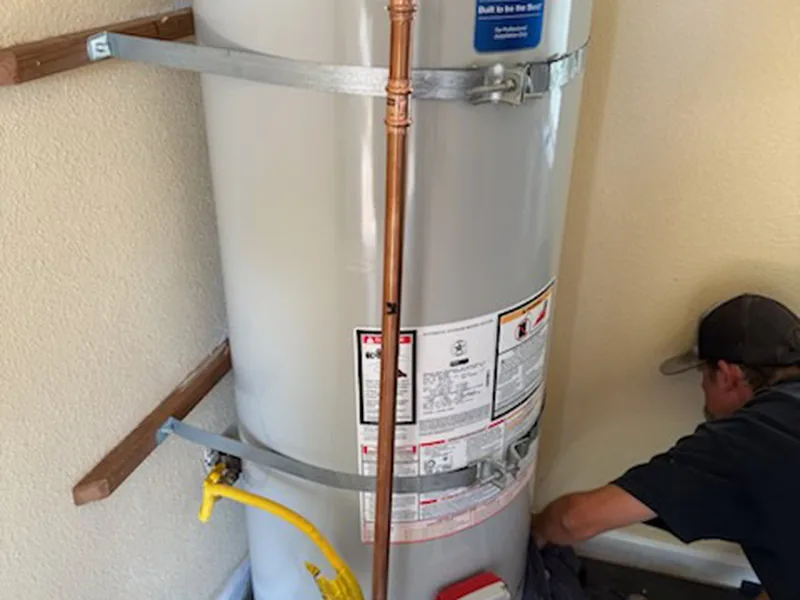
Plainville replacements are typically clean, well-planned swaps. Heaters in basement utility areas come out and go in without drama, which lets us focus the visit on doing everything around the tank correctly: proper expansion control, serviceable shutoffs, correct relief valve discharge routing, a level drain pan with a real drain path, and a sensor puck. Sizing gets honest attention, since many Plainville capes and ranches still run the original small tank from when the household was smaller, and a family that has grown needs a first-hour rating matched to mornings as they are now. Newer two-story homes usually have modern venting and gas service that keep all equipment options open, and we walk through the practical differences between tank, tankless, and heat pump models. We leave every homeowner with the new unit's basic maintenance explained plainly and the main water shutoff location confirmed.
Your Replacement, Start to Finish
Commissioning is the final step and we never skip it. With the new unit installed, we fill the tank completely and purge all air before applying heat, because firing a dry electric element destroys it in seconds. We check every water connection for leaks under full pressure, watching joints for several minutes, not seconds. Gas units get a leak check at every gas joint with proper detection fluid, a draft test, and burner observation for correct flame character. We set the thermostat to a safe, appropriate temperature and verify the temperature-pressure relief valve operates. The leak sensor gets wet-tested, and any automatic shutoff valve gets function-tested. Only when everything passes do we walk you through operation and maintenance basics, leave you our contact information, and consider the job done. A commissioned heater is a known-good heater. In Plainville, heaters usually occupy basement utility areas, often sharing space with the washer and dryer, making correct sizing and installation details matter.
Ready When You Are: What Happens Next
Calling (833) 713-2101 gets you a real evaluation, not a quote for whatever is on the truck. We will ask about your household, inspect your current setup, and tell you honestly whether repair or replacement makes sense. If it is replacement, we size from your actual demand and recommend equipment that fits your home's infrastructure and your long-term plans. Our installations are complete: no skipped expansion tank, no unvented shortcuts, no missing pan. For Plainville, MA 02762 homeowners, that completeness is the difference between a heater that runs quietly for a decade and one that generates service calls. We show up when scheduled, work cleanly, and stand behind the workmanship.
Signs It Is Time to Replace, Not Repair
Waiting has consequences that go beyond the heater. An aging tank does not just risk a leak; it wastes energy every day as sediment forces longer burn times, delivers inconsistent temperatures that strain your patience, and holds the ever-present risk of the failure that floods the basement at the worst moment. We have replaced heaters on emergency calls at midnight that the homeowner knew were failing for a year. The planned alternative is calmer and cheaper: time to choose the right equipment, schedule at your convenience, and get every installation detail right instead of rushing. If your heater is showing its age, an assessment is a small step that buys you control of the timeline. That control, choosing when and what, is the real value of replacing before failure. For Plainville homeowners, where heaters usually occupy basement utility areas, often sharing space with the washer and dryer, a planned replacement beats an emergency every time.